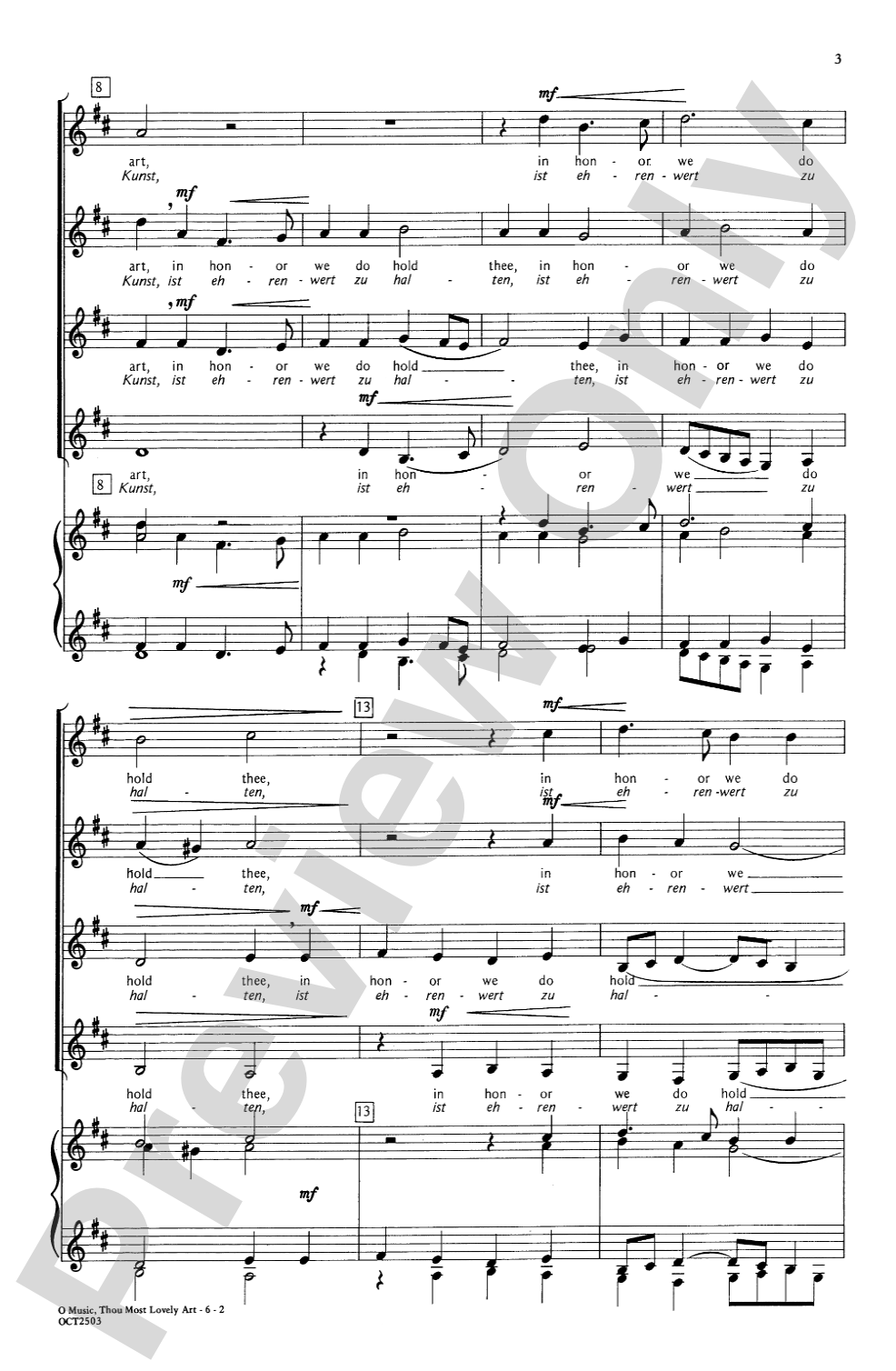
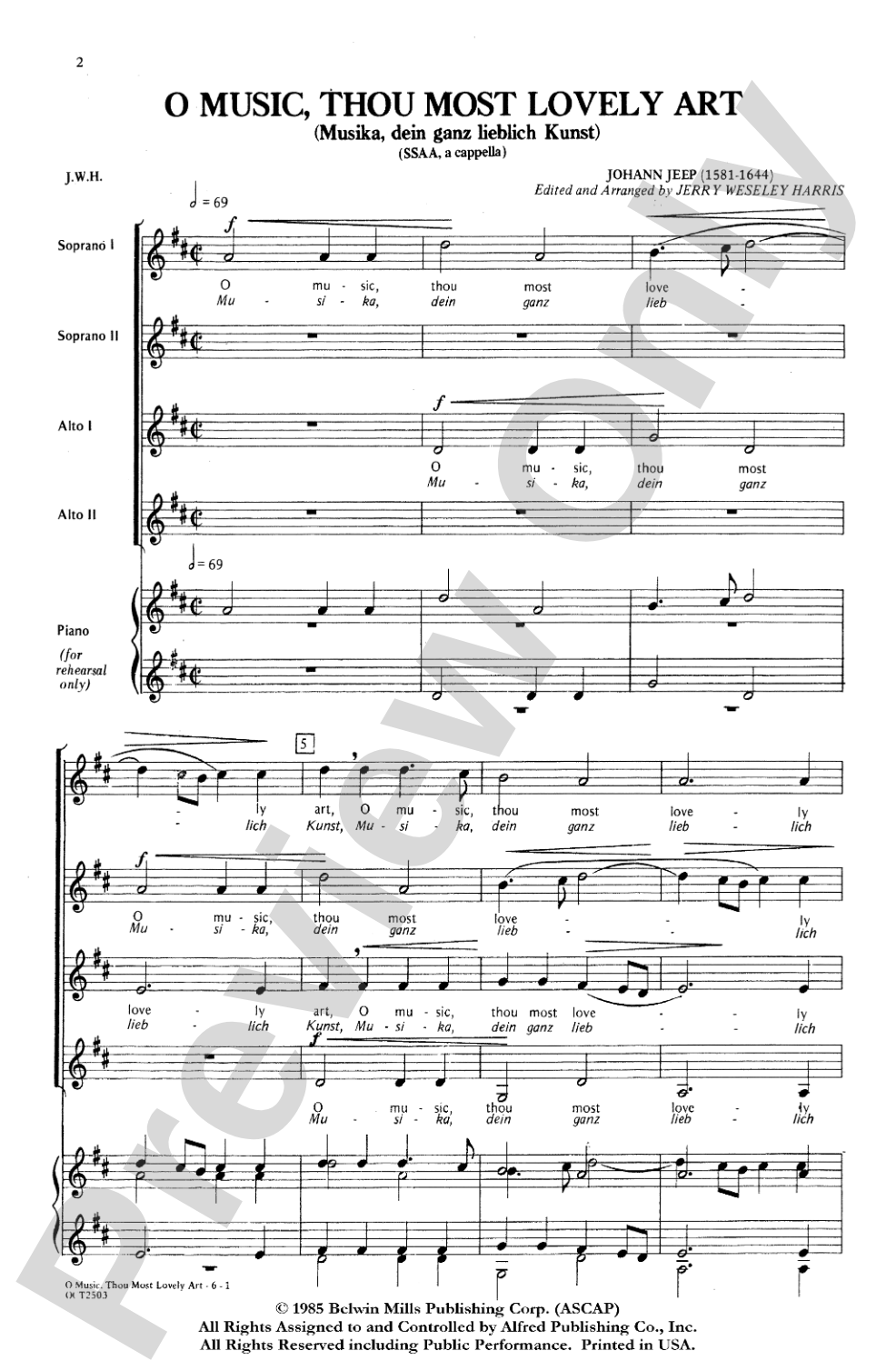
O Music, Thou Most Lovely Art Sheet Music Preview

O Music, Thou Most Lovely Art: SSAA, a cappella Choral Octavo

By Johann Jeep / ed. Jerry Weseley Harris

Level: Moderately Difficult

Item: 00-PO-0005135

Digital Download
$2.25

Minimum order quantity: 20 copies

Description

O Music, Thou Most Lovely Art: SSAA, a cappella Choral Octavo isn't in MakeMusic Cloud just yet...but it could be. Let us know you'd like to see it, and you'll help shape what comes next. In the meantime, start a free trial and dive into thousands of interactive titles your students can play along with today.

Sample Audio
No sample audio found.
Sample Video
Additional Details
Series: Alfred Archive Edition: Belwin Festival Series
Publisher: Alfred Music
Page Count: 8
SKU: 00-PO-0005135

More about this title

About the Composer: Johann Jeep

Johann Jeep (1546-1598) was a German composer and musician who bridged the Renaissance and early Baroque periods. Active primarily in Strasbourg and other German-speaking regions, he developed a distinctive style that blended sacred and secular vocal writing with remarkable melodic clarity and harmonic sophistication.

Why we love this

Jeep's command of four-part texture shines in this carefully crafted piece, offering choirs a genuine masterwork without the extreme tessiturae or dramatic swings that can derail younger ensembles. The musical substance rewards careful rehearsal while remaining singable for high school singers ready to tackle authentic Renaissance repertoire.

What to expect

The piece unfolds with the clarity and directness characteristic of Renaissance secular writing. There's an elegance in its simplicity, yet the harmonic language reveals sophistication beneath the surface, creating a sound that feels both intimate and refined.

Who it's for

This octavo works well for choirs with strong soprano and alto sections and the vocal control to sustain tone without accompaniment. It suits advanced high school choirs, community choirs with experienced singers, and groups preparing for festival or concert competition.

How to get the most out of it

  • Balance the soprano lines carefully in the opening measures; the two highest voices should blend seamlessly rather than compete for prominence.
  • Shape phrases using subtle dynamic movement rather than sudden shifts. This period rewards understated musicianship.
  • Pay attention to vowel consistency across all four parts, especially during sustained passages where tuning becomes exposed without instrumental support.

How to use it

Program this alongside other Renaissance or early Baroque masterworks to build a thematic segment exploring vocal writing across centuries. Its moderate length and contest designation also make it ideal for festival preparation or as a centerpiece in a concert celebrating unaccompanied choral literature.

Skills your students will build

  • Sustaining tone quality and intonation in a cappella singing
  • Balancing four-part harmony with independent voice leading
  • Interpreting Renaissance musical style and phrasing conventions
  • Reading and performing secure soprano and alto parts

You May Also Like