O Mio Babbino Caro (from Puccini's <i>Gianni Schicchi</i>): Tuba Sheet Music Preview

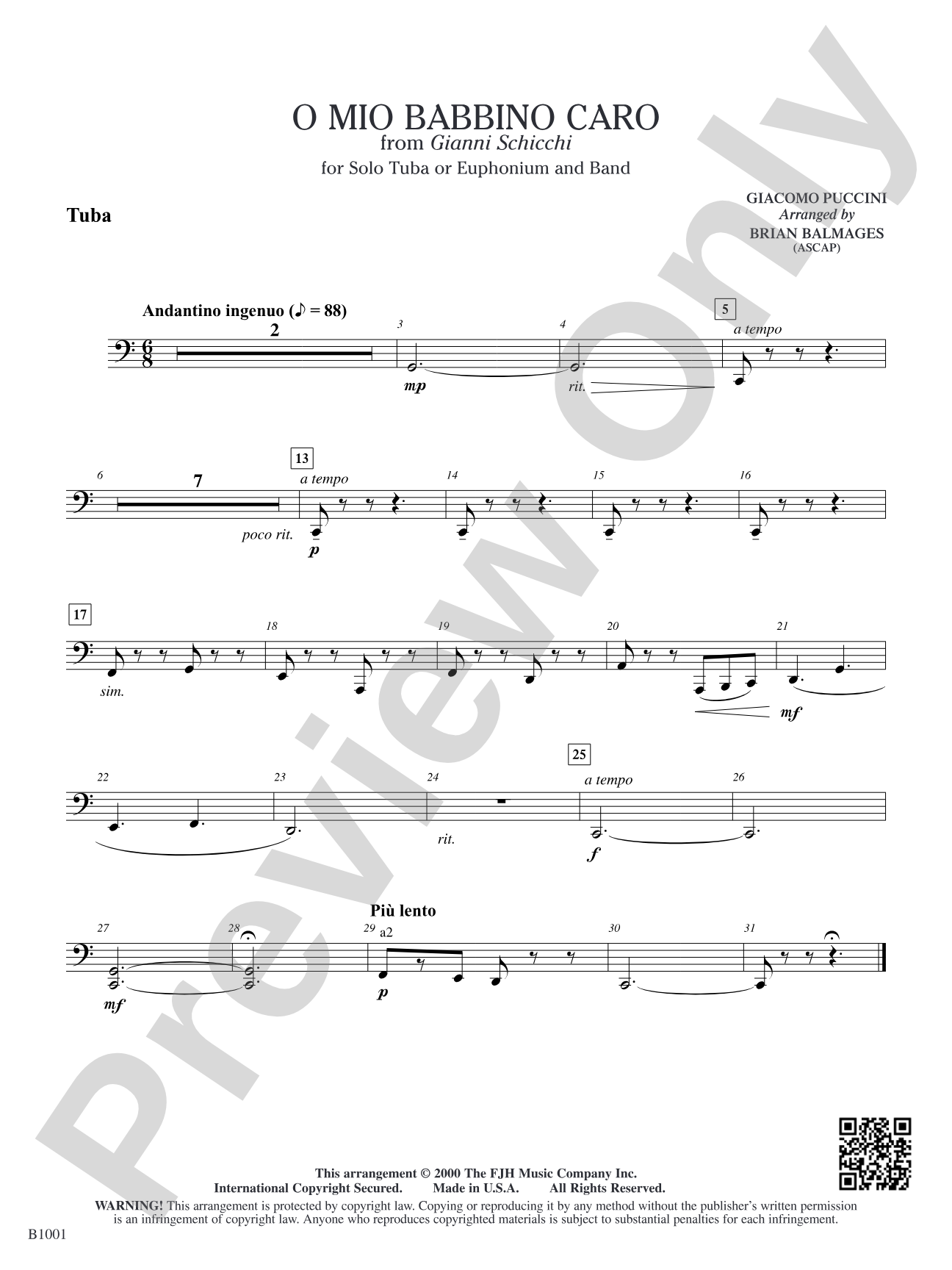
O Mio Babbino Caro (from Puccini's Gianni Schicchi): Tuba

from Puccini's Gianni Schicchi

By Giacomo Puccini / arr. Brian Balmages

Grade: 3

Item: 98-PC-DB1001_TB1

Digital Download
$7.00
Description
This familiar aria from Puccini's opera Gianni Schicchi is scored to feature solo tuba or euphonium. Gorgeous, lyric lines meld with a simple, warm background... an unforgettable arrangement. The wind and percussion score is a Grade 3 or less, and the solo euphonium part the same. (The tuba part is graded higher due to the extensive range.) (2:40)

O Mio Babbino Caro (from Puccini's Gianni Schicchi): Tuba isn't in MakeMusic Cloud just yet...but it could be. Let us know you'd like to see it, and you'll help shape what comes next. In the meantime, start a free trial and dive into thousands of interactive titles your students can play along with today.

Sample Audio
0:00
0:00
Sample Video
Additional Details
Series: FJH Masterworks for Concert Band
Publisher: The FJH Music Company, Inc.
SKU: 98-PC-DB1001_TB1

More about this title

About the Composer: Giacomo Puccini

Giacomo Puccini (1858-1924) shaped the operatic landscape of the late 19th and early 20th centuries through his gift for melody and dramatic pacing. His operas remain standards in professional houses worldwide, but his influence extends far beyond the stage into concert halls and classrooms, where his themes have inspired generations of arrangers and musicians.

Puccini's genius lay in writing lines that feel inevitable once heard. He understood how melody could carry emotion without excess, and how orchestration could support rather than overshadow the human voice. These qualities make his work ideal for wind band transcription, where lyrical integrity and warm sonority are paramount.

Why we love this

Brian Balmages has given the tuba and euphonium section a moment of genuine beauty, transforming an aria that most students know only from recordings into something their own ensemble can perform with pride. The orchestration trusts the wind band sound without trying to replicate the opera pit, which means your players will focus on singing the melody rather than compensating for thin voicing.

What to expect

Tender and unguarded. The melody unfolds with the simplicity of someone sharing something deeply personal, supported by gentle harmonic shifts and warm sustained tones. There's no virtuosity required from the ensemble, only sincerity and attention to the soloist's story.

Who it's for

Bands with strong tuba or euphonium players who can carry a sustained lyrical line with confidence. This works equally well for concert programming and for giving a solo player meaningful stage time without requiring a full concerto arrangement.

How to get the most out of it

  • Balance the solo line so it floats above the accompaniment without forcing; Puccini's melodies work best when they sound effortless and unrushed.
  • Shape the phrasing in four and eight-bar arcs rather than pushing through mechanically. Mark the arrival points in your score so the band knows where the soloist is breathing.
  • Allow rubato in the opening and closing passages. A slight broadening on the highest note of the melody gives it room to bloom.
  • Keep the harmonic foundation steady and warm; let the ensemble provide the harmonic cushion that allows the soloist's tone to sing freely.

How to use it

Position this as the emotional centerpiece of a concert devoted to opera and song literature, or pair it with other Grade 3 masterwork arrangements to create a program that rewards both performers and audience with familiar, beloved music. At 2 minutes 40 seconds, it fits comfortably on a full concert and leaves time for additional selections without padding.

Skills your students will build

  • Balancing solo melody with ensemble accompaniment
  • Sustaining warm, lyrical tone across a wide range (especially tuba/euphonium)
  • Phrasing in longer musical arcs rather than by the measure
  • Listening and responding to a featured soloist while maintaining rhythmic and harmonic stability
  • Interpreting Romantic-era operatic melody in a band context

You May Also Like