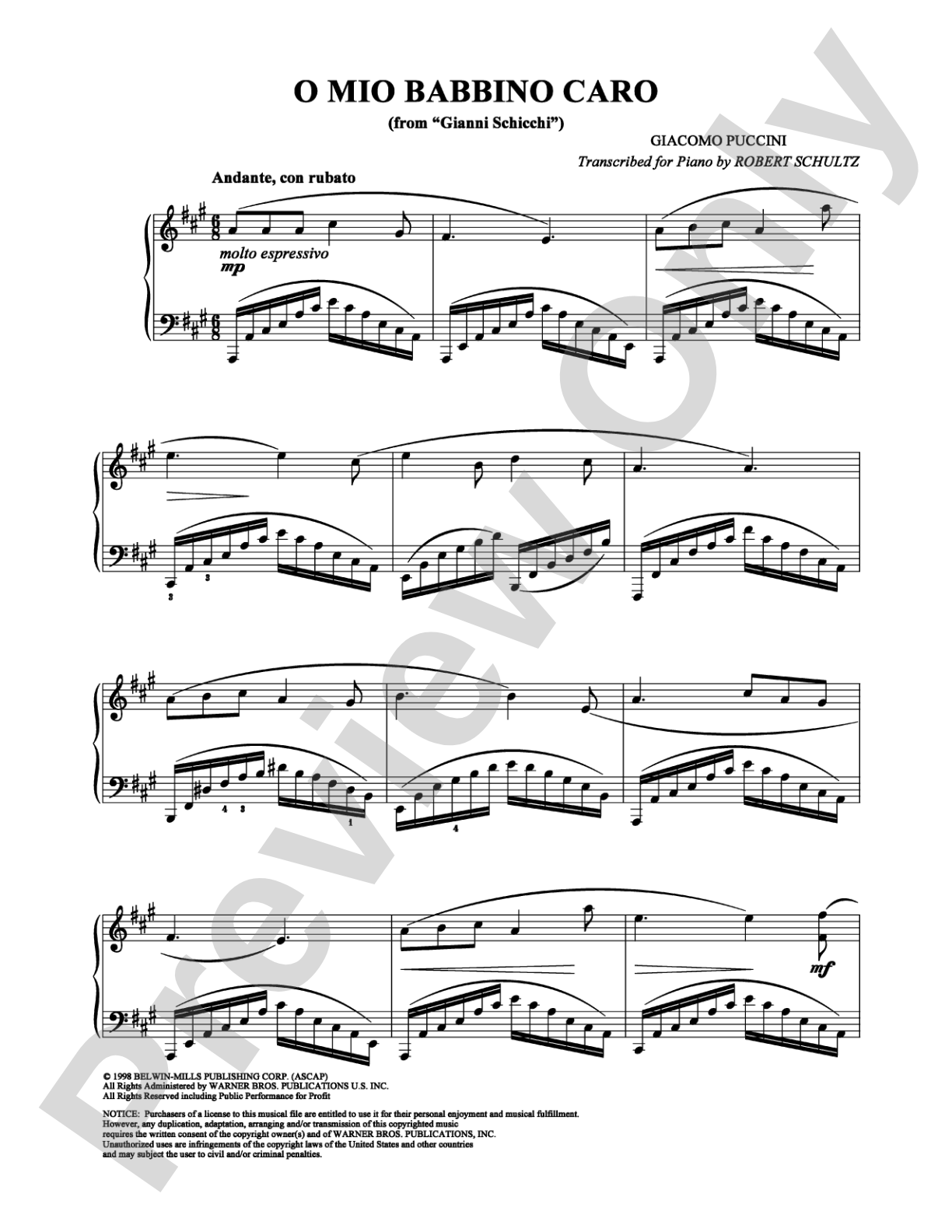
O mio babbino caro: Piano Digital Sheet Music

O mio babbino caro: Piano Digital Sheet Music

G. Puccini

Item: 00-PS-0006618

Digital Download
$3.99
Description

O mio babbino caro: Piano Digital Sheet Music isn't in MakeMusic Cloud just yet...but it could be. Let us know you'd like to see it, and you'll help shape what comes next. In the meantime, start a free trial and dive into thousands of interactive titles your students can play along with today.

Sample Audio
No sample audio found.
Sample Video
Additional Details
SKU: 00-PS-0006618

More about this title

About the Creator: Giacomo Puccini

Giacomo Puccini (1858-1924) was an Italian composer who dominated the operatic stage in the late nineteenth and early twentieth centuries. His gift for melody and dramatic pacing made him one of the most frequently performed opera composers in the world. Puccini wrote for the voice first and always, crafting arias that sit perfectly in the human range while remaining unforgettable. His operas remain repertory staples across the globe, performed thousands of times each year.

Why we love this

This aria has the kind of immediate emotional directness that cuts through any room. The melody is so singable and the harmonic movement so natural that even pianists new to accompanying will find themselves drawn into the story Puccini tells, making it a rewarding introduction to operatic collaboration.

What to expect

The piece breathes tenderness and vulnerability. Puccini's warm harmonic language creates an intimate space where the melody unfolds with simple, devastating beauty, inviting both performer and listener into a moment of genuine emotional connection.

Who it's for

This piece works for pianists accompanying voice students, singers preparing auditions or recitals, and pianists building their standard classical repertoire. It also serves as an accessible entry point into operatic music for younger or less experienced musicians.

How to get the most out of it

  • Shape the opening phrases with gentle rubato, allowing the melody to breathe naturally rather than keeping strict time
  • Balance the left-hand accompaniment so it supports rather than competes with the vocal line
  • Establish a clear harmonic foundation in the introduction; this grounds the singer's entrance
  • Listen closely to the singer's phrasing and adjust your tempo slightly to match their emotional arc, particularly at phrase endings

How to use it

Pair this with other shorter operatic arias for a focused vocal recital, or use it to introduce ensemble members to the character and demands of operatic accompaniment. It also works as a featured solo or interlude piece in mixed classical programs.

Skills your students will build

  • Accompanying a vocal soloist with appropriate balance and support
  • Phrasing melodic material through harmonic awareness rather than metric rigidity
  • Managing rubato within a structured harmonic framework
  • Translating Italian operatic style to the piano

You May Also Like