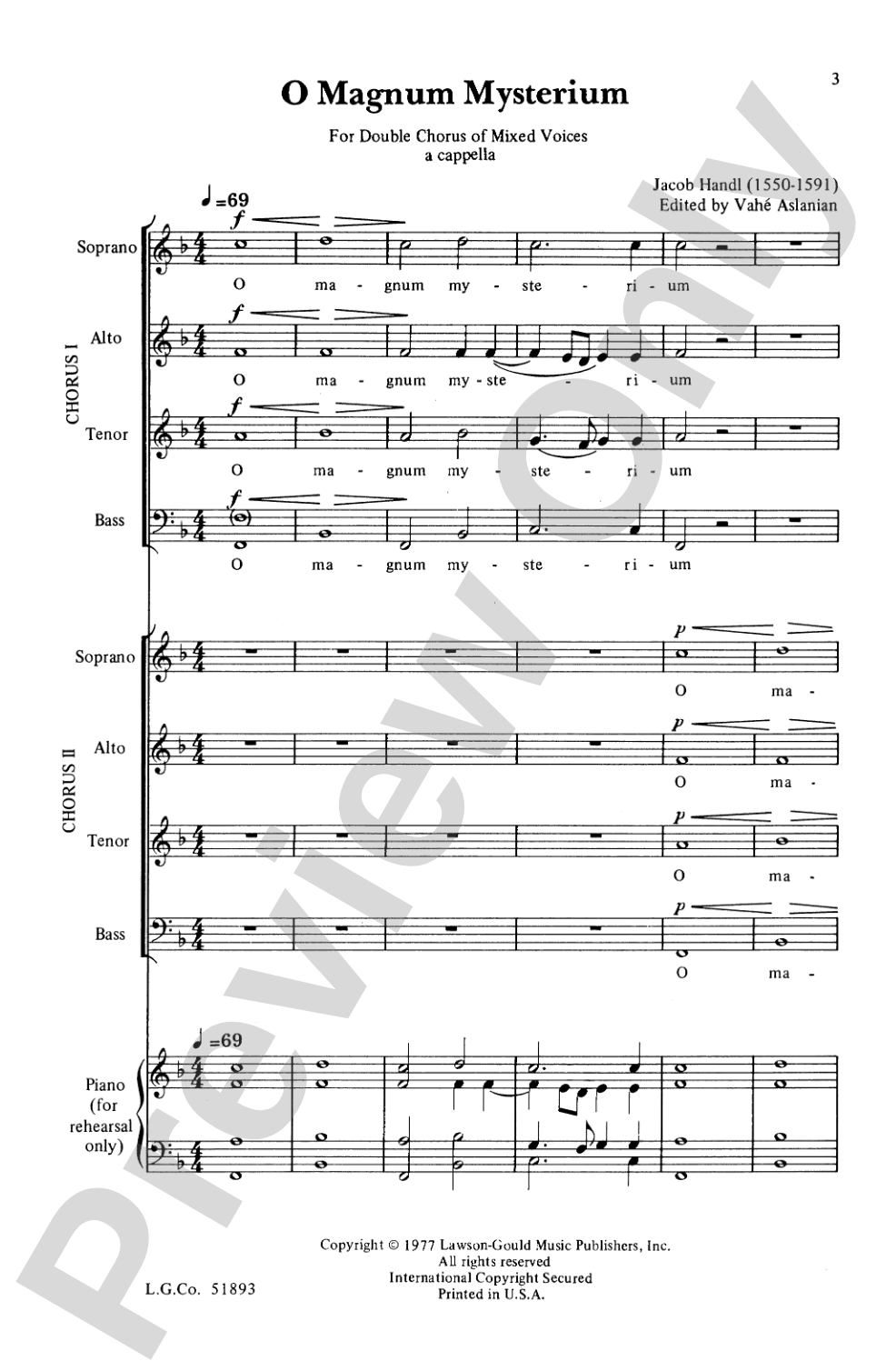
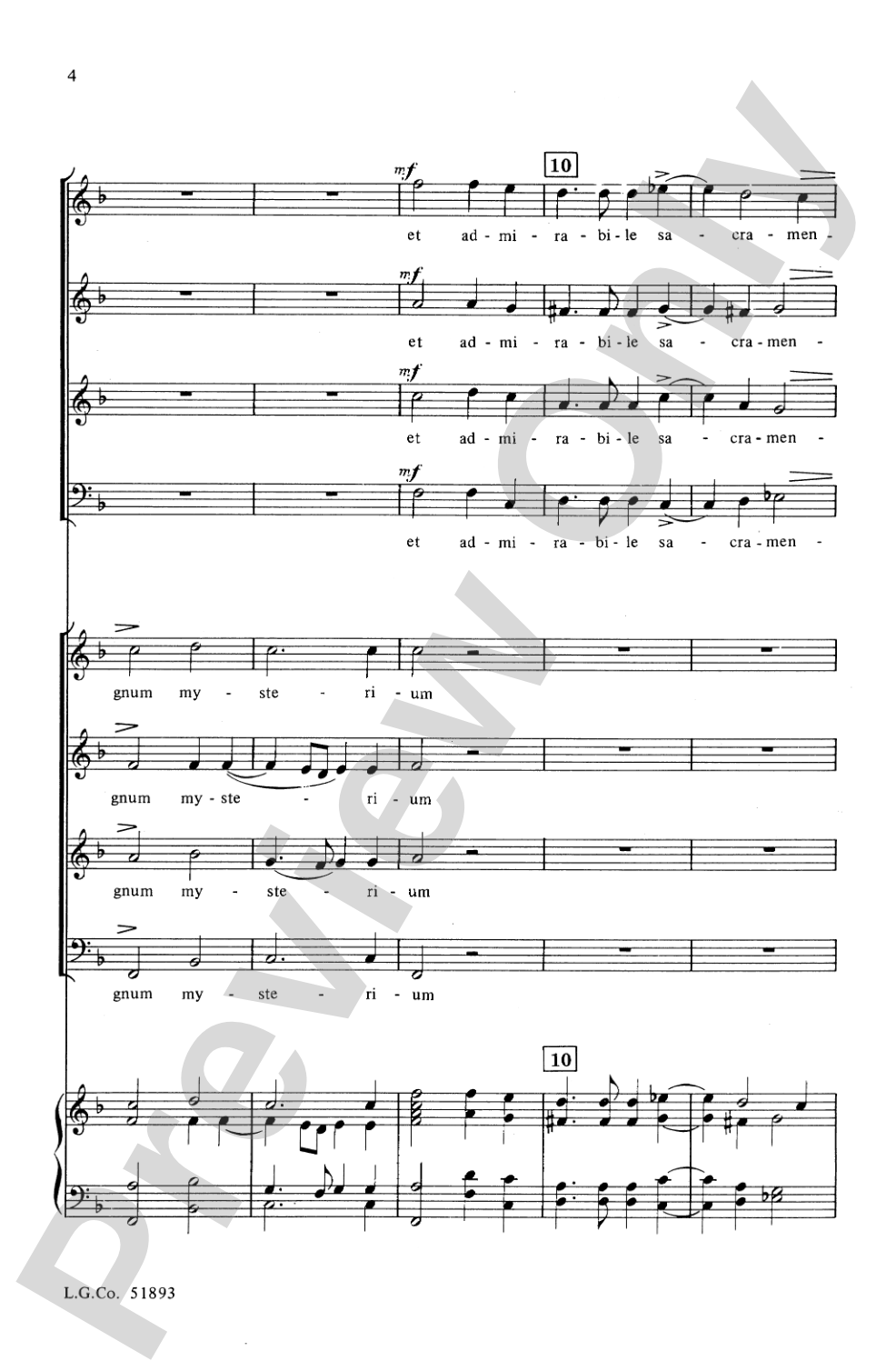
O Magnum Mysterium Sheet Music Preview

O Magnum Mysterium: SATB Double Chorus Choral Octavo

By Jacob Handl / ed. Vahe Aslanian

Item: 00-PO-0005035

Digital Download
$2.25

Minimum order quantity: 20 copies

Description

O Magnum Mysterium: SATB Double Chorus Choral Octavo isn't in MakeMusic Cloud just yet...but it could be. Let us know you'd like to see it, and you'll help shape what comes next. In the meantime, start a free trial and dive into thousands of interactive titles your students can play along with today.

Sample Audio
No sample audio found.
Sample Video
Additional Details
Series: Alfred Archive Edition: Lawson-Gould Music Publishers
Publisher: Alfred Music
Page Count: 12
SKU: 00-PO-0005035

More about this title

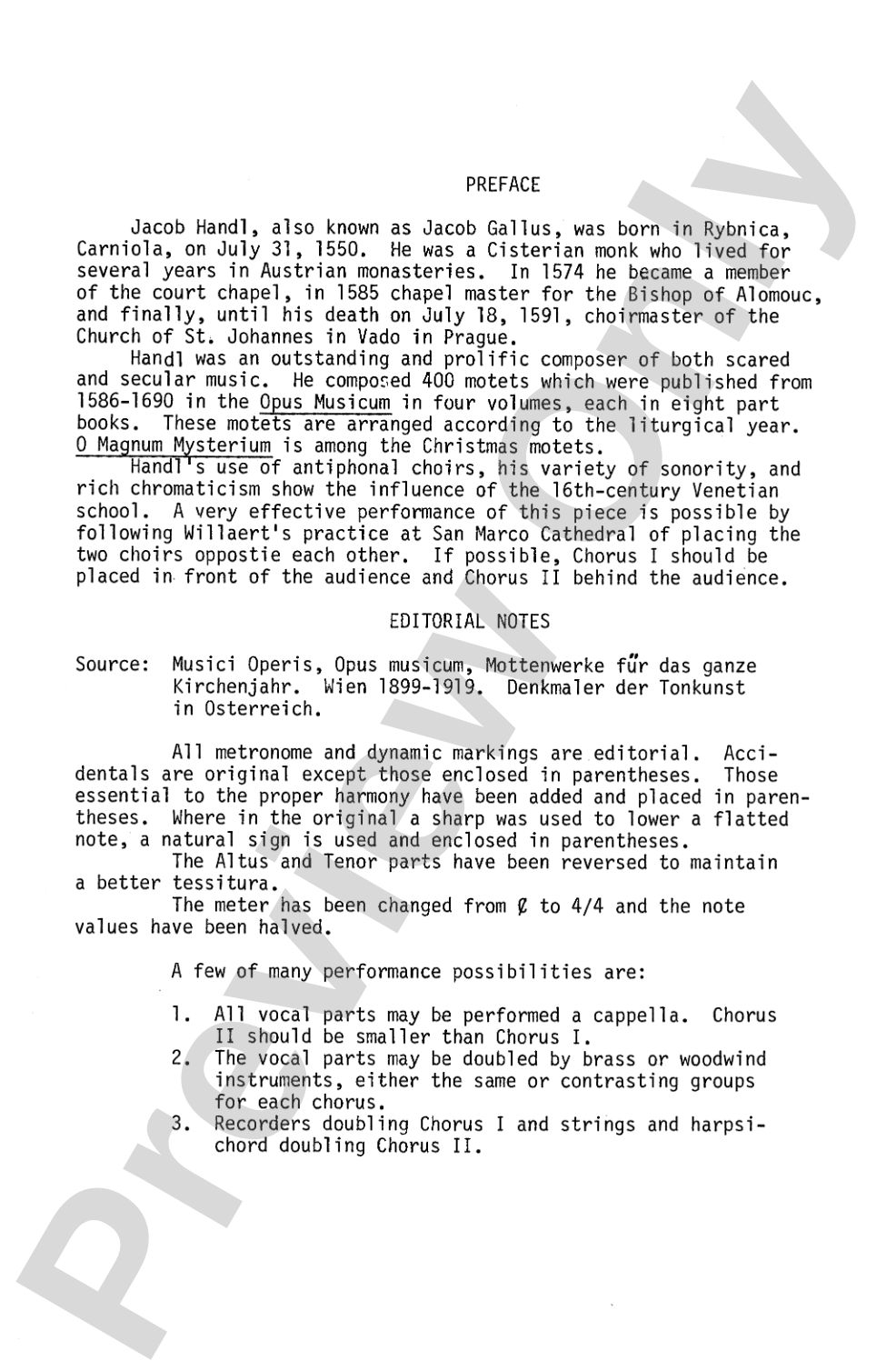
About the Composer: Jacob Handl

Jacob Handl (1550-1591) was a Slovenian composer whose sacred works shaped the sound of late Renaissance choral music across Europe. Working primarily in Vienna and Rome, he mastered the polyphonic idiom and created luminous settings of Latin texts that remain cornerstones of the choral repertoire. His gift for combining structural clarity with spiritual depth made his motets essential to both liturgical and concert life, and they continue to inspire singers today.

Handl's compositional voice sits at a crossroads between the conservative polyphonic tradition and the emerging expressive possibilities of the late Renaissance. His motets demonstrate how carefully crafted counterpoint and strategic use of homophony can deepen theological meaning. Though his life was cut short at age 41, he left behind a catalog of over 200 works that continue to reward singers with their architectural elegance and emotional resonance.

Why we love this

Few Renaissance motets achieve the perfect balance of accessibility and artistic substance that Handl brings to this text. A double chorus creates natural dramatic opportunities—the antiphonal exchanges between the two groups invite staging and expressive contrast without requiring interpretive guesswork. This is the kind of work that sounds both noble and human, rewarding careful ensemble singing without demanding impossible ranges or endurance.

What to expect

O Magnum Mysterium unfolds with quiet reverence and architectural clarity. The text contemplates the mystery of the Incarnation, and Handl's music mirrors this awe through interlocking voice parts and moments of radiant homophony. It feels both timeless and intimate, inviting the listener into a space of devotion without sentimentality.

Who it's for

Intermediate to advanced SATB choirs with enough singers to form two distinct choruses and the musicianship to manage Renaissance polyphony. The piece suits choirs seeking substantial Christmas or Advent repertoire beyond the obvious carols, as well as programs exploring Renaissance sacred music.

How to get the most out of it

  • Shape the dialogue between the two choruses as a musical conversation rather than unison repetition. Even when both groups sing identical text, slight differences in entry timing or dynamic emphasis create dimensional space.
  • Approach the polyphonic passages with transparent texture. Handl's counterpoint only works if each voice can be heard; resist the temptation to over-blend or soften the lines into indistinctness.
  • Use the page turns strategically during rehearsal to identify natural breathing points and phrase boundaries. Renaissance notation often obscures modern conventions, and singers need clarity about where phrases genuinely end.
  • Balance the lower voices carefully in the opening sections. Bass and tenor lines often carry the harmonic foundation while sopranos and altos spin the melody; resist making the top voices dominant.

How to use it

Program this as an anchor for a Renaissance-focused December concert, perhaps surrounding it with other Handl motets or works by his contemporaries like Palestrina and Lassus. Its moderate difficulty also makes it ideal for a mixed holiday program where you want to elevate the artistic discourse without overwhelming the audience. The double-chorus format gives it enough scale to stand alone as a concert centerpiece.

Skills your students will build

  • Reading and singing Renaissance polyphonic texture with multiple independent lines
  • Navigating counterpoint where melodic interest shifts between voices
  • Maintaining ensemble blend and intonation across extended passages without modern harmonic anchors
  • Understanding antiphonal singing and the acoustic properties of two-chorus arrangements
  • Interpreting Latin text with appropriate vowel purity and diction in Renaissance style

You May Also Like