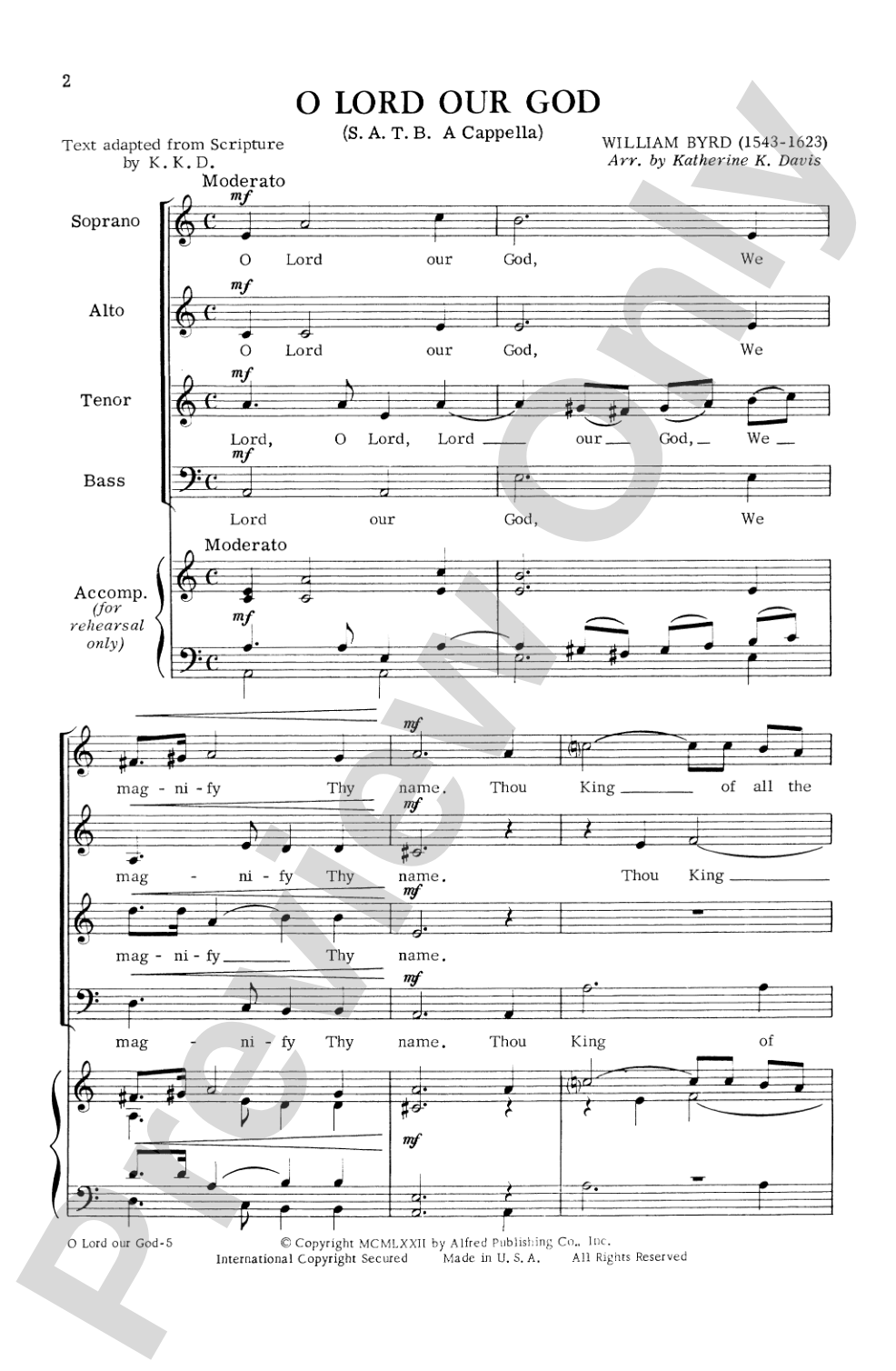
William Byrd (1540-1623) stands as one of the Renaissance's most prolific and technically accomplished composers. Working primarily in England during a period of religious and political upheaval, he composed across every major genre of his time: motets, masses, madrigals, and instrumental works. His sacred music reveals a mastery of counterpoint and harmonic language that influenced generations of composers who followed.
Byrd's ability to write idiomatically for voices while maintaining intellectual rigor makes his work enduringly valuable in choral education. His motets and sacred settings remain standard repertoire for advanced ensembles, prized for their clarity of voice leading and expressive depth.