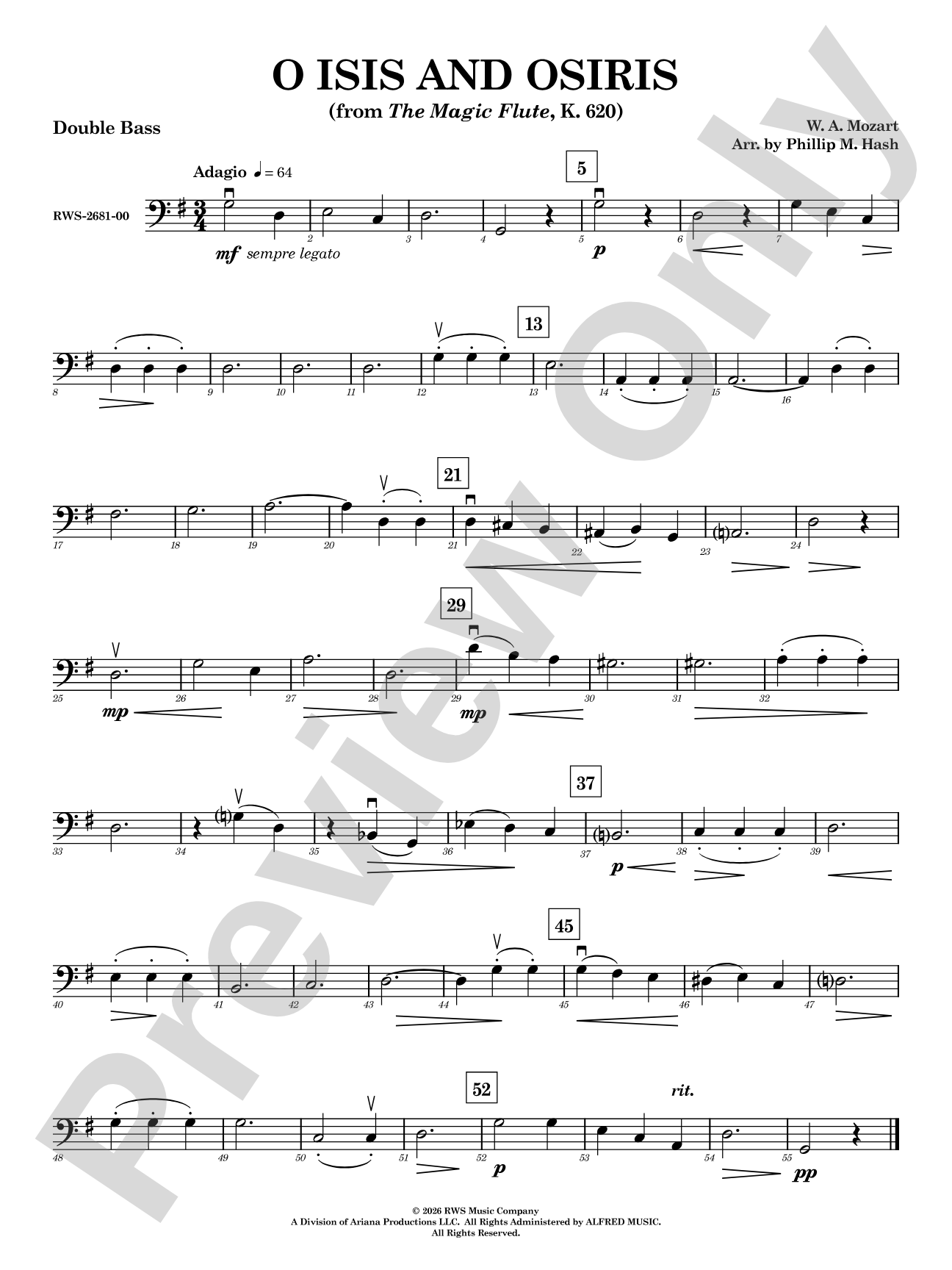
O Isis and Osiris: String Bass Sheet Music Preview

O Isis and Osiris: String Bass

(from The Magic Flute, K. 620)

By W. A. Mozart / arr. Philip M. Hash

Grade: 2

Item: 98-PC-0000055_SB

Digital Download
$3.00
Description
Experience the timeless beauty of Mozart's O Isis and Osiris like never before in this elegant new arrangement for string orchestra. Adapted from "The Magic Flute", this Grade 2 setting transposes the original aria from F major to G major, making it more accessible for developing ensembles while preserving the integrity and grandeur of the composition. Featuring the cello section on much of the iconic melody, this version offers rich, sonorous textures and a rewarding performance opportunity for young musicians---a perfect blend of classical authenticity and educational value.

O Isis and Osiris: String Bass isn't in MakeMusic Cloud just yet...but it could be. Let us know you'd like to see it, and you'll help shape what comes next. In the meantime, start a free trial and dive into thousands of interactive titles your students can play along with today.

Sample Audio
0:00
0:00
Sample Video
Additional Details
Series: RWS - Developing Strings
Publisher: RWS Music Company
SKU: 98-PC-0000055_SB

More about this title

About the Composer: W. A. Mozart

Wolfgang Amadeus Mozart (1756–1791) remains one of the most prolific and influential composers in Western music. His operas revolutionized the form, blending dramatic storytelling with melodies of extraordinary elegance and clarity. For string musicians and ensemble directors, Mozart's works offer an unmatched laboratory for studying balanced voicing, transparency of texture, and the art of making simplicity sound profound.

Why we love this

This arrangement captures one of Mozart's most solemn and dignified moments without demanding the technical firepower of the original. The transposition to G major and the decision to feature the cello section on the melody creates an entirely fresh sonority that still honors the ceremonial weight of the music. Your developing strings will experience what it means to sustain a legit orchestral color while managing a manageable technical landscape.

What to expect

Reverent and ceremonial. The cello voices carry an almost hymnic quality, supported by gently arpeggiated harmonies that create a hushed, resonant backdrop. There is weight and dignity here, a sense of entering sacred space.

Who it's for

String orchestras at the intermediate level who want to explore a genuine masterwork without requiring virtuosic passages. Directors building a contest or festival program need repertoire that sounds mature and substantial within Grade 2 technical bounds.

How to get the most out of it

  • Shape the opening cello melody with long, supported phrases rather than treating each measure as a separate unit. The breadth of the line matters more than technical precision.
  • Balance the inner voices so they support without overwhelming. Second violins and violas should recede enough that listeners focus on the soaring cello part.
  • Commit to a consistent, unhurried tempo. This music asks for patience and control, not urgency.
  • Use the full length of bows in slower passages. A rushed bow stroke will undermine the piece's contemplative character.

How to use it

Program this as an intermission opener or as the centerpiece of a concert devoted to operatic treasures arranged for younger ensembles. Its introspective character contrasts beautifully with lighter contemporary works or energetic Baroque pieces.

Skills your students will build

  • Sustaining long legit phrases with consistent tone quality
  • Balancing a melodic line against supporting harmonies
  • Reading and executing cello soloistic passages within an orchestral context
  • Understanding transposition and how key choice affects ensemble comfort and sonority

You May Also Like