
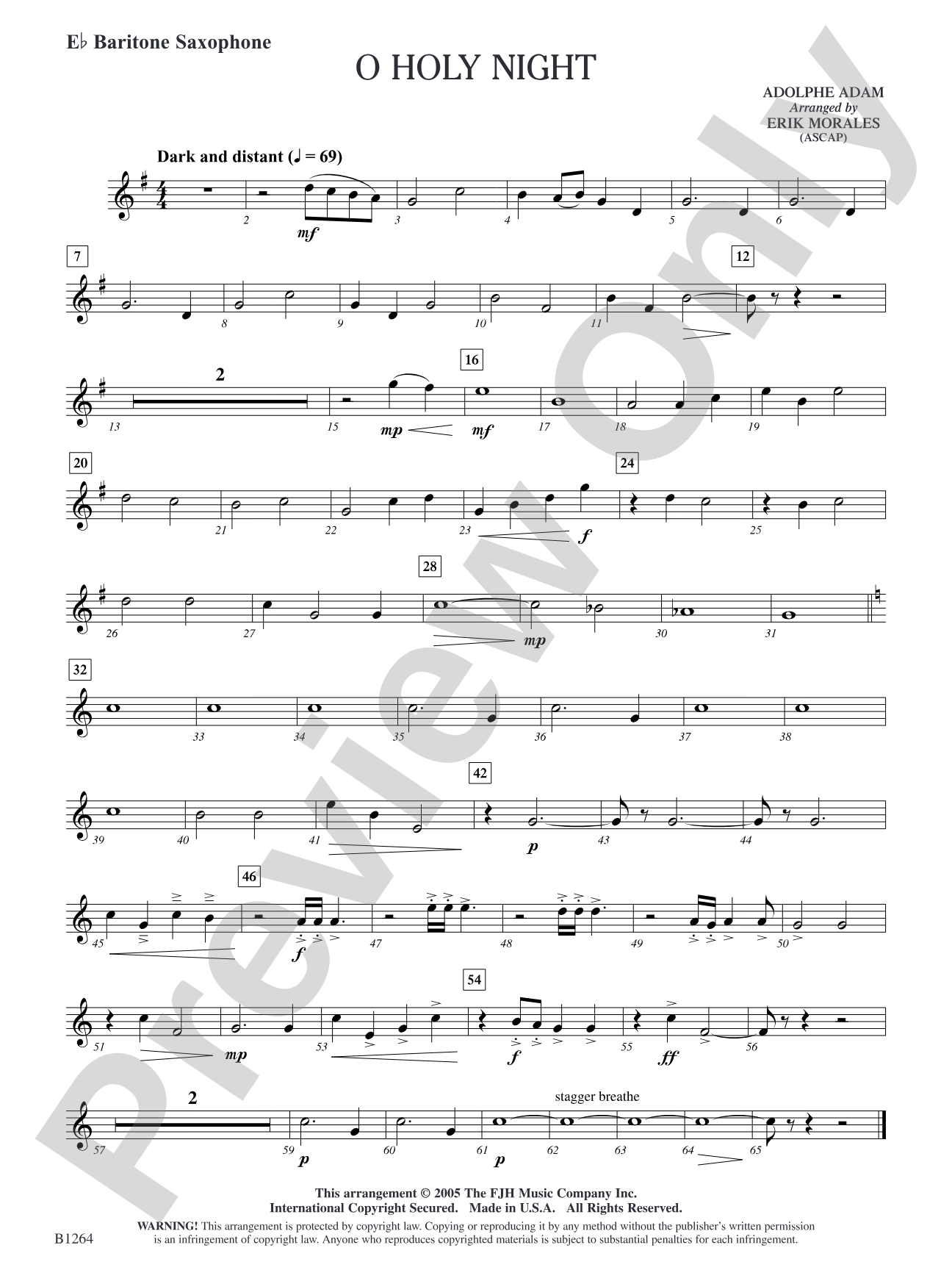

O Holy Night: E-flat Baritone Saxophone
By Adolphe Adam / arr. Erik Morales
Grade: 2.5
Item: 98-PC-DB1264_BTX
$7.00
Pickup currently not available
Description
This classic holiday composition by Adolph Adam is given a modern twist with the contemporary and sensitive arranging skills of Erik Morales. The piece builds throughout as it takes your audience on an emotional journey, highlighted by increasingly powerful fanfares in the winds and percussion. After a key change, the piece climaxes in dramatic fashion before returning to the opening ethereal material and the final sounds of sleigh bells heard offstage. This isn't just another holiday arrangement - this one will make memories!


O Holy Night: E-flat Baritone Saxophone isn't in MakeMusic Cloud just yet...but it could be. Let us know you'd like to see it, and you'll help shape what comes next. In the meantime, start a free trial and dive into thousands of interactive titles your students can play along with today.
Request This Title
Tell us you want it.
Start Your Free Trial
Explore everything that's ready to play right now.
Sample Audio
1
Audio File
--:--
0:00
0:00
Sample Video
No sample videos found.
Additional Details
Series:
FJH Young Band
Publisher:
The FJH Music Company, Inc.
SKU:
98-PC-DB1264_BTX
More about this title
About the Composer: Adolphe Adam
Adolphe Adam (1803-1856) was a French composer whose gift for melody and theatrical charm made him a dominant figure in 19th-century opera and ballet. He composed over 40 stage works, including the beloved ballet Giselle, which remains a cornerstone of classical dance repertoire. His ability to craft memorable, singable lines and orchestrate with clarity and warmth has kept his music alive in concert halls and rehearsal rooms for nearly two centuries.
In music education, Adam's work models the craft of accessible composition without sacrificing musical substance. His melodies reward both student performers and audiences, making pieces like O Holy Night ideal teaching vehicles for young musicians developing their sense of phrasing, dynamic control, and ensemble balance.
Why we love this
Erik Morales's arrangement preserves Adam's gift for melody while building genuine dramatic tension through orchestration rather than mere repetition. The architecture of the piece (opening serenity, building momentum through winds and percussion, key change, climax, and return) gives your band a clear emotional arc to play and your audience a complete listening experience. At Grade 2.5, it's sophisticated enough to challenge young musicians without requiring advanced technique, and the inclusion of offstage sleigh bells adds a memorable performance element that students will remember long after the holiday season passes.
What to expect
The piece opens with quiet, almost hymn-like beauty before gradually building emotional intensity through orchestration and fanfare gestures. When the key change arrives, the music shifts into dramatic, powerful territory; the climax feels genuinely earned rather than arbitrary. The return to the serene opening material provides reflection and closure, leaving audiences with a sense of both wonder and peace.
Who it's for
This arrangement serves young concert bands (Grade 2.5) that want to program substantial holiday repertoire without requiring advanced technical demands. It works equally well for holiday pops concerts, winter assemblies, or as a finale to a fall or winter concert that includes non-holiday repertoire.
How to get the most out of it
- Balance the opening ethereal material carefully; the piece's emotional power depends on restraint before the crescendo begins. Resist the urge to play loudly early on.
- Mark the increasing fanfares in winds and percussion as separate dynamic layers. These aren't all the same volume; each entrance should feel like a fresh wave of energy.
- Execute the key change with clear precision so the climax lands with full impact. Give yourself and the band a moment to settle before diving into the more powerful final section.
- Coordinate the offstage sleigh bells carefully during rehearsal. Practice their entrance and dynamics so they enhance rather than distract from the final return to the opening material.
How to use it
Program this as a holiday concert anchor or as the closing piece of a winter concert to send audiences out in a reflective mood. Its emotional arc also works well sandwiched between lighter holiday selections, giving the concert shape and variety. Consider pairing it with more uptempo or comedic holiday fare earlier in the program so the contrast heightens the impact of this arrangement's dramatic elements.
Skills your students will build
- Dynamic control across a wide range (quiet, ethereal passages to full climax)
- Phrasing and legato playing in the opening melody
- Ensemble balance when layering independent wind and percussion fanfares
- Responding to key change and shifting the ensemble's sound and intensity
- Coordination and attention in transitions, especially the final return to opening material