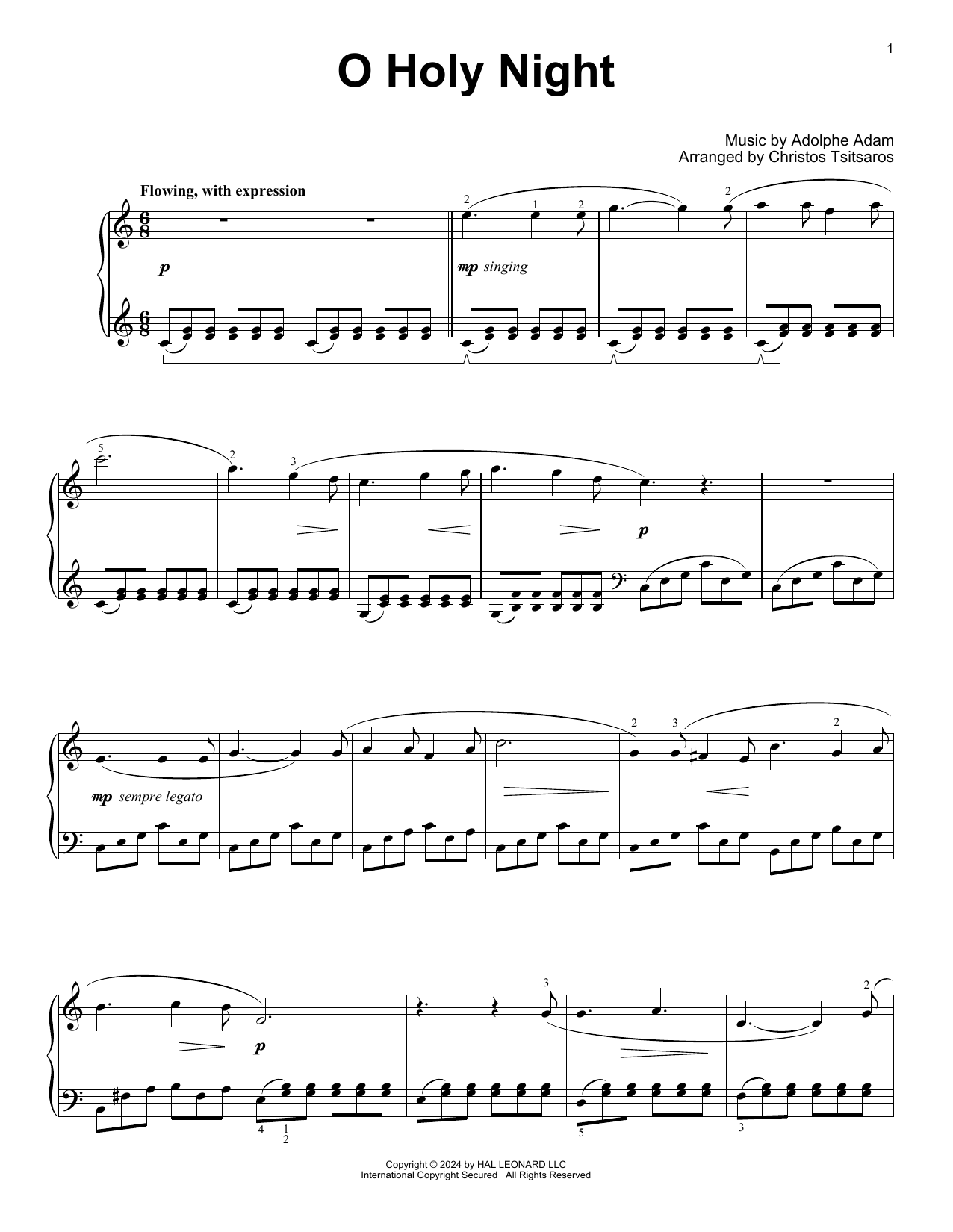
Christos Tsitsaros is a prolific composer and arranger whose work spans classical, educational, and contemporary idioms. His arrangements are known for their clarity of voice leading and sensitivity to the source material, making beloved standards accessible to pianists at multiple levels without sacrificing musical integrity.
Why we love this
Tsitsaros respects the melodic grandeur of this nineteenth-century masterwork while stripping away the vocal demands that make it daunting for solo pianists. The writing sits naturally under the hands, allowing students and adult hobbyists to experience the full emotional arc of the piece without wrestling with extreme technical demands.
What to expect
There is a quiet luminosity here. The arrangement preserves the hymn-like simplicity of the original melody while letting the harmony breathe with subtle sophistication. The experience of playing it feels contemplative rather than showy, devotional without being heavy.
Who it's for
This arrangement serves developing pianists who want meaningful repertoire beyond mechanical exercises, as well as adult students returning to the piano and seeking music with genuine emotional resonance. Teachers will find it ideal for students preparing holiday recitals or exploring sacred music traditions at an achievable technical level.
How to get the most out of it
Shape the melody with subtle dynamic swells rather than sudden changes; the voice lives best when it breathes naturally.
Resist rushing the harmonic progressions, especially in the middle sections. Space and breath transform this from a recitation into a meditation.
Pedal conservatively to preserve clarity in the accompaniment. Too much blur obscures the delicate harmony that anchors the piece emotionally.
How to use it
Consider placing this near the close of a holiday concert program, where its reflective quality offers a counterpoint to livelier seasonal fare. It also works beautifully as a standalone piece for winter recitals or as an accompaniment option for vocalists seeking a more intimate instrumental setting.
Skills your students will build
Voicing of triadic harmony in the left hand
Sustaining a singing melodic line while maintaining rhythmic independence below
Dynamic control and phrase shaping without excessive ornamentation
Pedal technique for harmonic resonance in the middle to upper registers
You May Also Like
Scan to Complete Your Purchase
Use your phone's camera to scan the code below
You'll log in on your phone and the order will be added to your account