
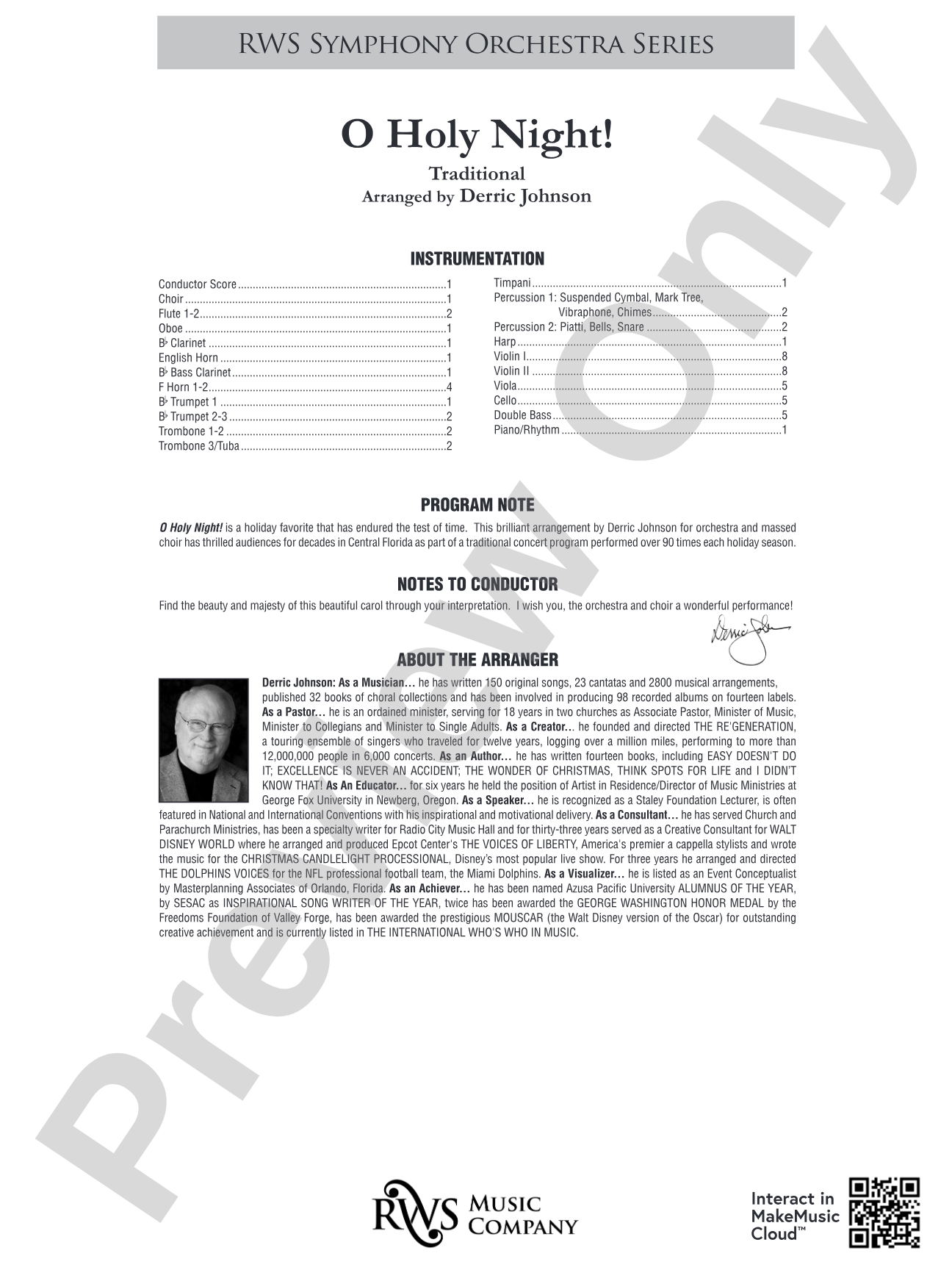
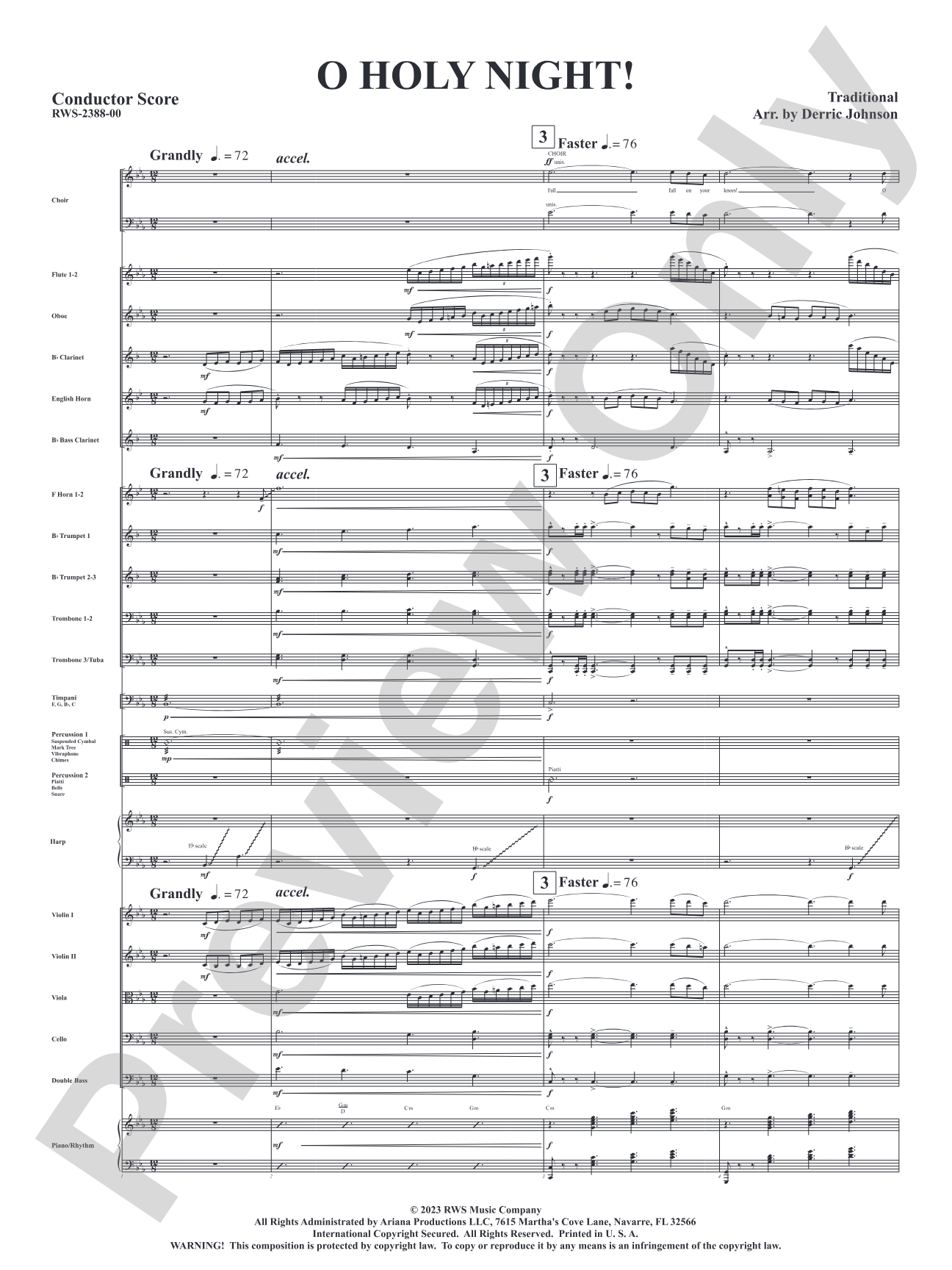
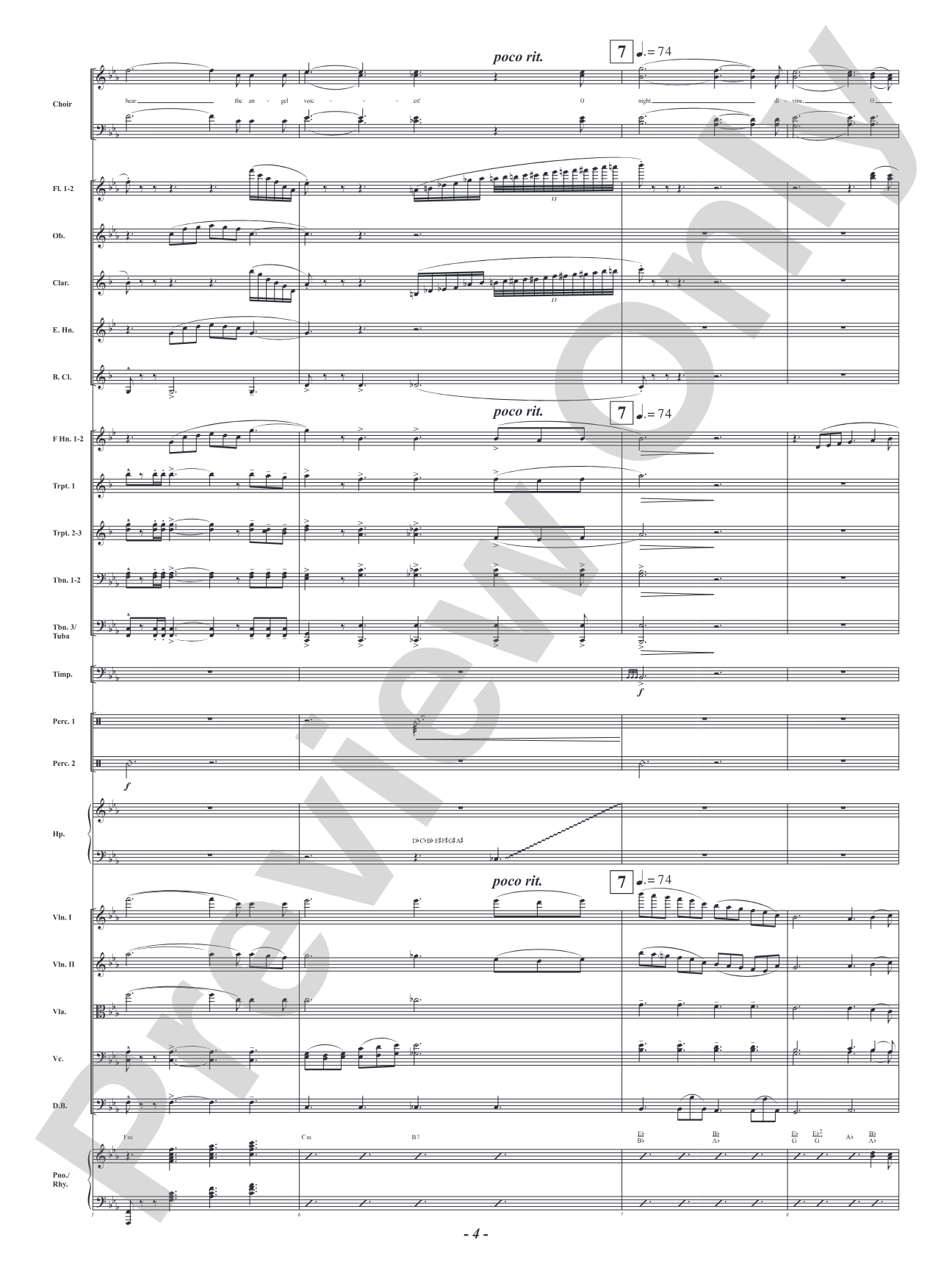
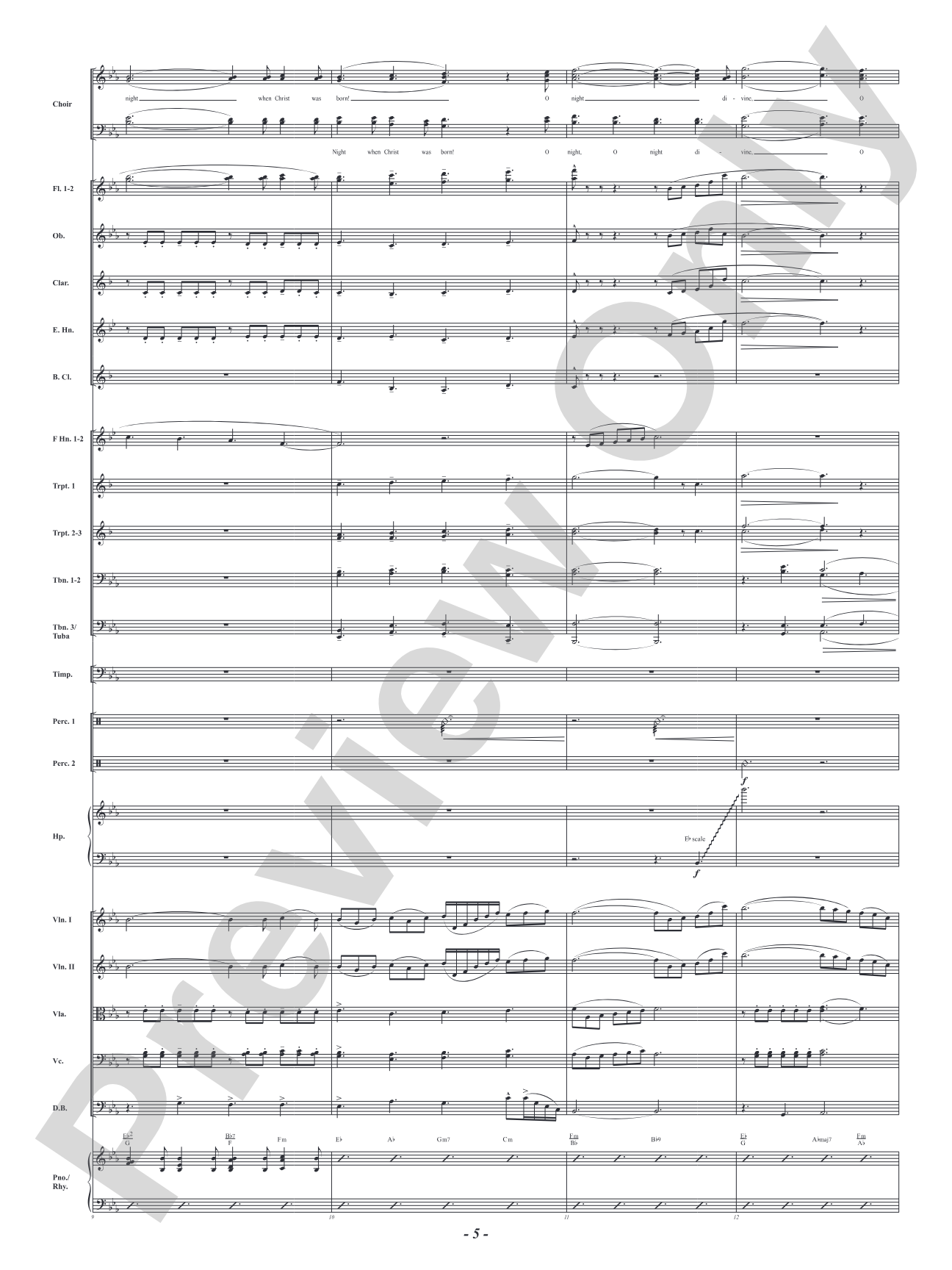
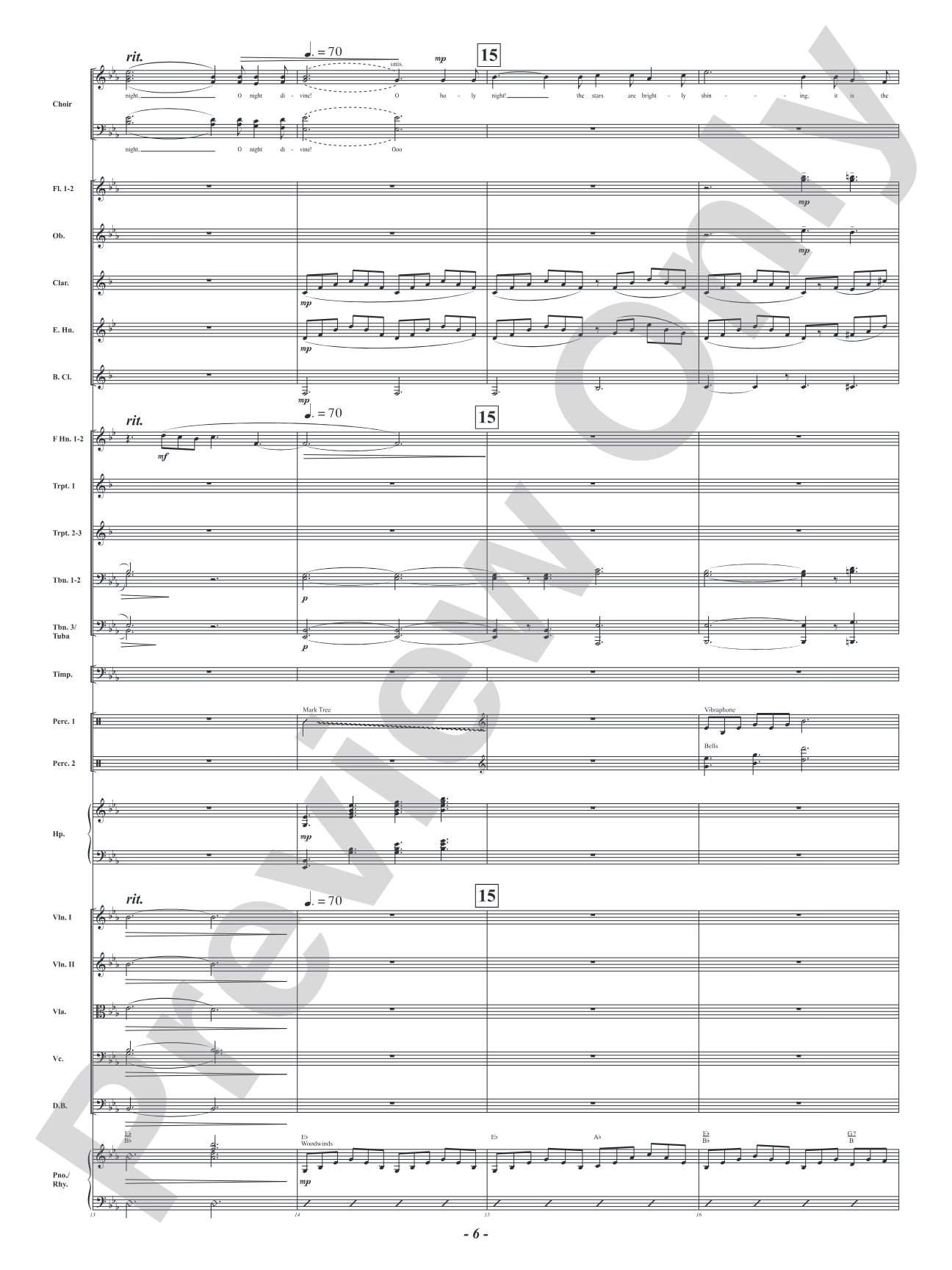
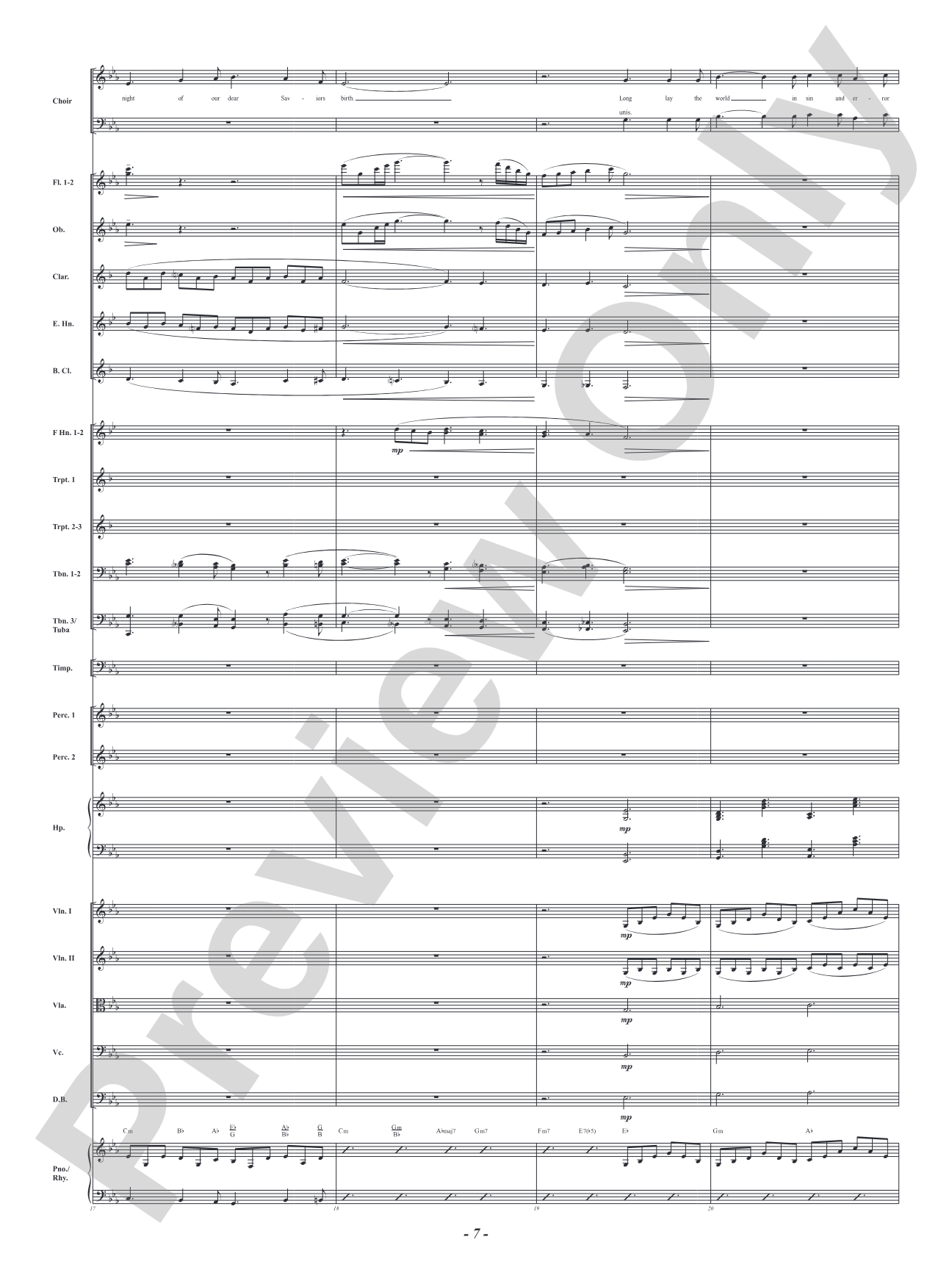
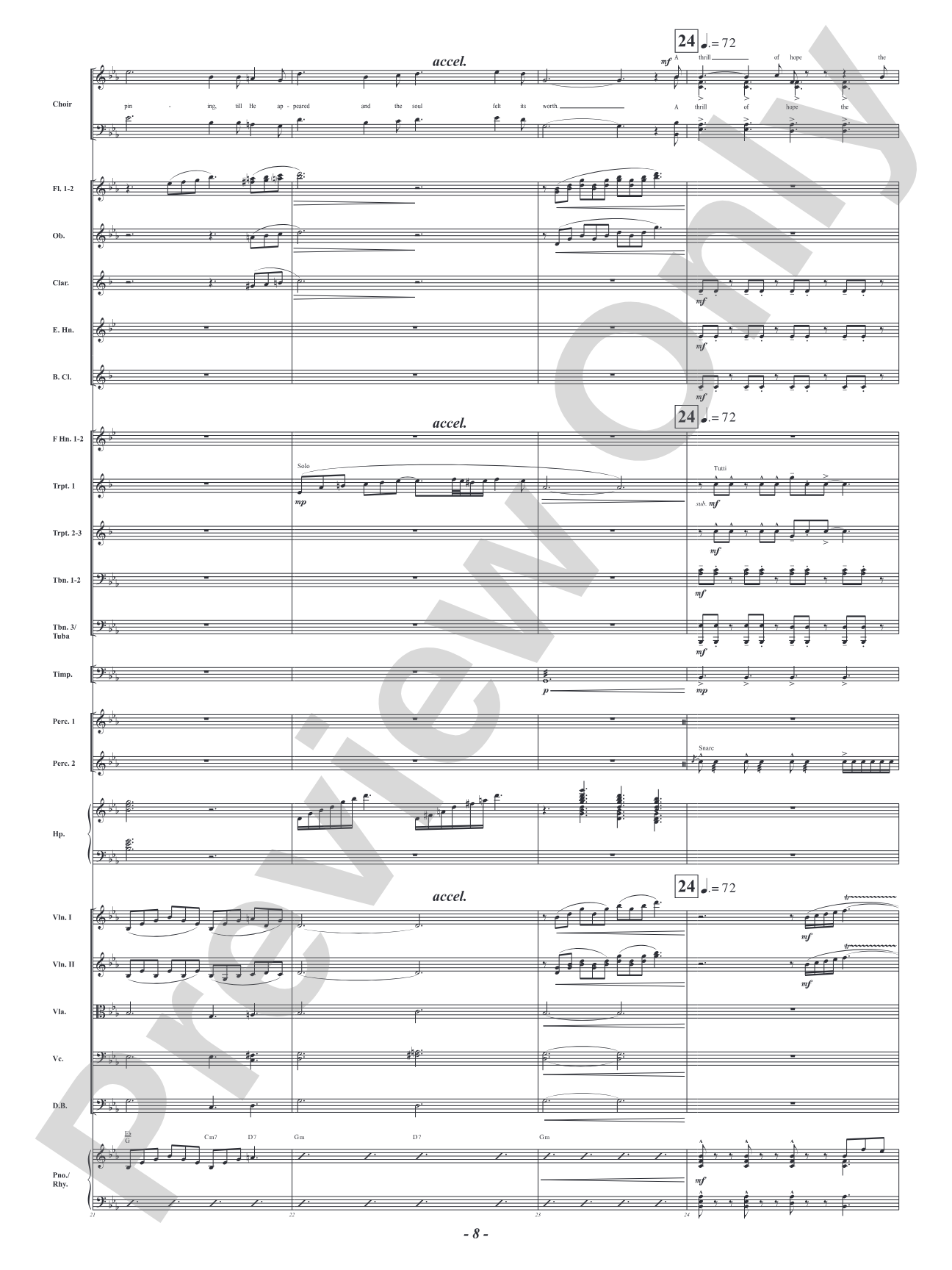
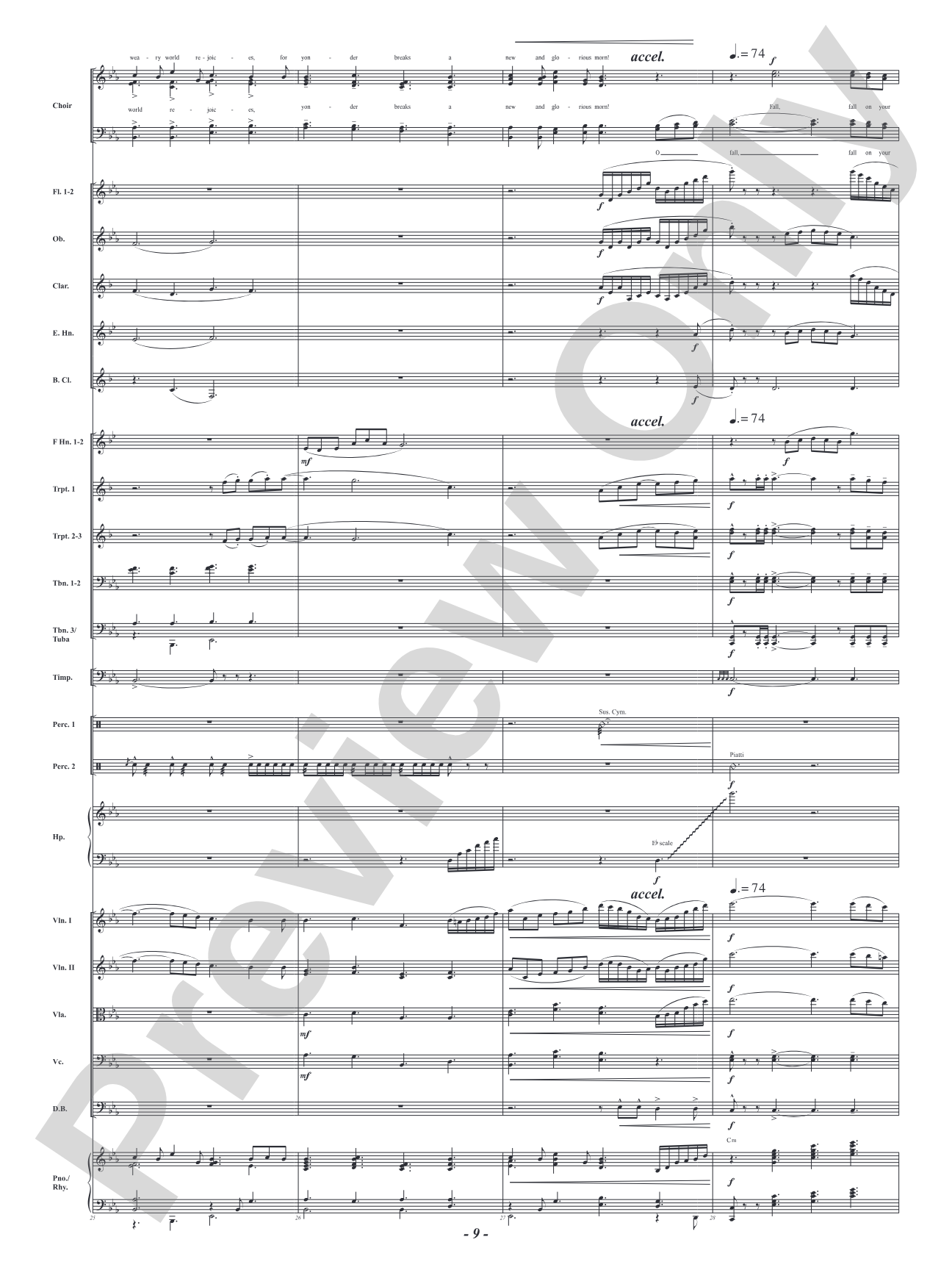
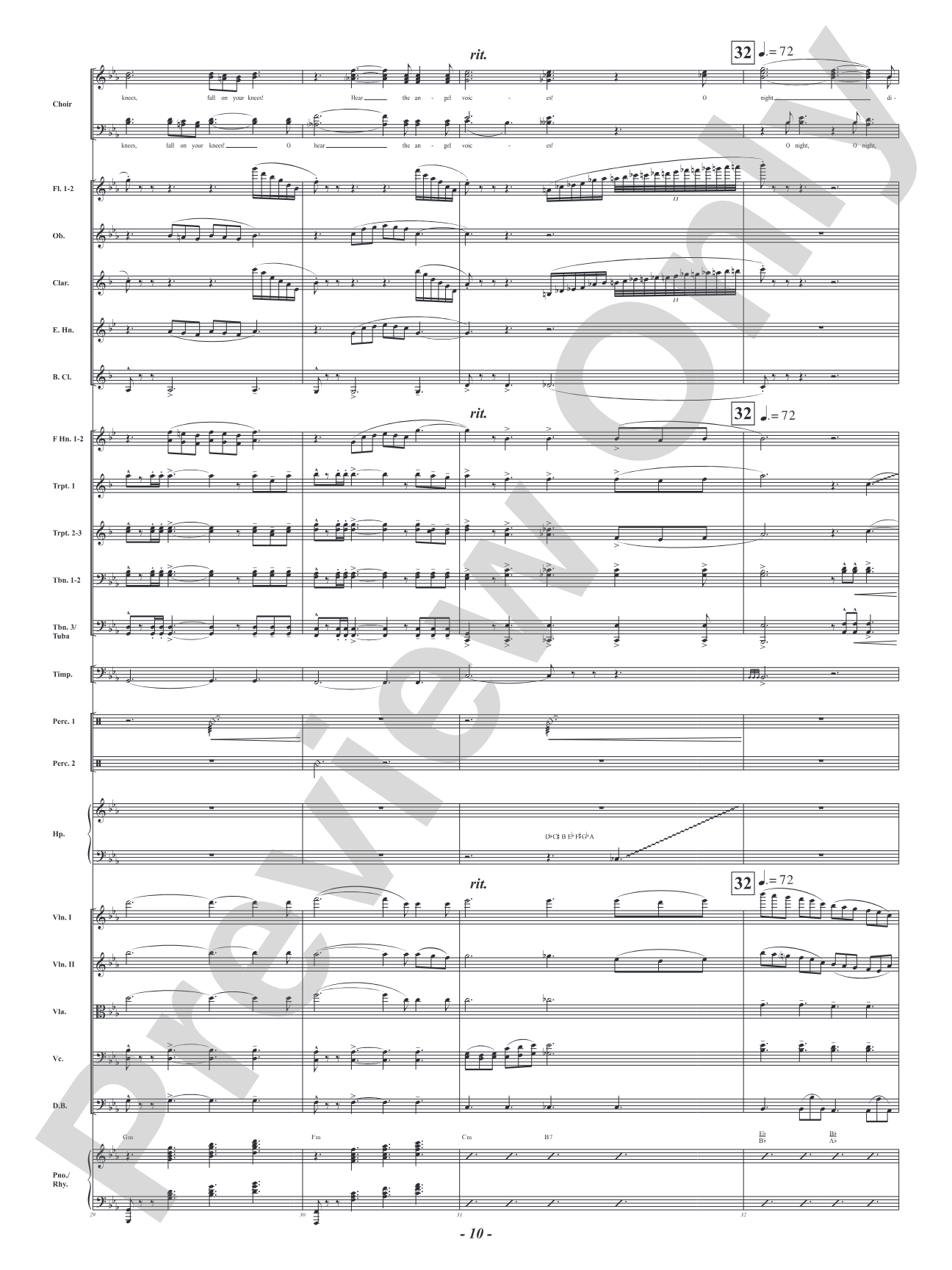
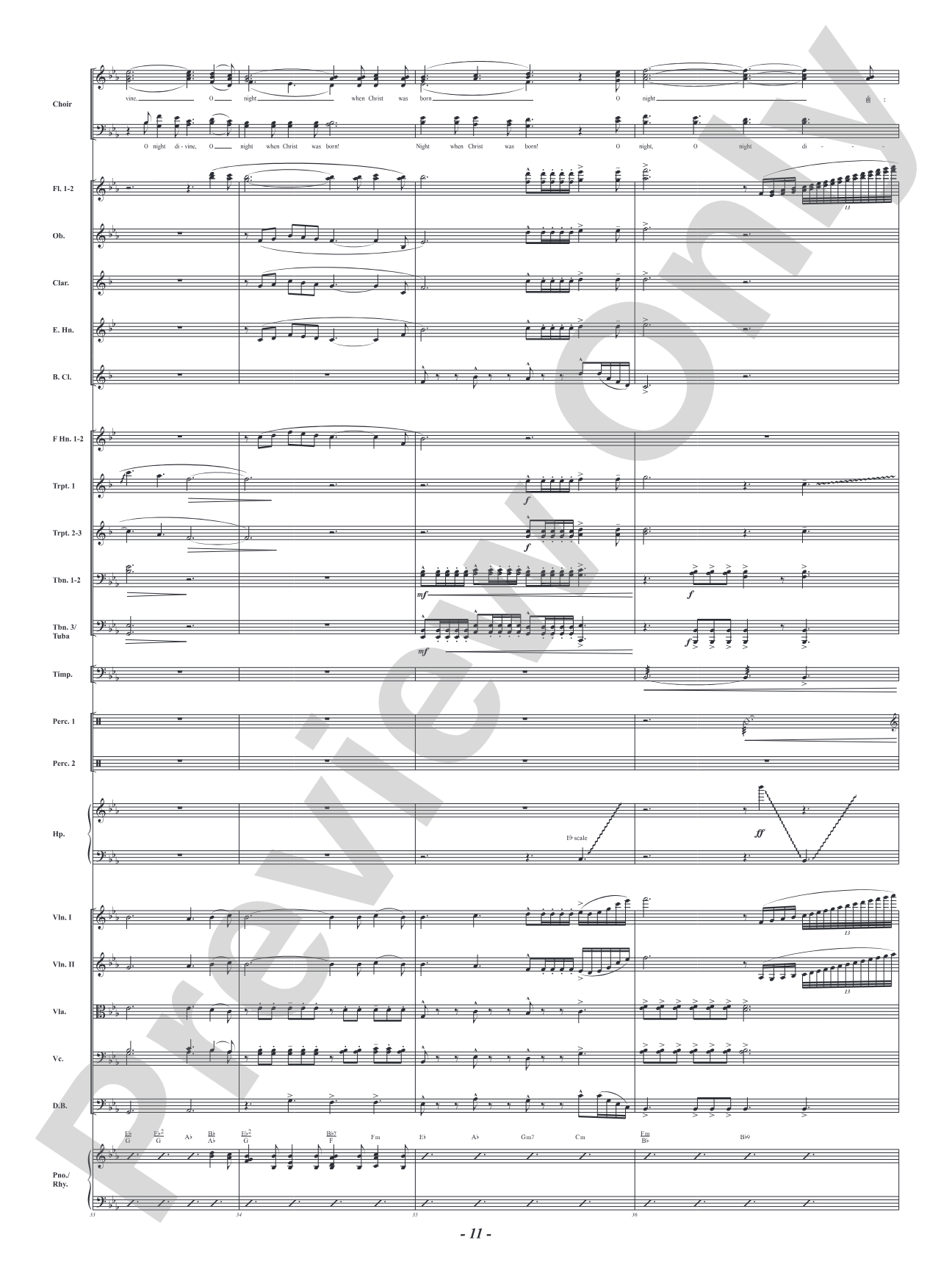
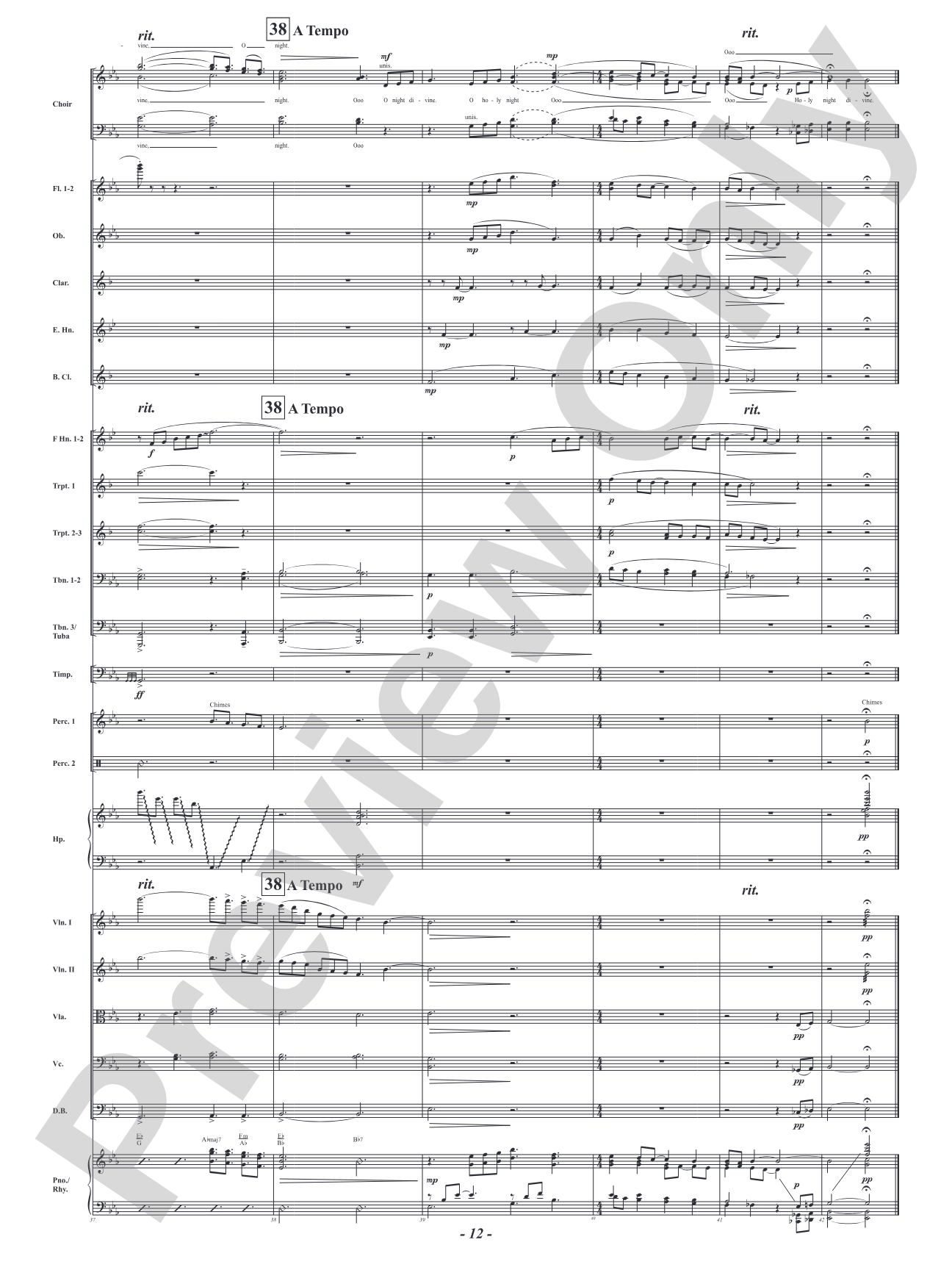

O Holy Night!: Full Orchestra Conductor Score & Parts
Arranged by Derric Johnson
Grade: 4.5
Item: 98-PK-RWS2388
$120.00
Pickup currently not available
Buy Extra Parts (Digital PDF Download)
| Product | Price | Quantity |
|---|---|---|
| O Holy Night!: Score | $15.00 | |
| O Holy Night!: Choir | $3.99 | |
| O Holy Night!: 1st & 2nd Flute | $3.99 | |
| O Holy Night!: Oboe | $3.99 | |
| O Holy Night!: 1st B-flat Clarinet | $3.99 | |
| O Holy Night!: English Horn | $3.99 | |
| O Holy Night!: Bass Clarinet | $3.99 | |
| O Holy Night!: 1st & 2nd F Horns | $3.99 | |
| O Holy Night!: 1st B-flat Trumpet | $3.99 | |
| O Holy Night!: 2nd & 3rd Trumpet | $3.99 | |
| O Holy Night!: 1st & 2nd Trombones | $3.99 | |
| O Holy Night!: Trombone 3/Tuba | $3.99 | |
| O Holy Night!: Timpani | $3.99 | |
| O Holy Night!: 1st Percussion | $3.99 | |
| O Holy Night!: 2nd Percussion | $3.99 | |
| O Holy Night!: Harp | $3.99 | |
| O Holy Night!: 1st Violin | $3.99 | |
| O Holy Night!: 2nd Violin | $3.99 | |
| O Holy Night!: Viola | $3.99 | |
| O Holy Night!: Cello | $3.99 | |
| O Holy Night!: String Bass | $3.99 | |
| O Holy Night!: Piano/Rhythm | $3.99 |
Parts Added to Cart!
Description
The traditional sacred holiday arrangement made famous by Derric Johnson is now available for your orchestra. Appropriate for holiday concerts and church Christmas programs, this beautiful setting is a perfect centerpiece for your holiday and celebration.
Original Item#: RWS-2388-00


Original Item#: RWS-2388-00
O Holy Night!: Full Orchestra Conductor Score & Parts isn't in MakeMusic Cloud just yet...but it could be. Let us know you'd like to see it, and you'll help shape what comes next. In the meantime, start a free trial and dive into thousands of interactive titles your students can play along with today.
Request This Title
Tell us you want it.
Start Your Free Trial
Explore everything that's ready to play right now.
Sample Audio
No sample audio found.
Sample Video
No sample videos found.
Additional Details
Series:
RWS - Symphony Orchestra
Publisher:
RWS Music Company
SKU:
98-PK-RWS2388
More about this title
About the Arranger: Derric Johnson
Derric Johnson is an accomplished arranger whose work has become standard repertoire in school and community orchestras across the country. His arrangements balance accessibility with musical substance, creating settings that engage both young players and audiences without sacrificing artistic integrity.
Why we love this
Derric Johnson's orchestration honors the emotional core of this beloved carol while giving your orchestra genuine material to sink their teeth into at a Grade 4.5 level. The arrangement strikes that rare balance between accessibility and musical substance, so your ensemble sounds polished without requiring soloists or specialized voices. It's a piece that feels like a real accomplishment to perform, not a simplification.
What to expect
Reverent and luminous, with the spacious simplicity of a carol set against full orchestral color. There's vulnerability in the melody paired with the warmth of ensemble support, creating a sense of quiet celebration rather than bombast.
Who it's for
Orchestra directors programming holiday concerts, church musicians needing a substantial orchestral arrangement, and ensembles at the intermediate-advanced level seeking repertoire that audiences recognize and musicians respect. This works equally well in academic and faith-based settings.
How to get the most out of it
- Shape the opening carefully to establish the tender, reverent mood before the fuller orchestration enters. This is not a rushing piece; allow rubato to breathe naturally.
- Balance the inner voices with attention to harmonic clarity. At this grade level, some players may be reading counterpoint for the first time; mark cues in the parts to anchor those lines.
- Coordinate the brass and woodwind transitions thoughtfully. These instruments carry the melody at different moments, and smooth handoffs will preserve the song's continuity.
- Let the strings sing. This arrangement gives them the lyrical spine of the carol, and a warm, sustained tone from the string section will elevate the entire sound.
How to use it
Program this as your centerpiece closing number for a holiday concert, where its spiritual elegance can anchor the second half. It also serves beautifully as a thoughtful addition to a winter celebration or church service, offering your orchestra a moment of genuine musical significance rather than obligatory seasonal filler.
Skills your students will build
- Balancing homophonic and polyphonic textures within a single arrangement
- Sustaining ensemble sound and intonation across a lyrical, rubato-driven piece
- Identifying and performing inner voice counterpoint
- Coordinating sectional entries and transitions across winds, brass, and strings
- Shaping a long-lined melody over multiple orchestral colors