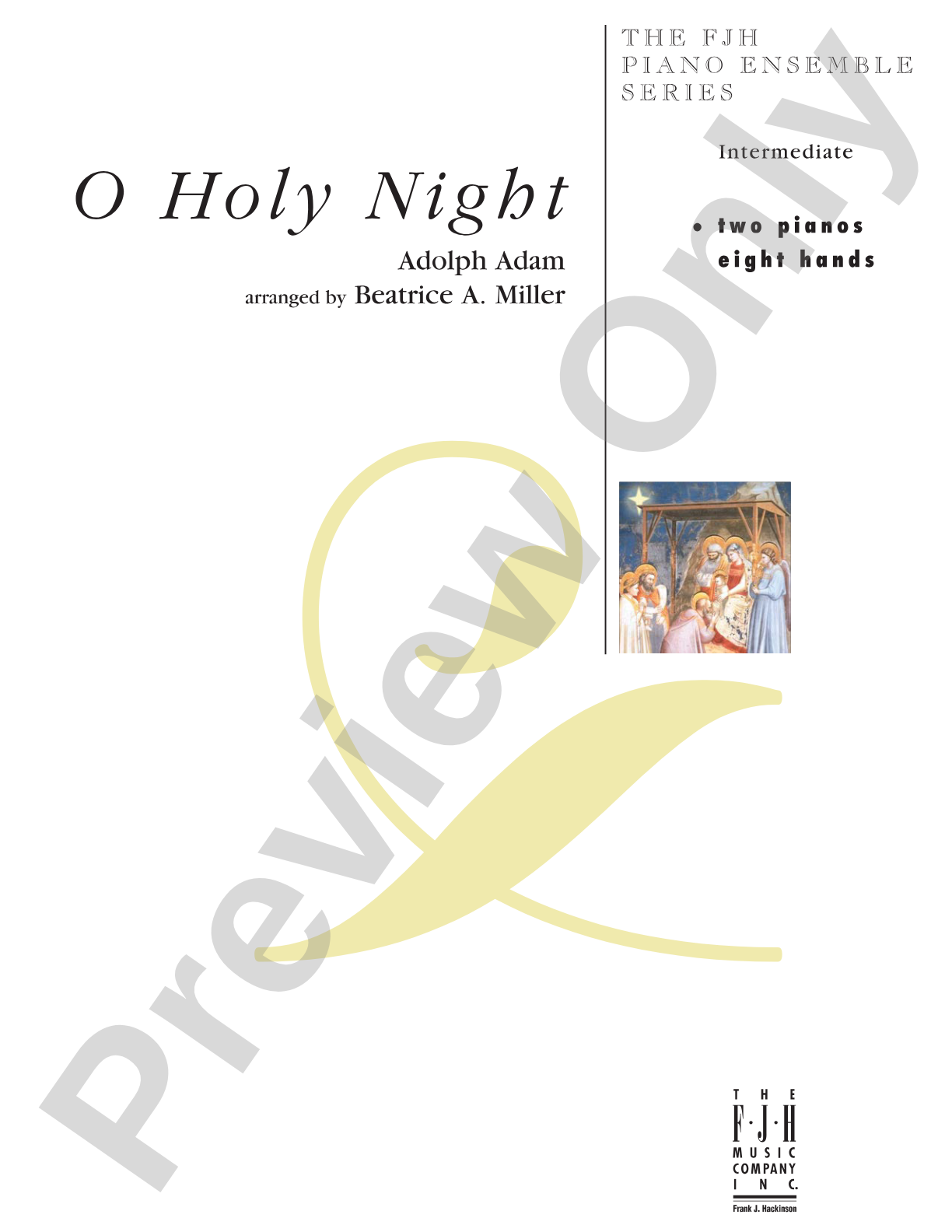
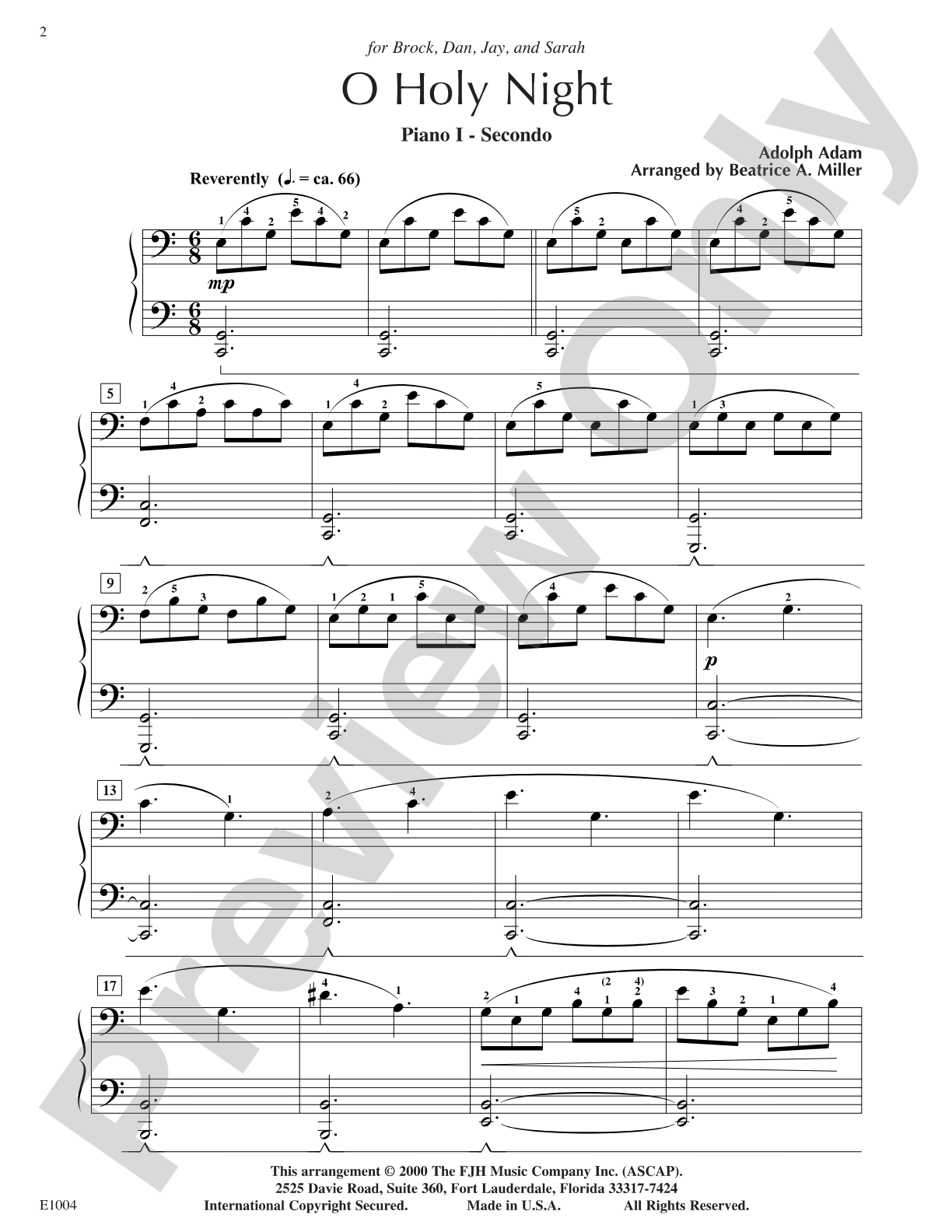
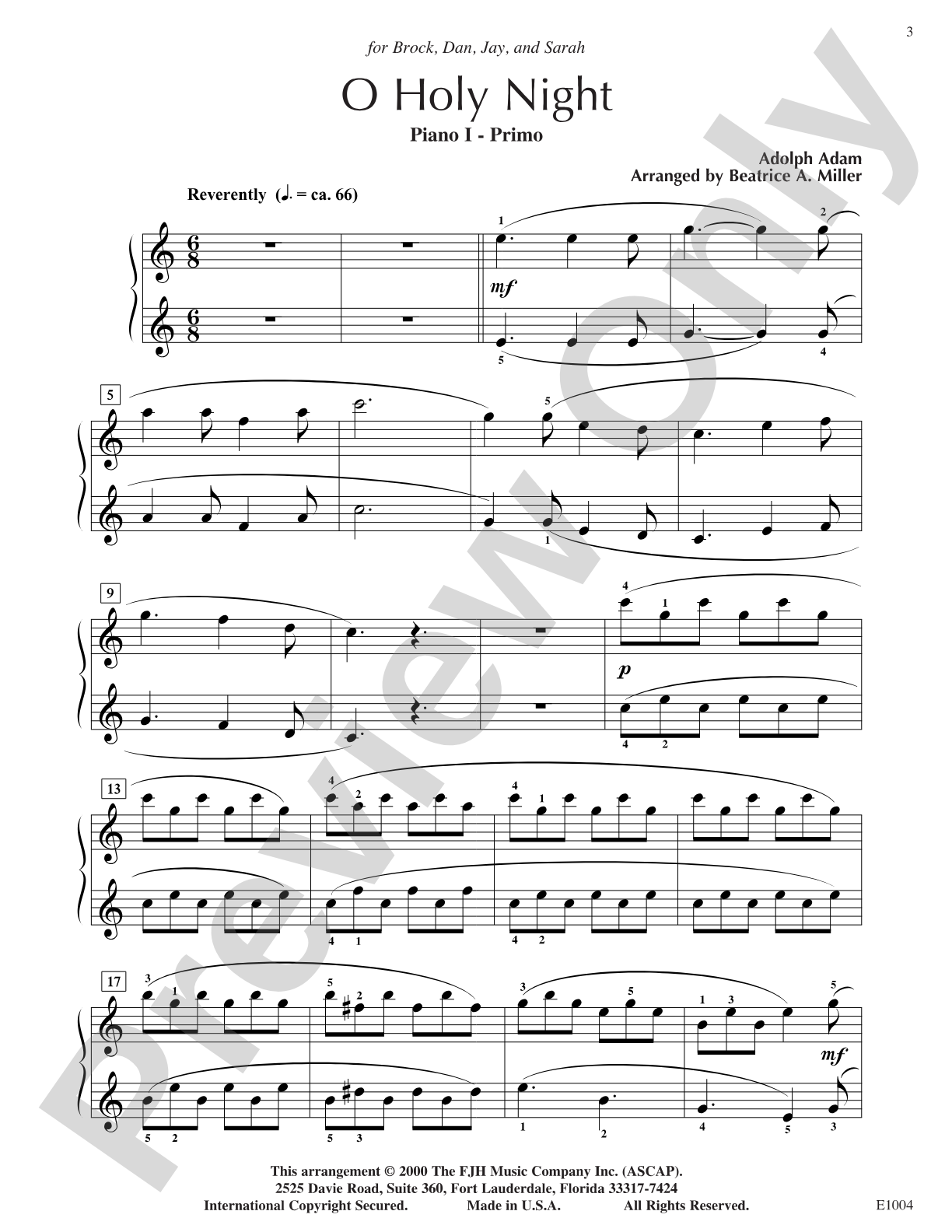
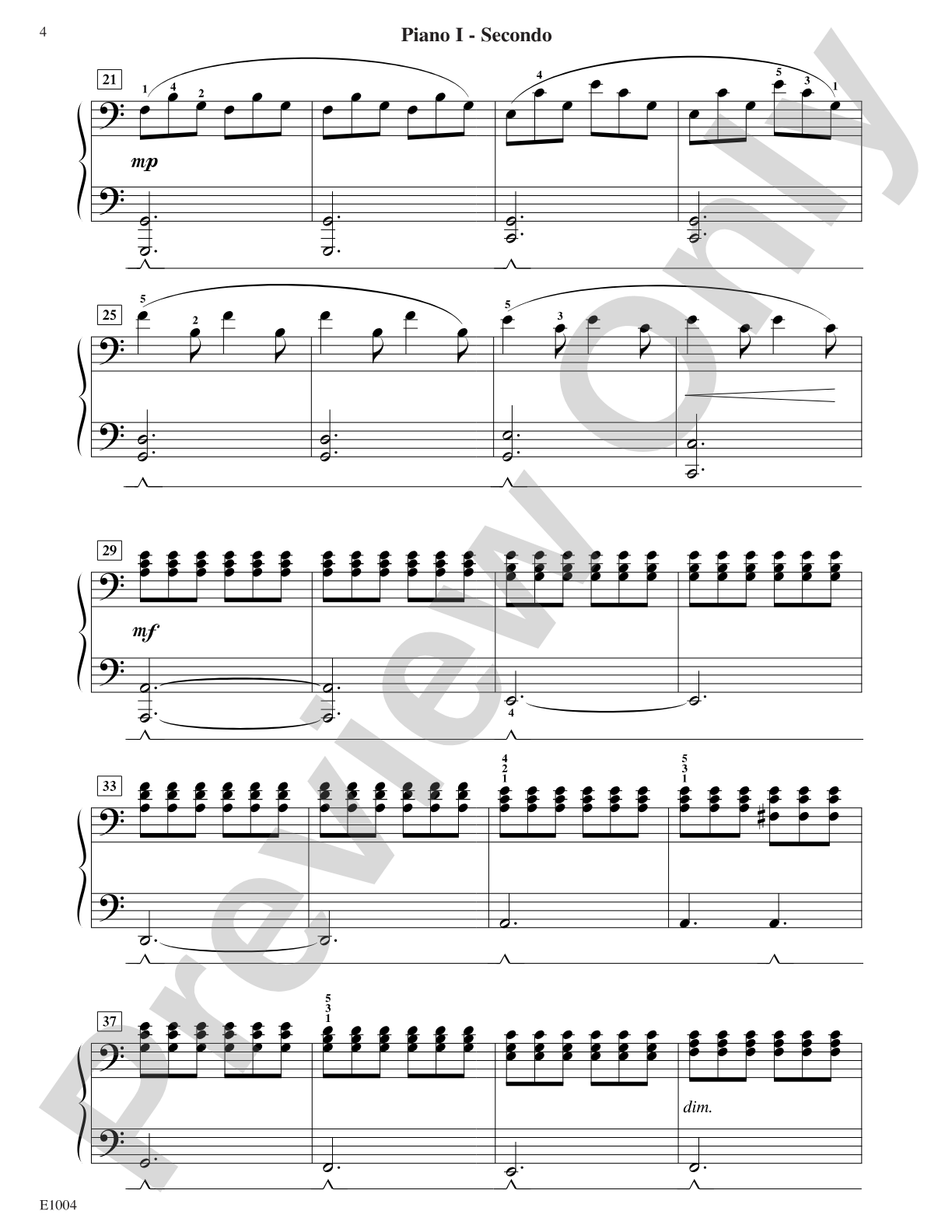
Adolph Adam (1803-1856) was a French composer who mastered the art of accessible melody and direct emotional expression. His prolific output spanned operas, ballets, and sacred music, all characterized by tunefulness and clarity. Adam's gift for writing music that speaks to both trained musicians and general audiences made his work durable across performance contexts, from concert halls to churches.
Why we love this
Beatrice A. Miller's arrangement cuts through the orchestral weight of the original and places the melody squarely in the hands of two pianists, where its contours become impossible to ignore. The duo format creates natural opportunities for one player to shape the vocal line while the other provides sensitive harmonic support, making this an excellent vehicle for teaching ensemble listening and interdependence at the intermediate level.
What to expect
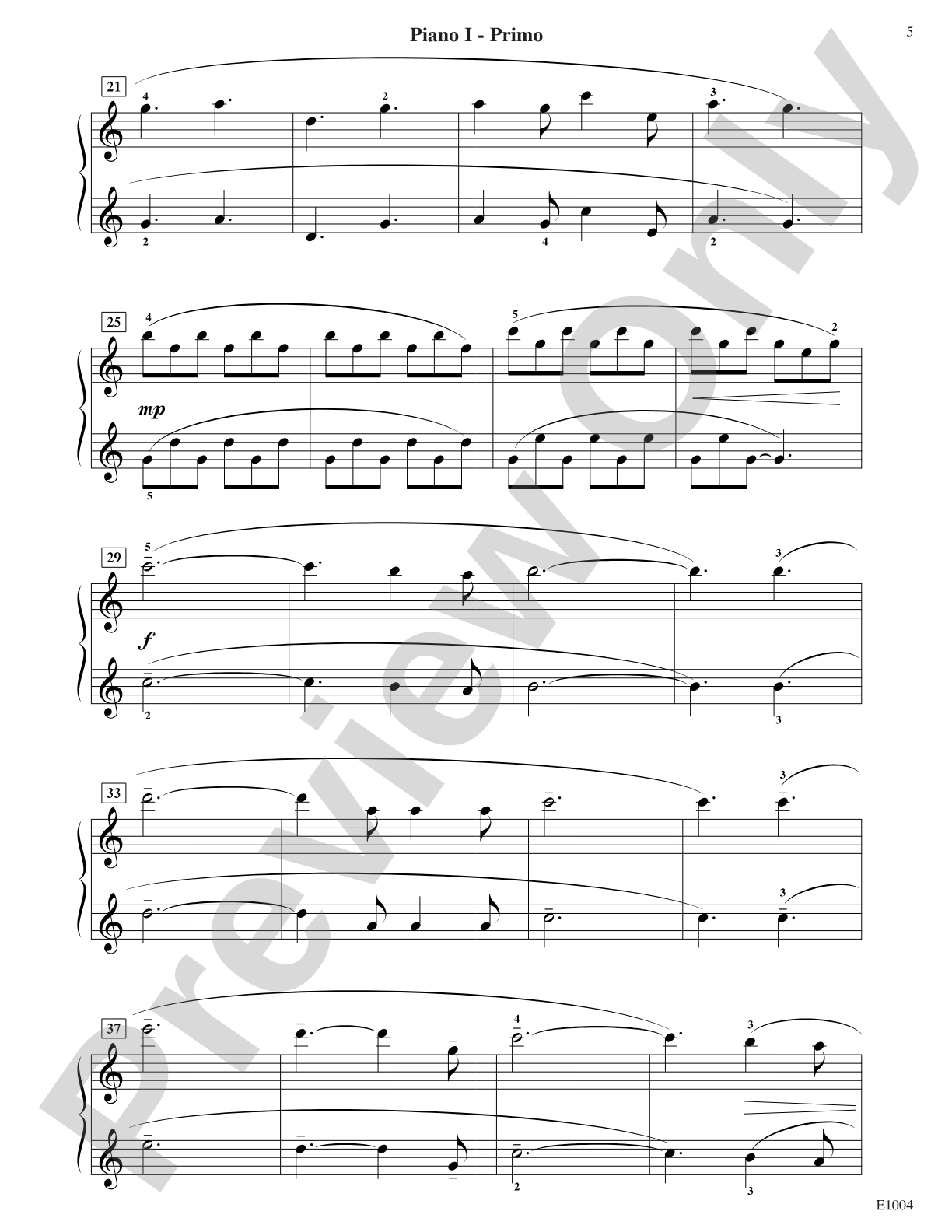
The carol emerges with quiet dignity, its familiar melody unfolding in the upper staff while the lower part weaves in harmonic texture and gentle movement. There is an intimacy here that the full orchestral version cannot achieve, an invitation to listen closely to every phrase turn and dynamic shift.
Who it's for
This duo arrangement serves intermediate pianists who have developed independent hand coordination and can manage the rhythmic independence required of ensemble playing. It works equally well for church musicians seeking accessible Christmas repertoire and for studio teachers building their students' collaborative skills.
How to get the most out of it
Establish clear leadership between the two parts before rehearsing together. Decide which player carries the primary melodic responsibility in each section, then swap roles in passage work to build awareness of the supporting role's importance.
Shape the phrase contours using dynamic variation within the marked ranges rather than stepping to the next dynamic level. Subtle shifts in tone color and weight will read as phrasing without sounding mannered.
Balance requires frequent calibration. Record yourselves and listen for moments where the accompaniment obscures the melody, then adjust hand position and finger weight accordingly.
How to use it
Program this during a Christmas service or concert where you want a purely instrumental take on the carol, allowing the melody to breathe without text. The intermediate level makes it accessible for church pianists while still offering musical substance; pair it with vocal arrangements of the same tune for an effective thematic pairing across your program.
Skills your students will build
Dynamic control and balance in duo textures
Phrasing by ear through sensitive listening to a partner
Rhythmic independence and ensemble synchronization
Shaping a cantabile melodic line across hand positions
You May Also Like
Scan to Complete Your Purchase
Use your phone's camera to scan the code below
You'll log in on your phone and the order will be added to your account