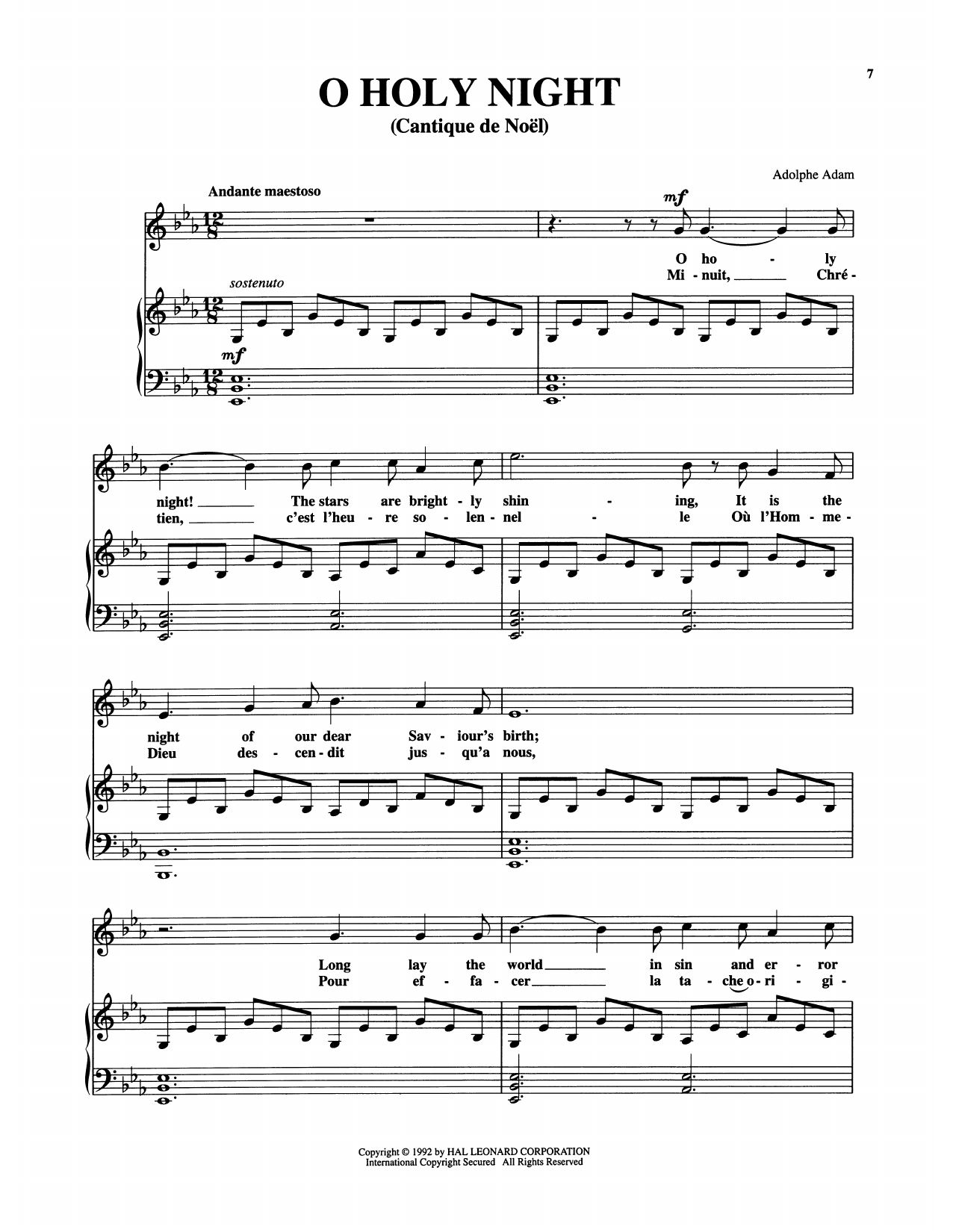
O Holy Night Sheet Music Preview

O Holy Night: Piano Vocal

As performed by John S. Dwight (trans.)

Item: 35-DS01822009

Digital Download
$5.99
Description

O Holy Night: Piano Vocal isn't in MakeMusic Cloud just yet...but it could be. Let us know you'd like to see it, and you'll help shape what comes next. In the meantime, start a free trial and dive into thousands of interactive titles your students can play along with today.

Sample Audio
No sample audio found.
Sample Video
Additional Details
Publisher: Hal Leonard
Page Count: 11
SKU: 35-DS01822009

More about this title

About the Artist: John S. Dwight (trans.)

John S. Dwight (1813-1893) was an American music critic, translator, and cultural advocate who shaped American musical taste in the mid-19th century. His translation of Adolphe Adam's "Cantique de Noël" into English as "O Holy Night" became the definitive version performed in American churches and concert halls, introducing this beloved carol to generations of English-speaking singers.

Dwight's work as a translator extended beyond this single carol; he was instrumental in bringing European classical music and sacred texts to American audiences at a time when such resources were scarce. His gift for capturing both the emotional depth and singability of translated lyrics made his versions endure long after other translations faded from use.

Why we love this

This arrangement respects the song's emotional arc without overshadowing the vocalist. The piano writing provides harmonic richness and dramatic support that lets a skilled singer shine, making it equally suitable for a concert soloist or a featured moment within a holiday service. Dwight's English text flows naturally and remains the standard by which all other English versions are measured.

What to expect

Reverent and achingly beautiful, with moments of genuine vulnerability. The piano accompaniment moves between intimate warmth and sweeping grandeur, creating space for the voice to convey both the wonder and the tender intimacy of the text.

Who it's for

Soprano soloists with solid technique and interpretive maturity will find this arrangement rewarding, as well as mezzo-sopranos comfortable in the high voice tessitura. This works beautifully in concert settings, holiday services, or as a special solo within a larger choral program.

How to get the most out of it

  • Shape the opening phrases with restraint. The melody's power comes from its simplicity, so resist the urge to add vibrato or ornamentation in the first verse.
  • Coordinate the vocal phrasing with the piano's harmonic shifts, particularly around key changes, to ensure the accompaniment feels like a partner rather than a backdrop.
  • Use the middle verse (around page 6-7 based on the 11-page length) to build intensity gradually, allowing the return to the original melody to feel like a genuine emotional return rather than a repetition.
  • Balance the lower register of the piano part so it supports without muddying the vocal line, especially important in passages where both voices occupy similar ranges.

How to use it

Position this as a late-program selection on a holiday concert, allowing its emotional weight to serve as a moment of reflection rather than festive energy. It pairs naturally with other sacred carols but stands powerfully on its own as a featured solo within a choral concert or service.

Skills your students will build

  • Sustained legato singing across long phrases
  • Dynamic control and emotional storytelling in a solo setting
  • Coordination between vocal phrasing and piano accompaniment
  • Interpretation of a text-heavy, narrative-driven melody

You May Also Like