

O Holy Night: String Orchestra Conductor Score & Parts
By Adolphe Charles Adam / arr. Jeffrey E. Turner
Grade: 3
Item: 00-PK-0005707

$46.00
Pickup currently not available
Buy Extra Parts (Digital PDF Download)
| Product | Price | Quantity |
|---|---|---|
| O Holy Night: Score | $9.00 | |
| O Holy Night: 1st Violin | $7.99 | |
| O Holy Night: 2nd Violin | $7.99 | |
| O Holy Night: 3rd Violin (Viola [TC]) | $7.99 | |
| O Holy Night: Viola | $7.99 | |
| O Holy Night: Cello | $7.99 | |
| O Holy Night: String Bass | $7.99 | |
| O Holy Night: 1st Percussion | $7.99 |
Parts Added to Cart!
Description
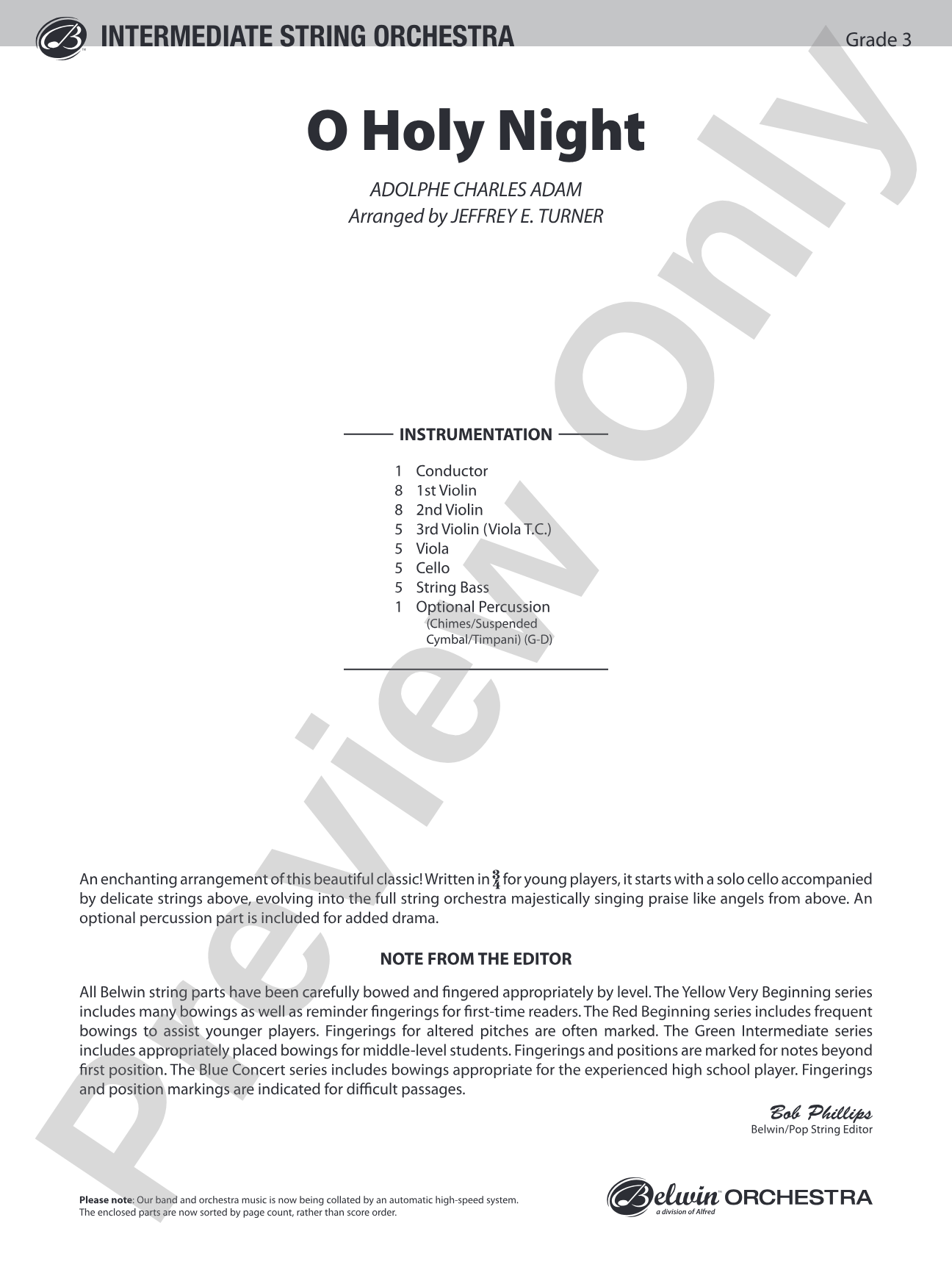
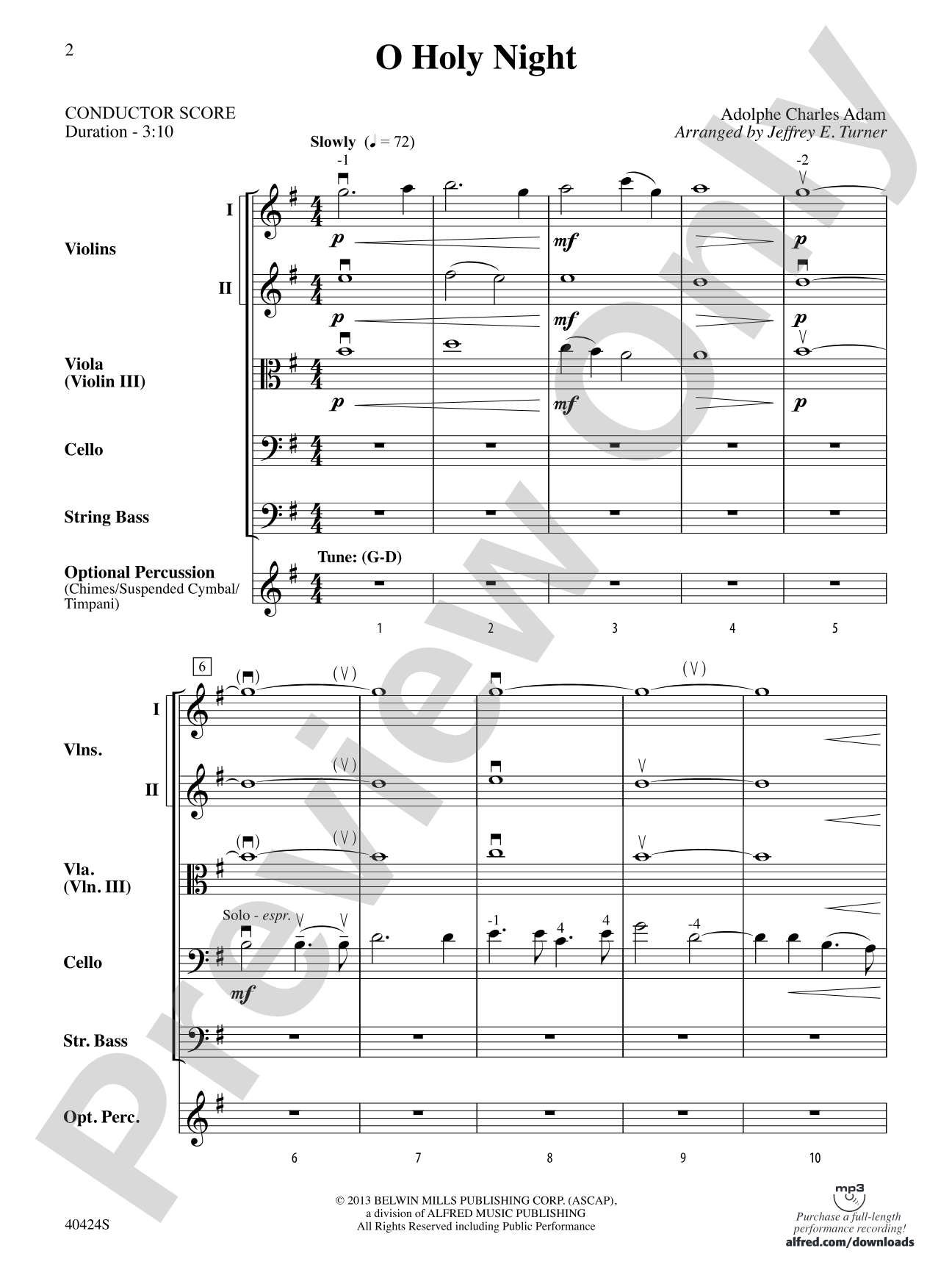
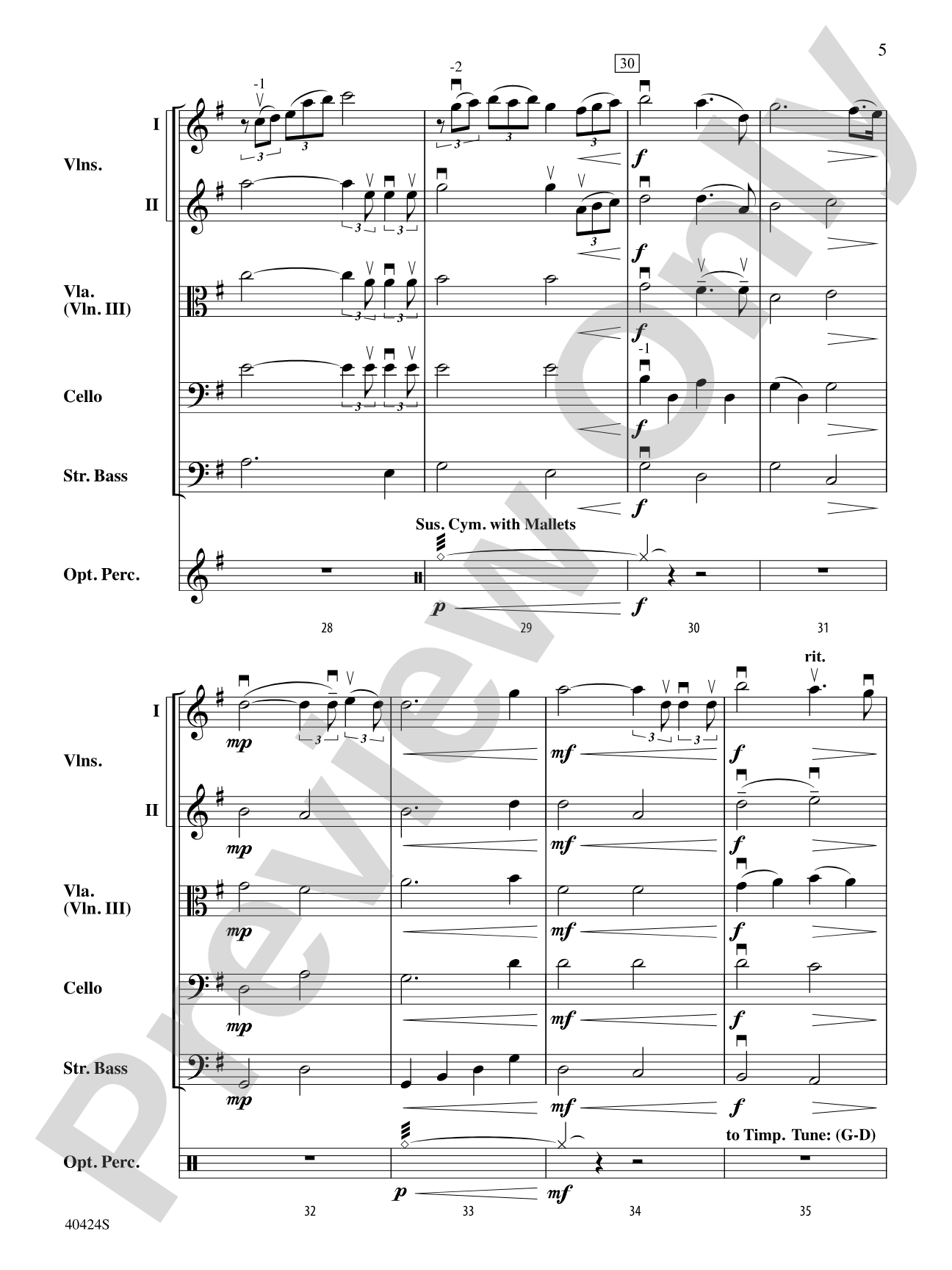
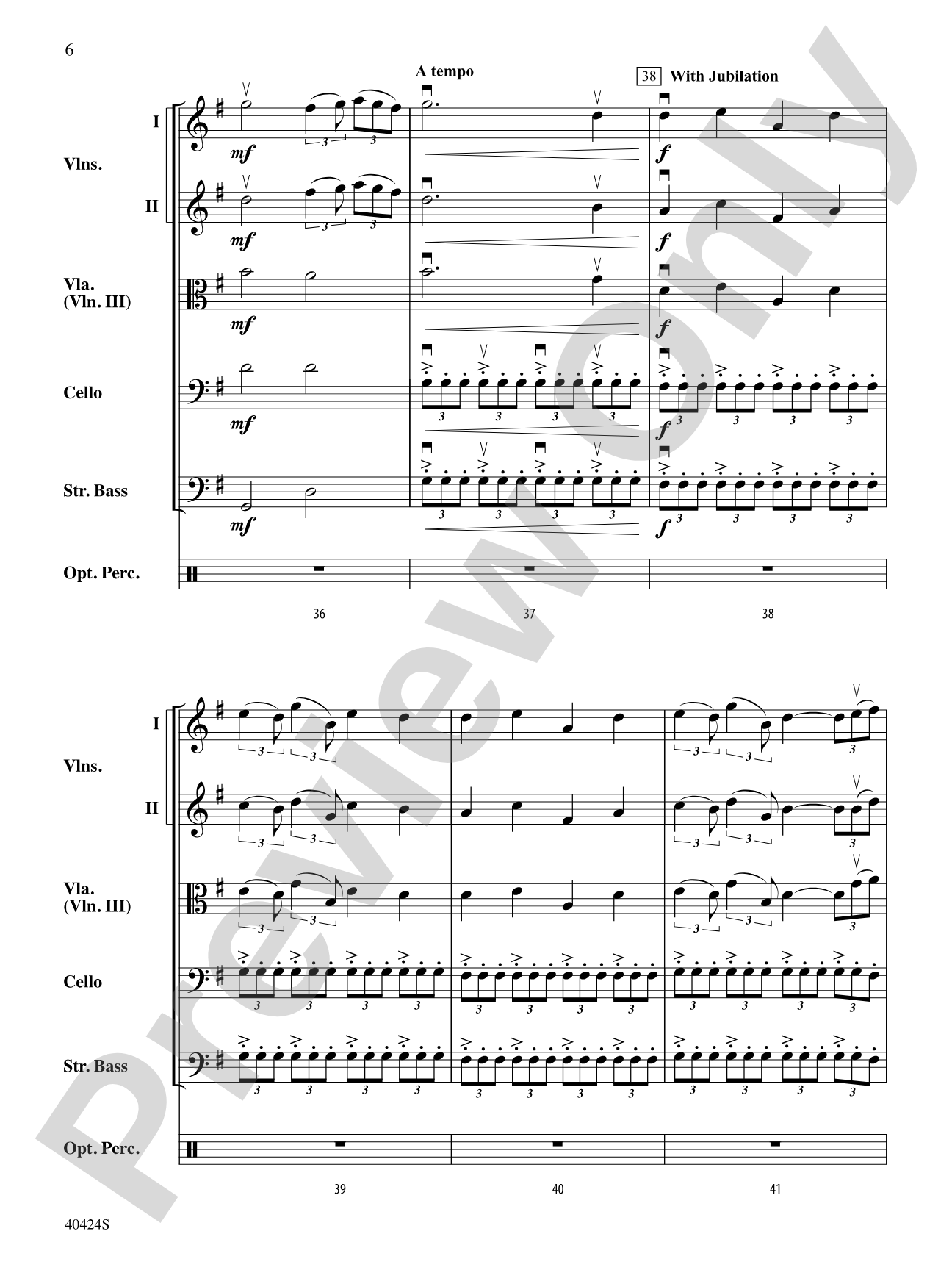
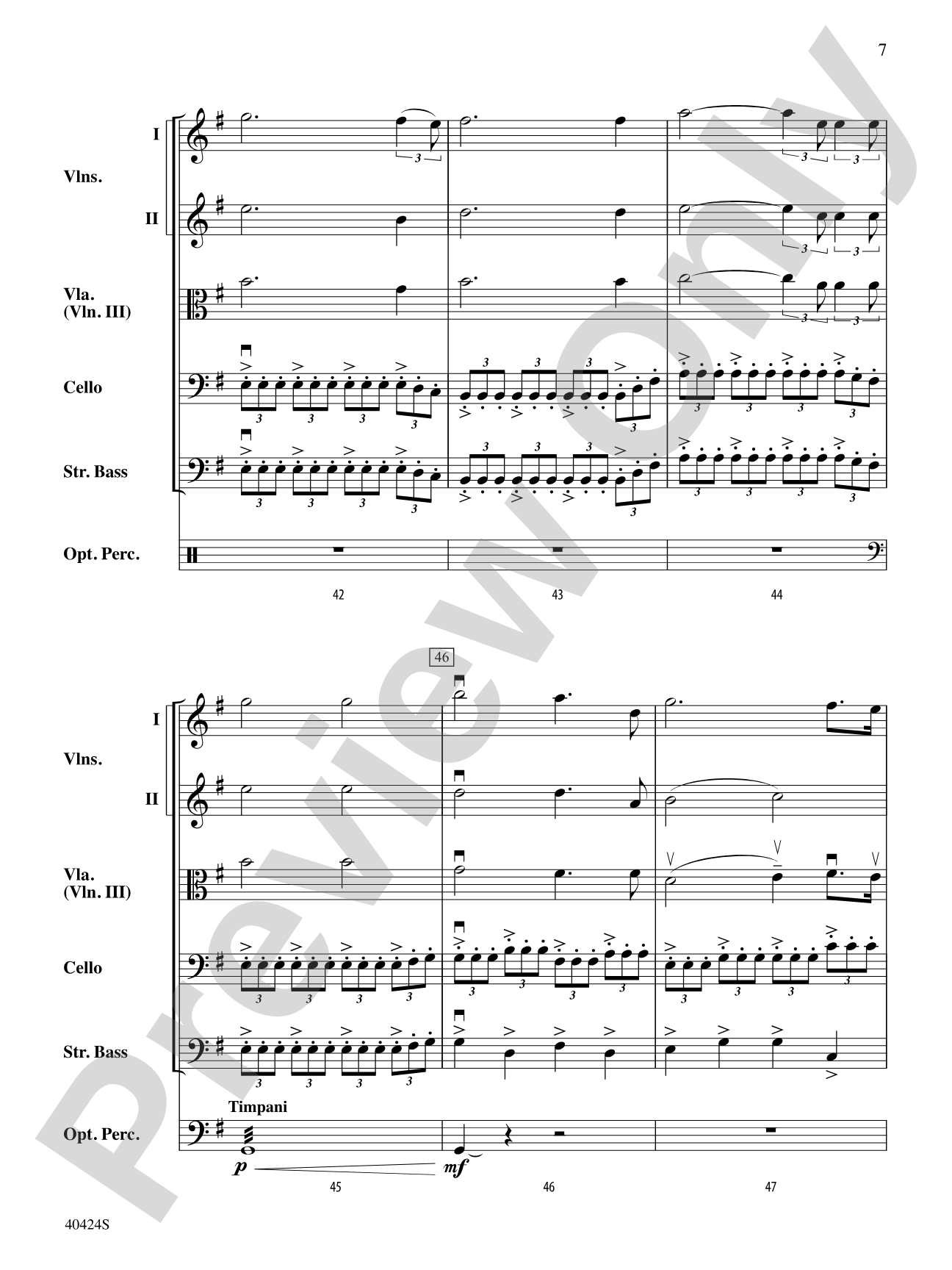
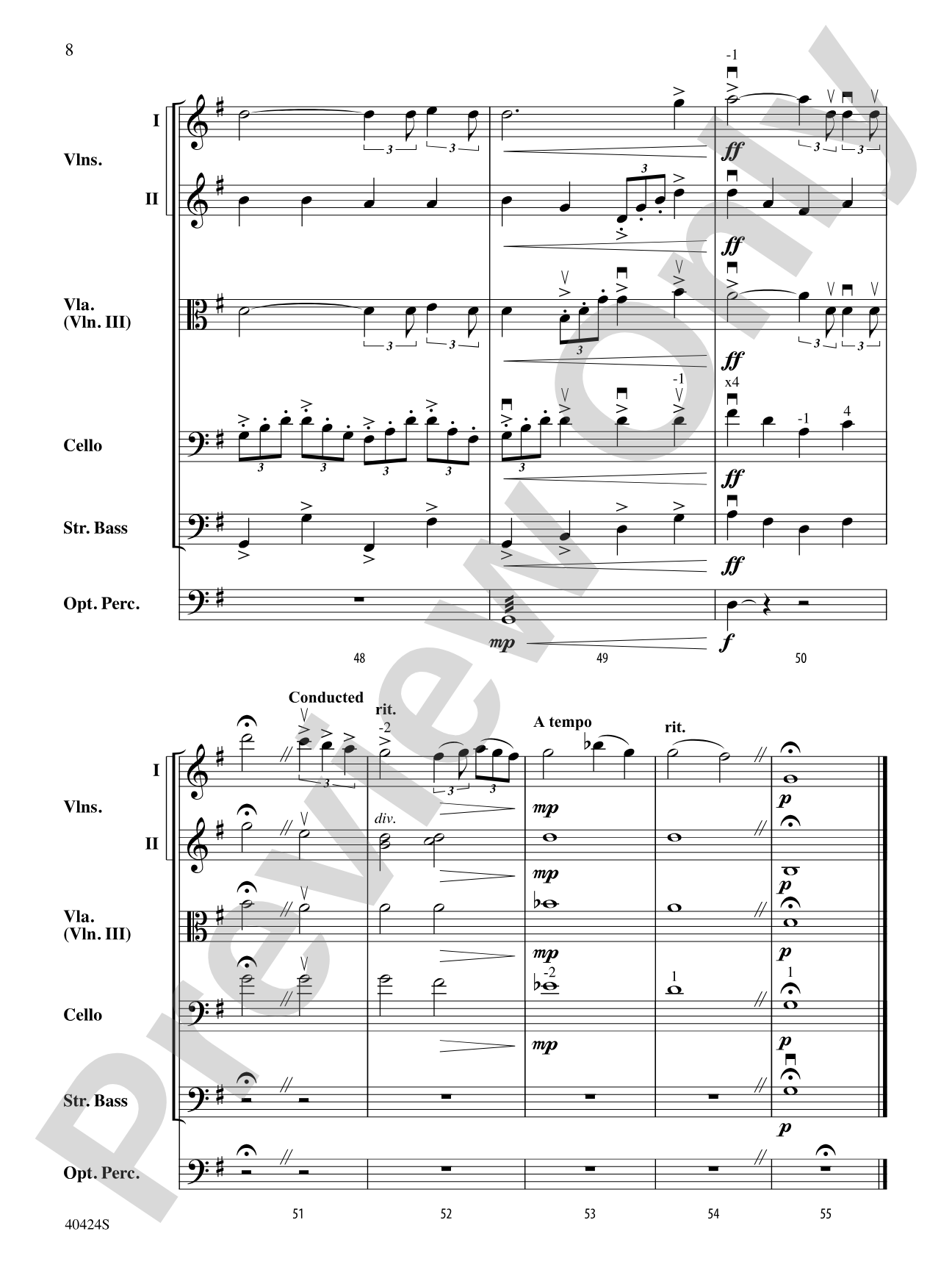
An enchanting arrangement of this beautiful classic! Written in 4/4 this work starts with a solo cello accompanied by delicate strings above, evolving into the full string orchestra majestically singing praise like angels from above. An optional percussion part is included for added drama.


Don't just read it, hear it, play along with it, and watch your students grow with it. In MakeMusic Cloud, O Holy Night: String Orchestra Conductor Score & Parts comes alive with professional accompaniment, adjustable tempo, and built-in practice tools that turn solo practice into real progress.
Open in the Player
Jump straight in and assign it today.
Start Your Free Trial
Open this title and explore the full library in minutes.
Sample Audio
1
Audio File
--:--
0:00
0:00
Sample Video
No sample videos found.
Additional Details
Series:
Belwin Intermediate String Orchestra
Publisher:
Alfred Music
Page Count:
74
SKU:
00-PK-0005707
More about this title
About the Composer: Adolphe Charles Adam
Adolphe Charles Adam (1803, 1856) was a French composer who dominated the Parisian stage during the Romantic era. Though best known for his ballet scores like Giselle, Adam possessed a gift for melody that transcended genre; his sacred and seasonal works reveal the same theatrical sensibility and emotional directness that made his stage music enduring.
For music educators, Adam's strength lies in his accessibility without condescension. His melodies sing naturally for young musicians, and his harmonic language supports clarity of line rather than obscuring it. O Holy Night, originally conceived as a vocal solo, exemplifies his ability to craft moments of genuine spiritual weight that students can feel without needing years of interpretive experience.
Why we love this
This arrangement respects the song's spiritual core while giving string players a chance to carry and shape a beloved melody from start to finish. Turner's orchestration, building from intimate cello solo to full ensemble, teaches young musicians how texture and ensemble size create emotional narrative, making this as much a conducting and arranging lesson as a performance opportunity.
What to expect
Hushed reverence giving way to open-hearted conviction. The piece moves from intimate prayer, a single voice in the darkness, to a full ensemble affirmation, creating a trajectory that feels earned rather than imposed. There's beauty in the restraint, especially when the full orchestra enters and honors the melody rather than overwhelming it.
Who it's for
String orchestra conductors seeking a sacred winter repertoire piece that engages intermediate students without requiring advanced technique. This work suits ensembles with solid intonation and the ability to balance divisi writing, and it works equally well in concert settings or holiday programming.
How to get the most out of it
- Shape the opening cello solo with a singing tone and gentle vibrato; this moment sets the devotional character for everything that follows.
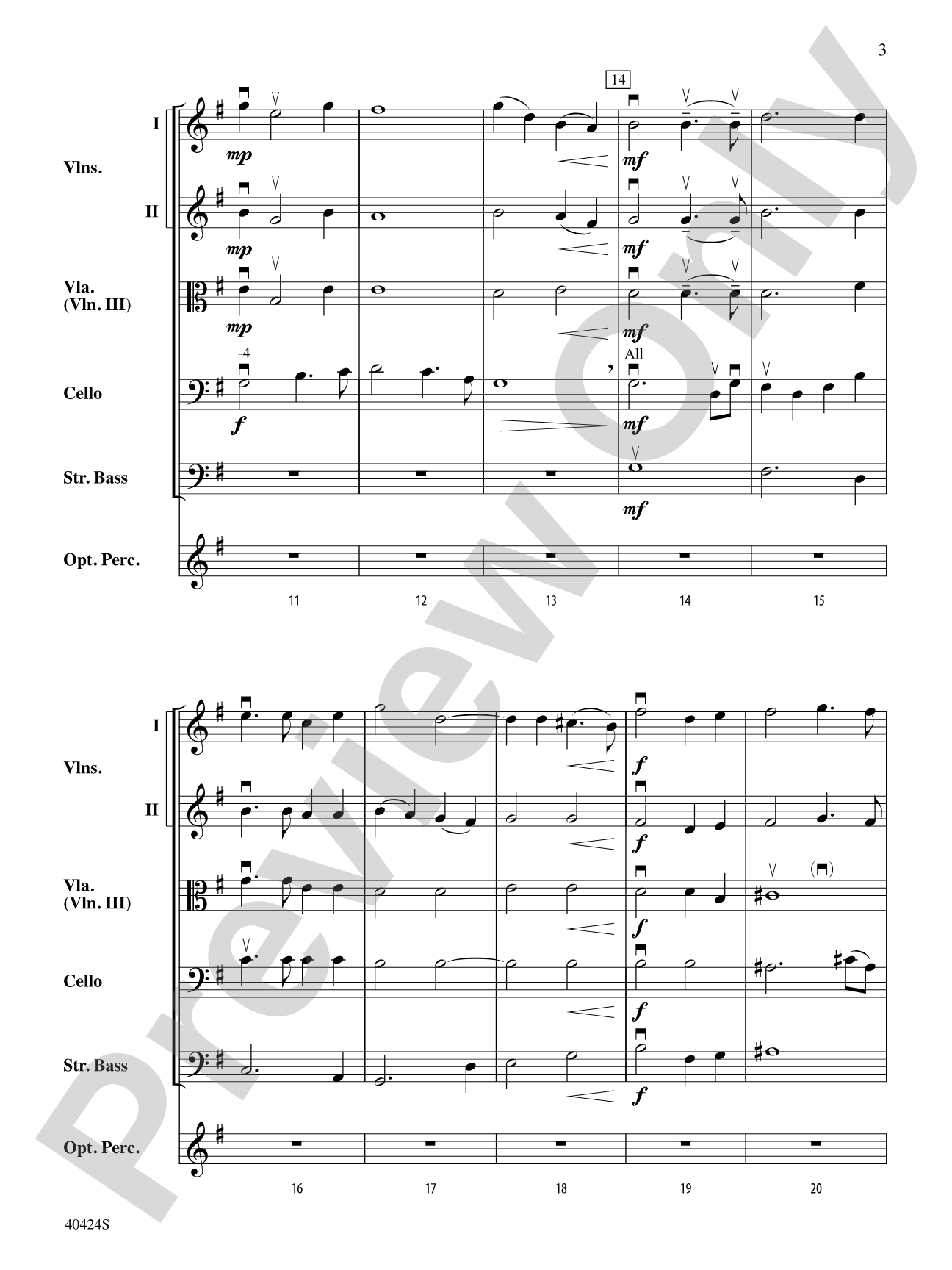
- Balance the delicate upper string writing in the early sections so it complements rather than obscures the cello line.
- Build the crescendo into the full orchestra passage gradually and organically; resist the urge to jump immediately to full volume.
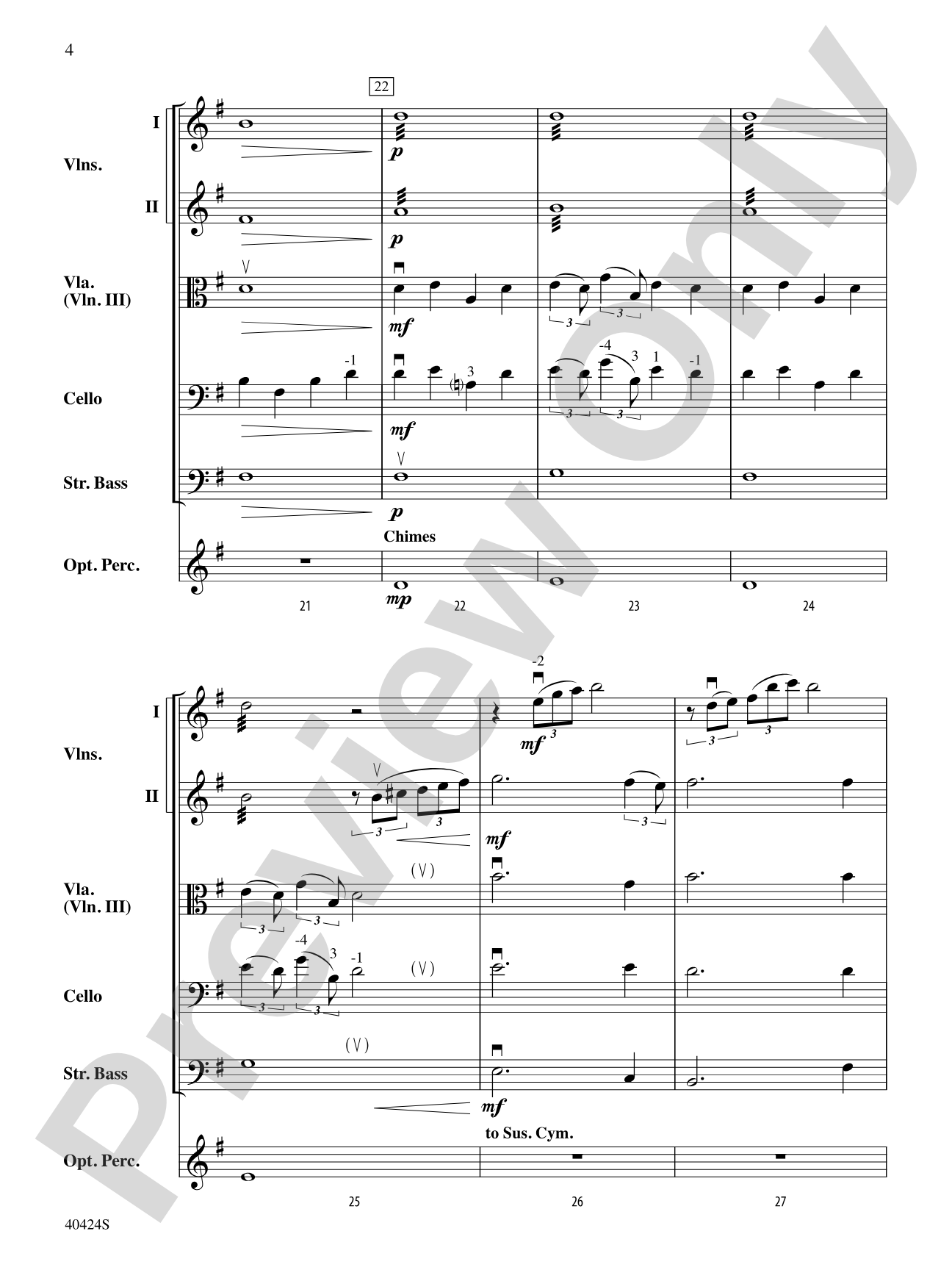
- If using the optional percussion part, rehearse it separately first to ensure it enhances rather than overwhelms the string writing.
How to use it
Include this in your winter concert or holiday program as the centerpiece of a sacred music segment, pairing it with other spirituals or classical hymn arrangements. Its moderate length and complete emotional arc make it an effective standalone feature, or it can anchor a thematic programming block around light concert classics.
Skills your students will build
- Balancing multiple string lines with different dynamic levels
- Sustaining long phrases with consistent tone quality
- Reading divisi voicing and maintaining intonation across split sections
- Responding to expressive conducting of gradual crescendo and dynamic shape
- Coordinating with optional percussion while maintaining string ensemble unity