
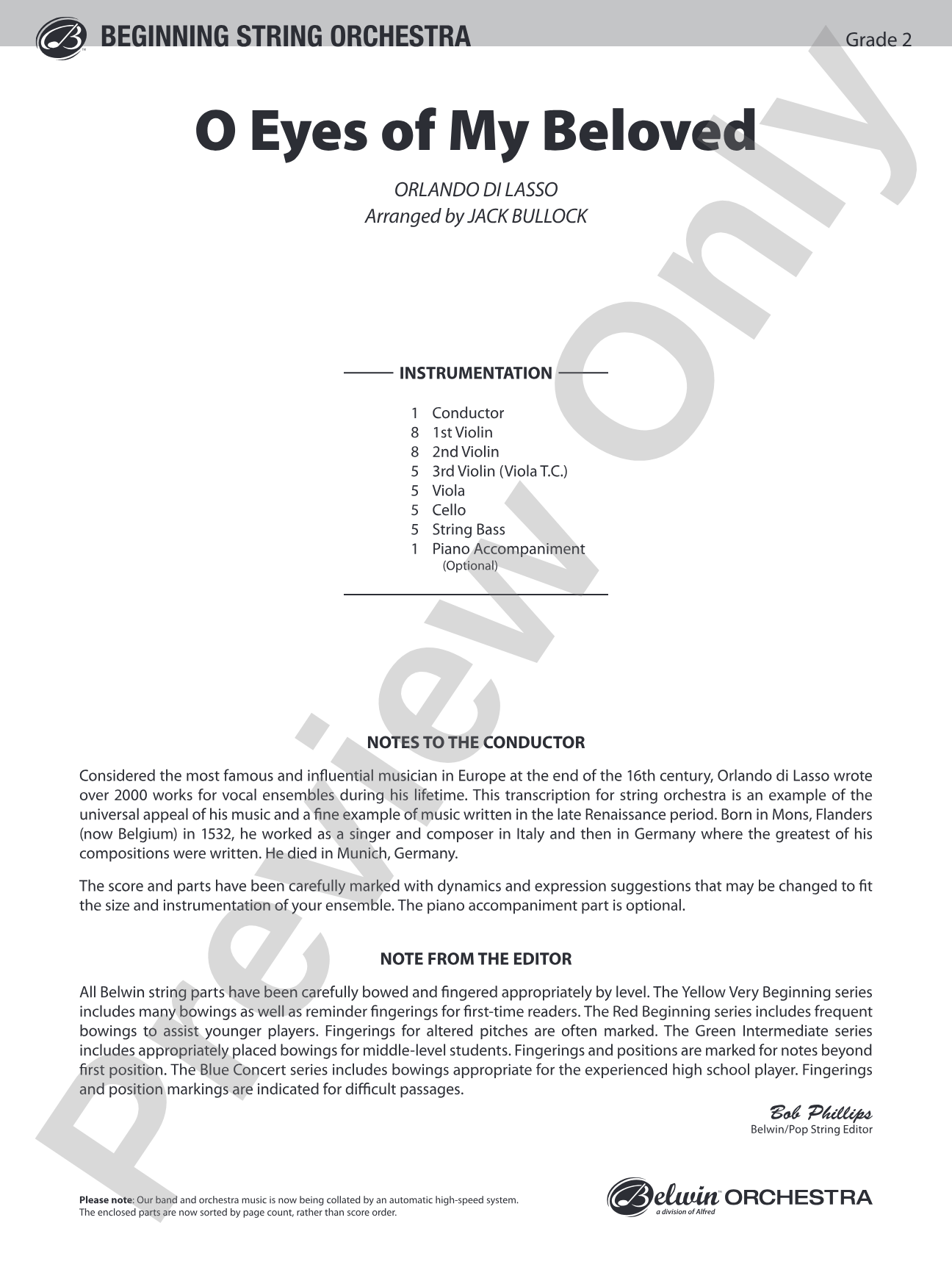

O Eyes of My Beloved: String Orchestra Conductor Score & Parts
By Orlando di Lasso / arr. Jack Bullock
Grade: 2
Item: 00-PK-0004145

$40.00
Pickup currently not available
Buy Extra Parts (Digital PDF Download)
| Product | Price | Quantity |
|---|---|---|
| O Eyes of My Beloved: Score | $6.00 | |
| O Eyes of My Beloved: 1st Violin | $5.99 | |
| O Eyes of My Beloved: 2nd Violin | $5.99 | |
| O Eyes of My Beloved: 3rd Violin (Viola [TC]) | $5.99 | |
| O Eyes of My Beloved: Viola | $5.99 | |
| O Eyes of My Beloved: Cello | $5.99 | |
| O Eyes of My Beloved: String Bass | $5.99 | |
| O Eyes of My Beloved: Piano Accompaniment | $5.99 |
Parts Added to Cart!
Related Items
O Eyes of My Beloved: String Orchestra Conductor Score |
$6.00
|
View |
Description
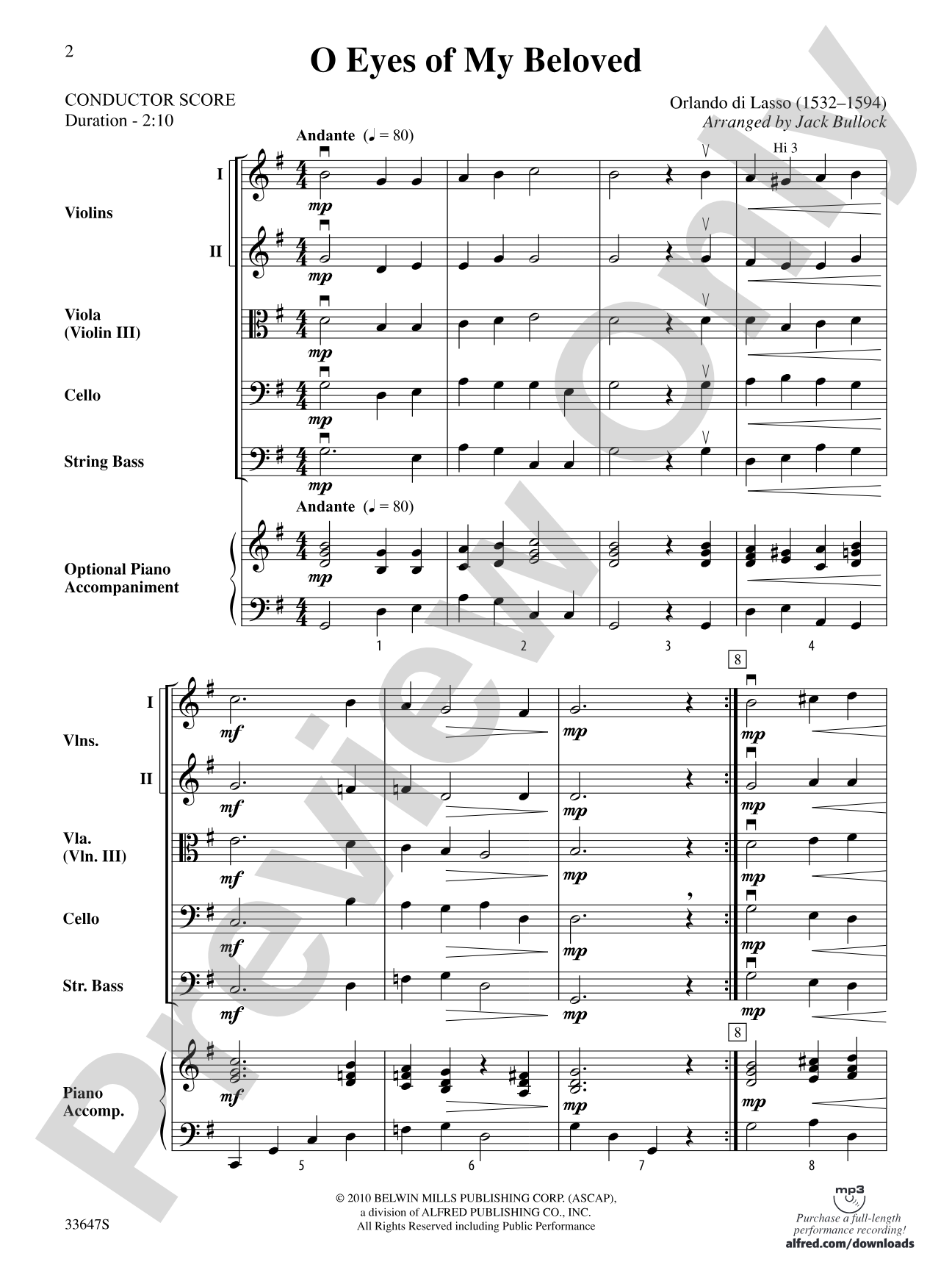
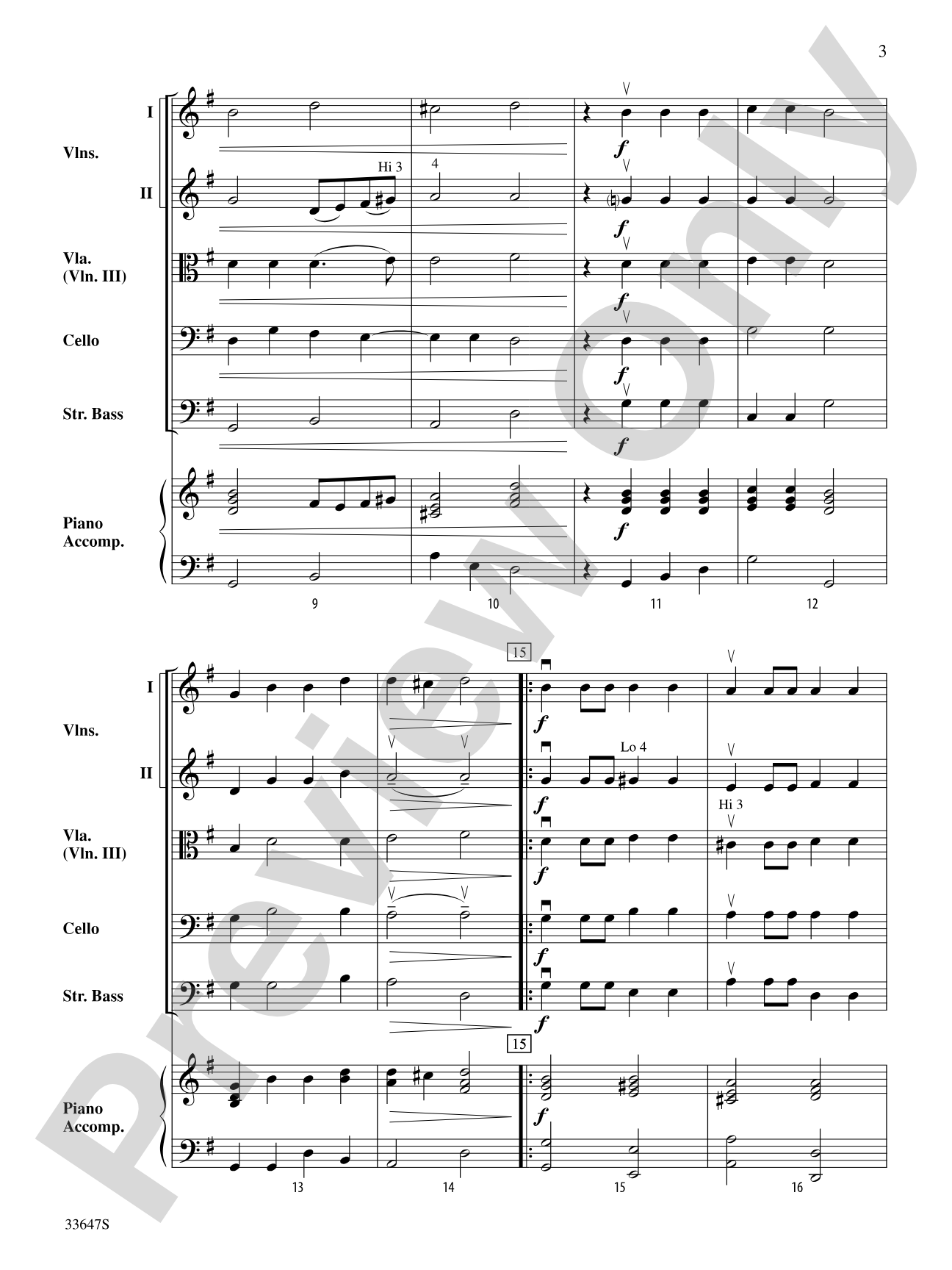
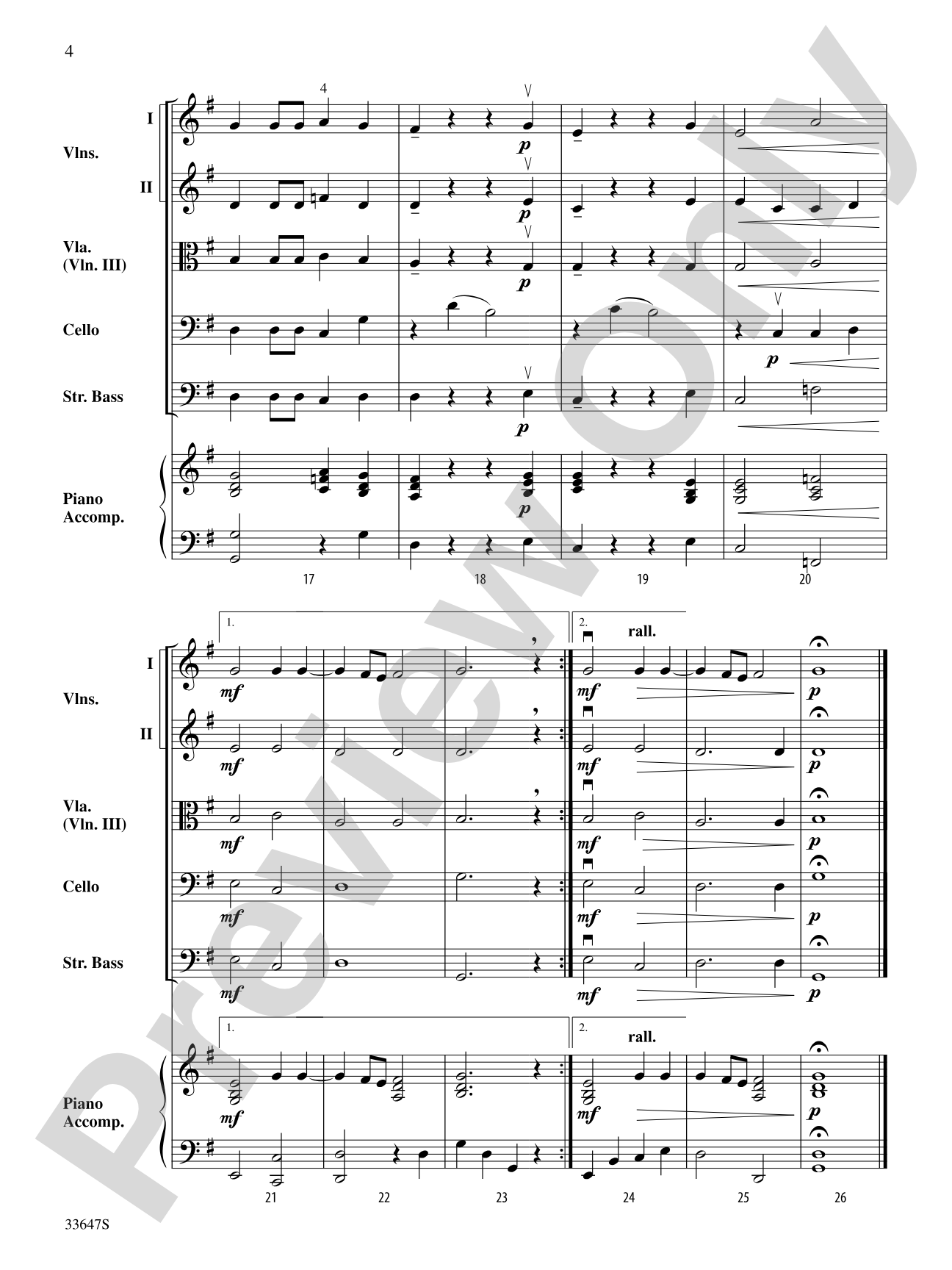
A fantastic and accessible introduction to music written in the late Renaissance period! This lovely transcription of a work for vocal ensemble includes unison and part playing for young string orchestra.


Don't just read it, hear it, play along with it, and watch your students grow with it. In MakeMusic Cloud, O Eyes of My Beloved: String Orchestra Conductor Score & Parts comes alive with professional accompaniment, adjustable tempo, and built-in practice tools that turn solo practice into real progress.
Open in the Player
Jump straight in and assign it today.
Start Your Free Trial
Open this title and explore the full library in minutes.
Sample Audio
1
Audio File
--:--
0:00
0:00
Sample Video
No sample videos found.
Additional Details
Series:
Belwin Beginning String Orchestra
Publisher:
Alfred Music
Page Count:
74
SKU:
00-PK-0004145
More about this title
About the Composer: Orlando di Lasso
Orlando di Lasso (c. 1532, 1594) was one of the most prolific and celebrated composers of the Renaissance, commanding respect across Europe for his mastery of both sacred and secular music. His output was staggering, over 2,000 compositions, yet each work demonstrates his gift for expressive melody and clear part writing that serves the text and emotion first.
Di Lasso's secular works, including his many love songs and chansons, show why he remains essential repertoire for understanding Renaissance vocal writing. His ability to create memorable, singable lines that work in ensemble makes his music particularly valuable for young musicians learning how voices interact and support one another.
Why we love this
Jack Bullock's transcription captures the intimacy and grace of di Lasso's original while solving a real scheduling problem: you get a Grade 2 arrangement that respects the source material rather than oversimplifying it. The mix of unison and part passages gives young orchestras the confidence boost of playing together while building their ability to hold independent lines, and the piece itself is genuinely beautiful, not a musical etude masquerading as art.
What to expect
The piece radiates warmth and directness, its Renaissance origins audible in unpretentious harmonies and graceful melodic lines. There is tenderness in the subject matter and clarity in the writing that makes the music feel both intimate and transparent, inviting listeners into a moment of genuine human expression across four centuries.
Who it's for
Beginning and developing string orchestras seeking repertoire that spans centuries and styles with genuine musical substance. This work suits ensembles ready for part independence and harmonic awareness but still building technical facility across all four string sections.
How to get the most out of it
- Shape phrases according to text underlay, even in instrumental settings. Di Lasso's melodies grew from language and breathing patterns; respecting those natural arcs produces more musical phrasing than mechanical note reading.
- Balance the upper voices carefully in unison passages. Young players often play louder in unison thinking safety lies in volume; encourage them to match tone quality and place their sound forward without force.
- Approach dynamic changes subtly. Renaissance music lacks printed dynamics; changes in texture and harmonic density suggest where sound should grow or recede. Avoid sudden shifts.
- Tune thoughtfully in sustained chords. Di Lasso's harmonies reward just intonation; take time in rehearsal to listen for beats and adjust accordingly, particularly in cadential moments.
How to use it
Place this in a concert exploring love songs across musical history, pairing it with Romantic era art song arrangements and contemporary vocal settings to show how different periods approach the same human theme. Its manageable length and concert appeal make it ideal for a spring pops program or festival performance that values historical breadth.
Skills your students will build
- Phrasing and shaping in music without printed dynamic markings
- Reading and balancing part writing across four string sections
- Playing with stylistic awareness of Renaissance harmonic language
- Ensemble intonation and listening in sustained chords
- Moving fluidly between unison and divisi passages