
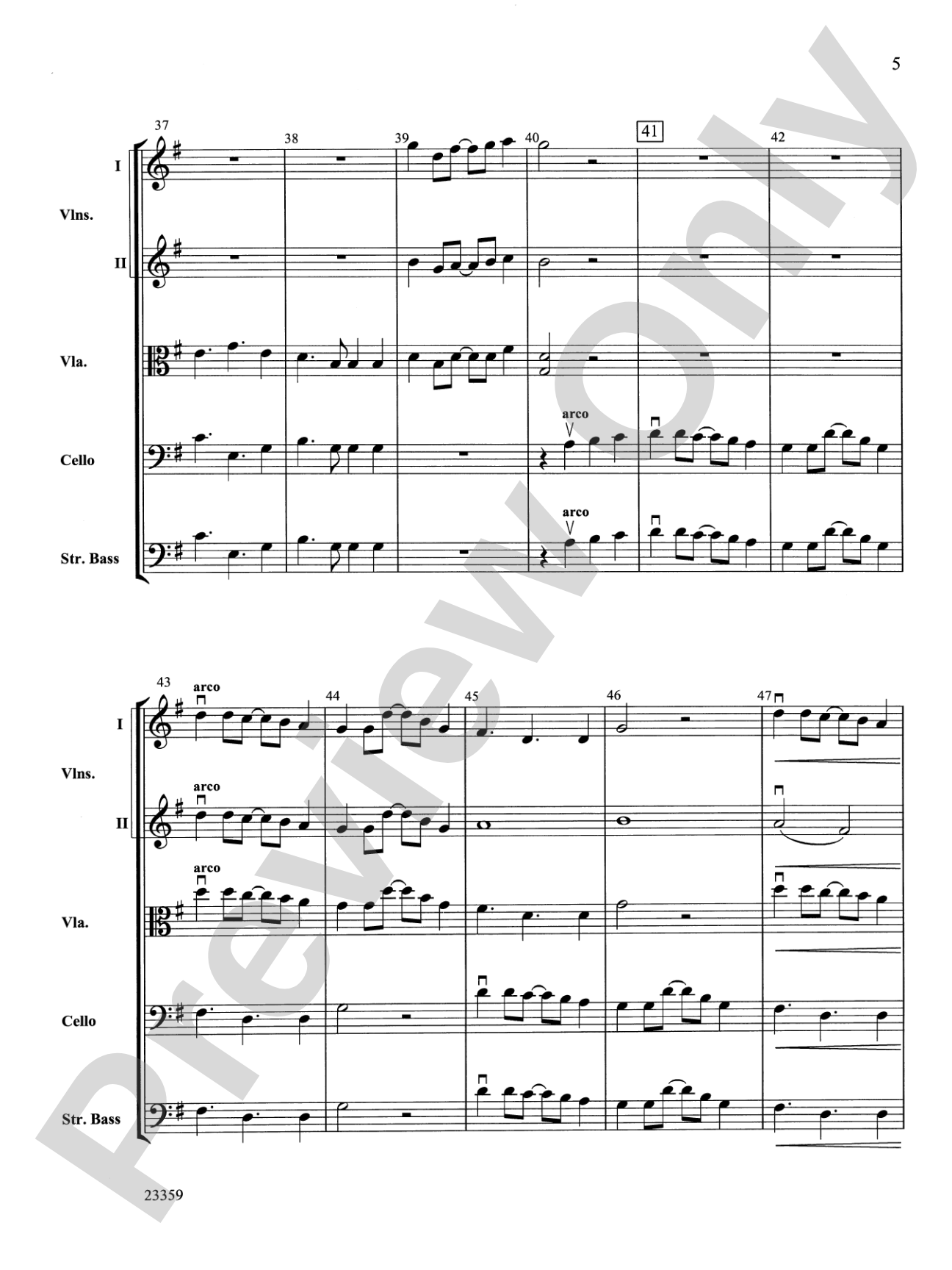
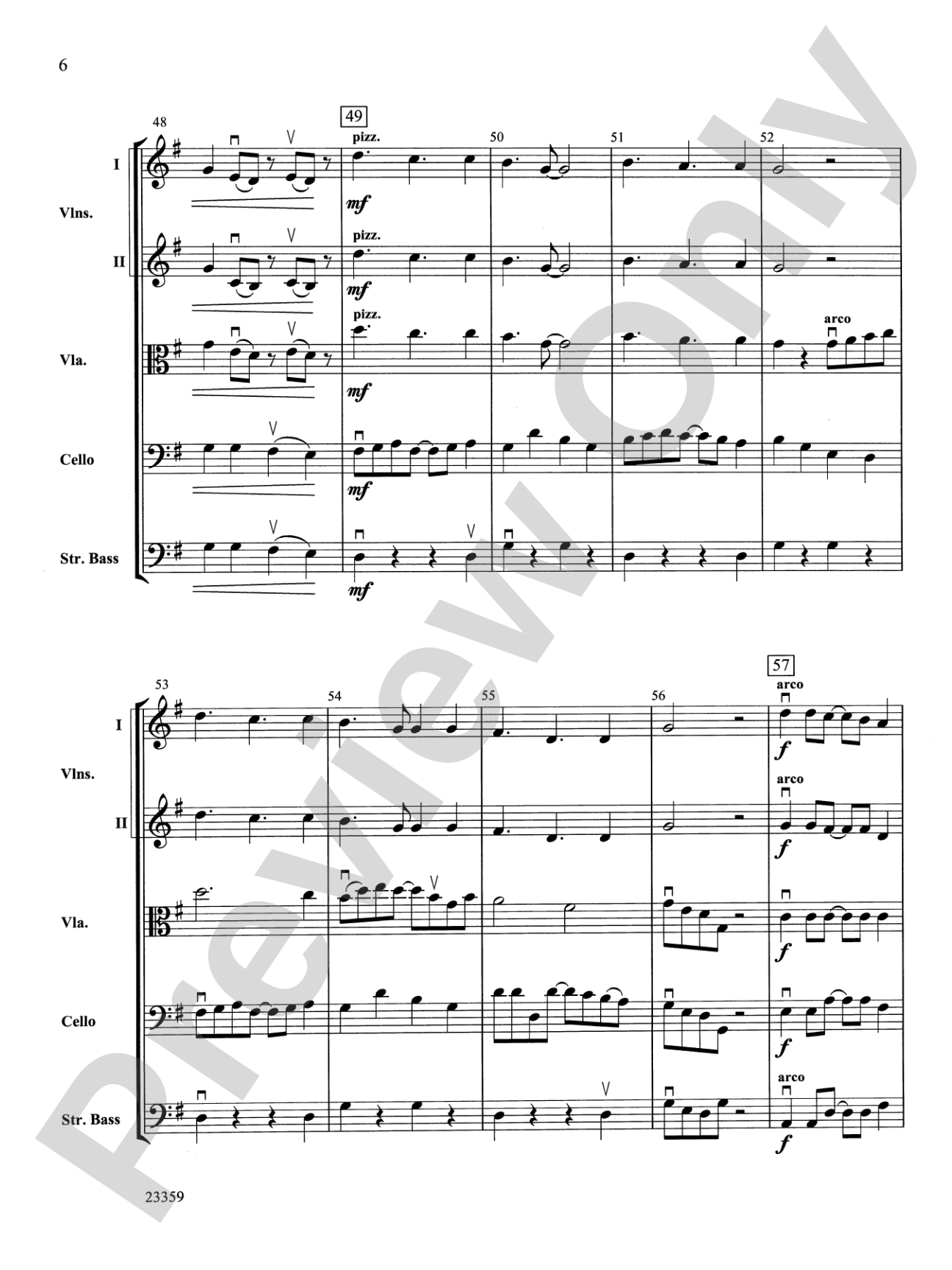
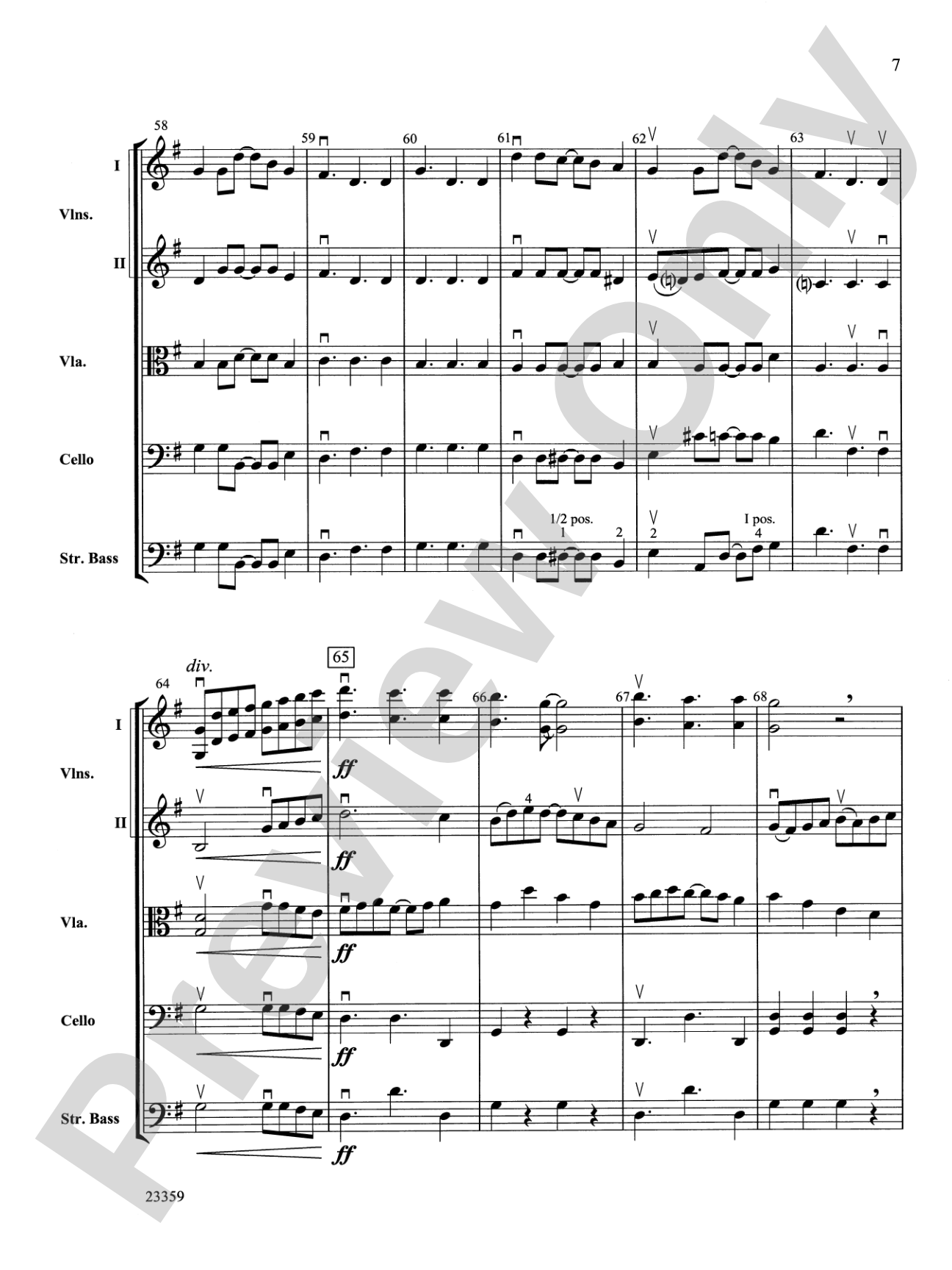
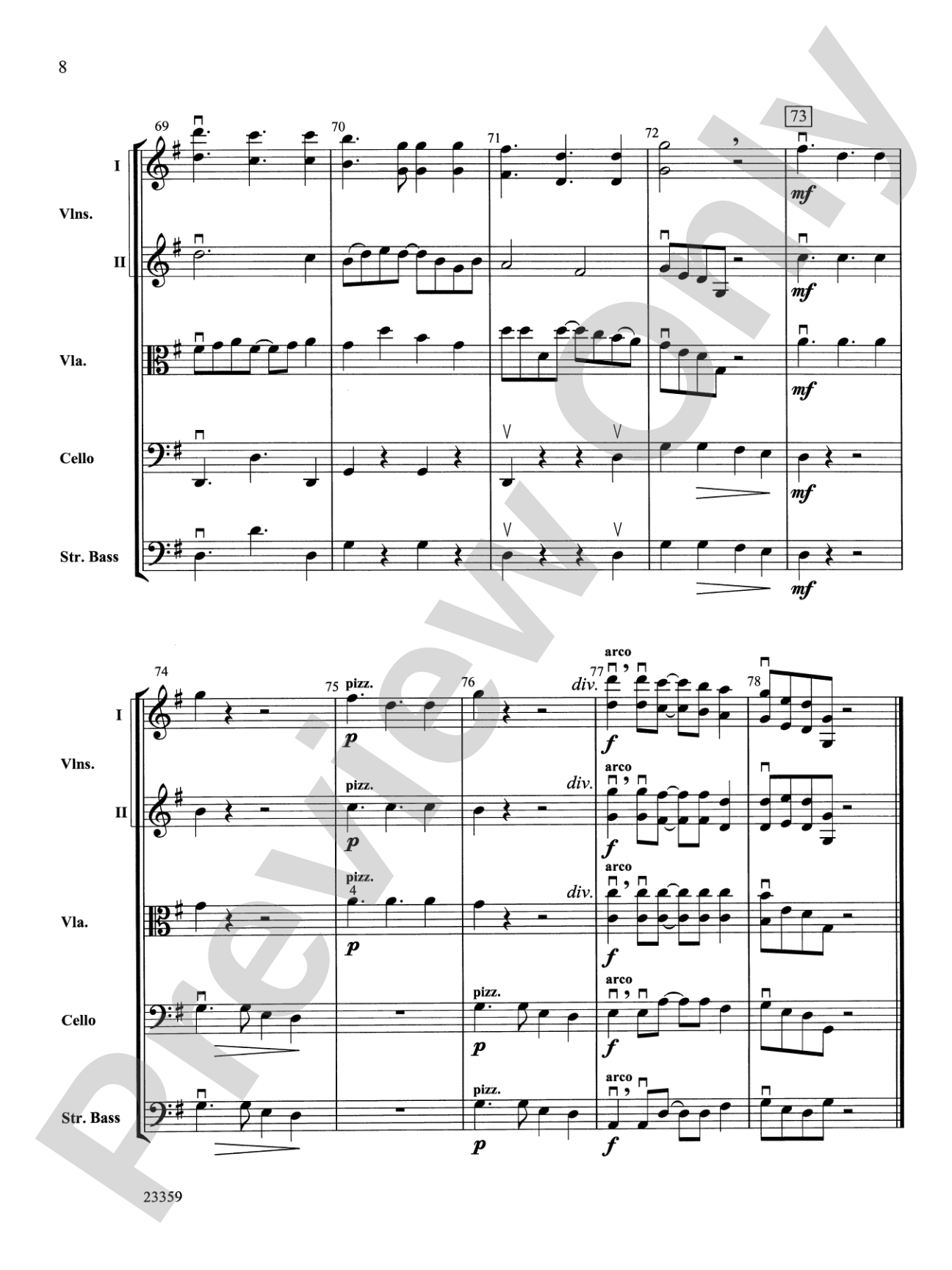

O Desayo: String Orchestra Conductor Score & Parts
Angolan Folk Tune / arr. Carrie Lane Gruselle
Grade: 2.5
Item: 00-PK-0000712

$48.00
Pickup currently not available
Buy Extra Parts (Digital PDF Download)
| Product | Price | Quantity |
|---|---|---|
| O Desayo: Score | $7.00 | |
| O Desayo: 1st Violin | $5.99 | |
| O Desayo: 2nd Violin | $5.99 | |
| O Desayo: Viola | $5.99 | |
| O Desayo: Cello | $5.99 | |
| O Desayo: String Bass | $5.99 |
Parts Added to Cart!
Description
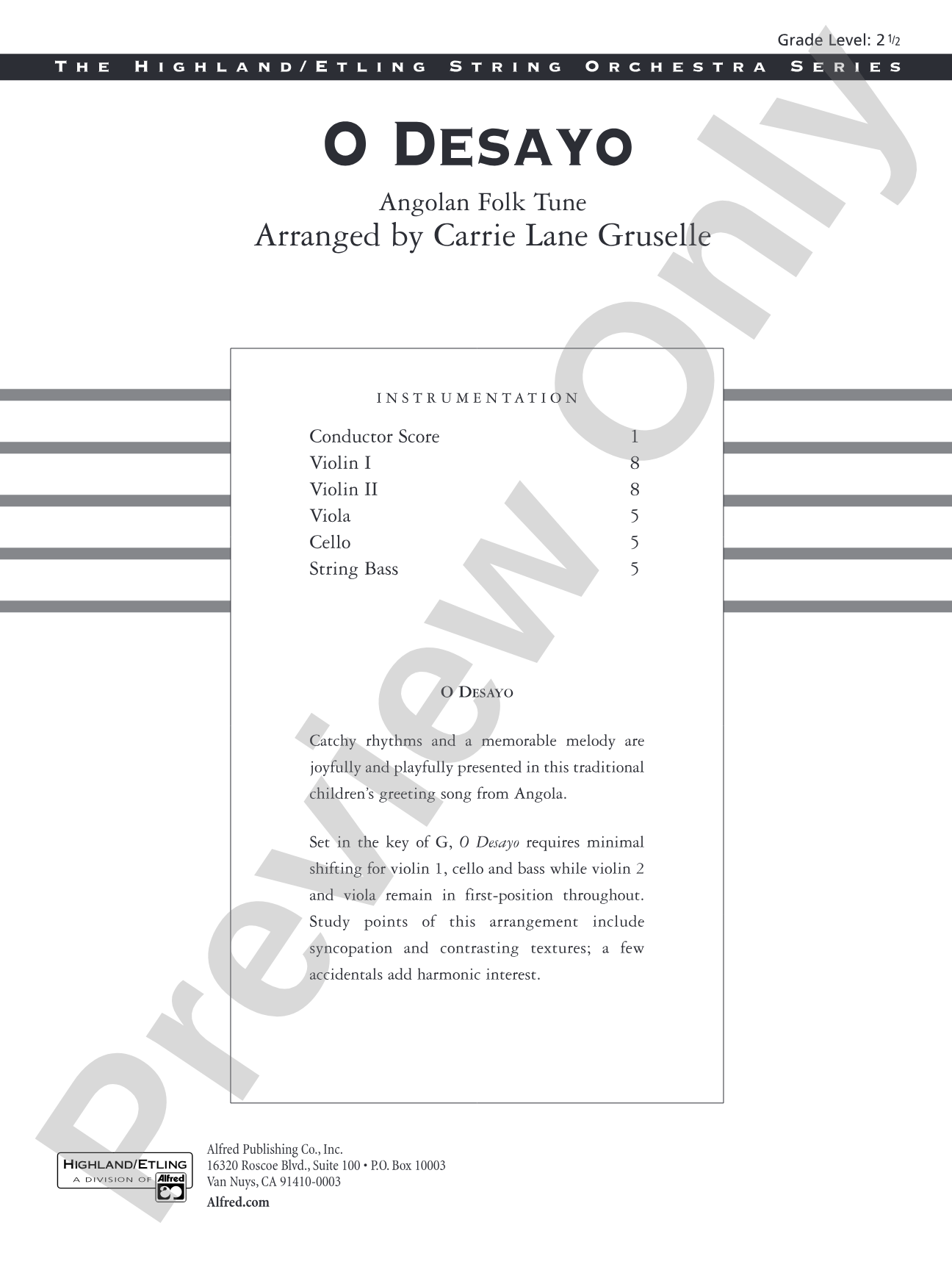
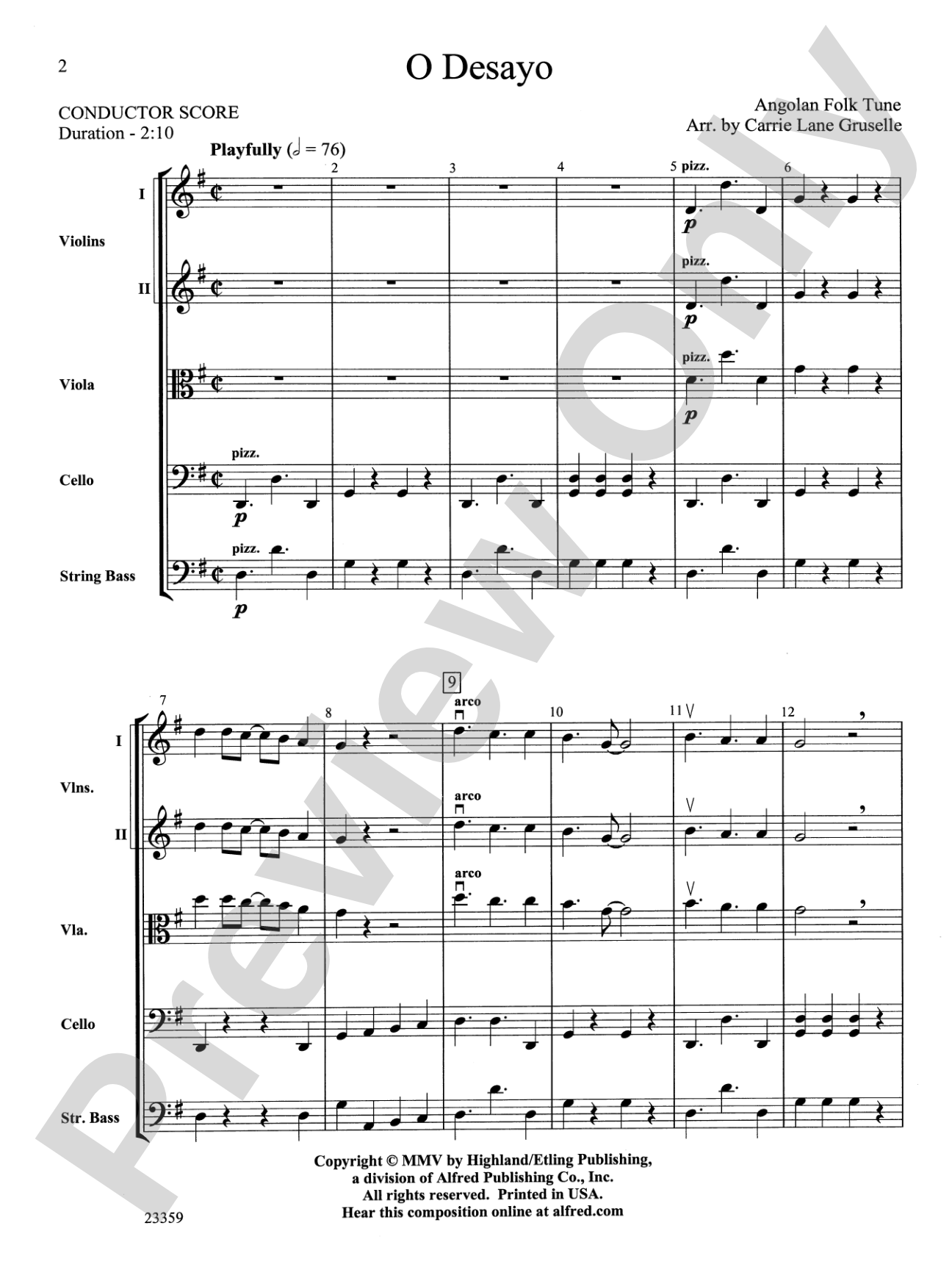
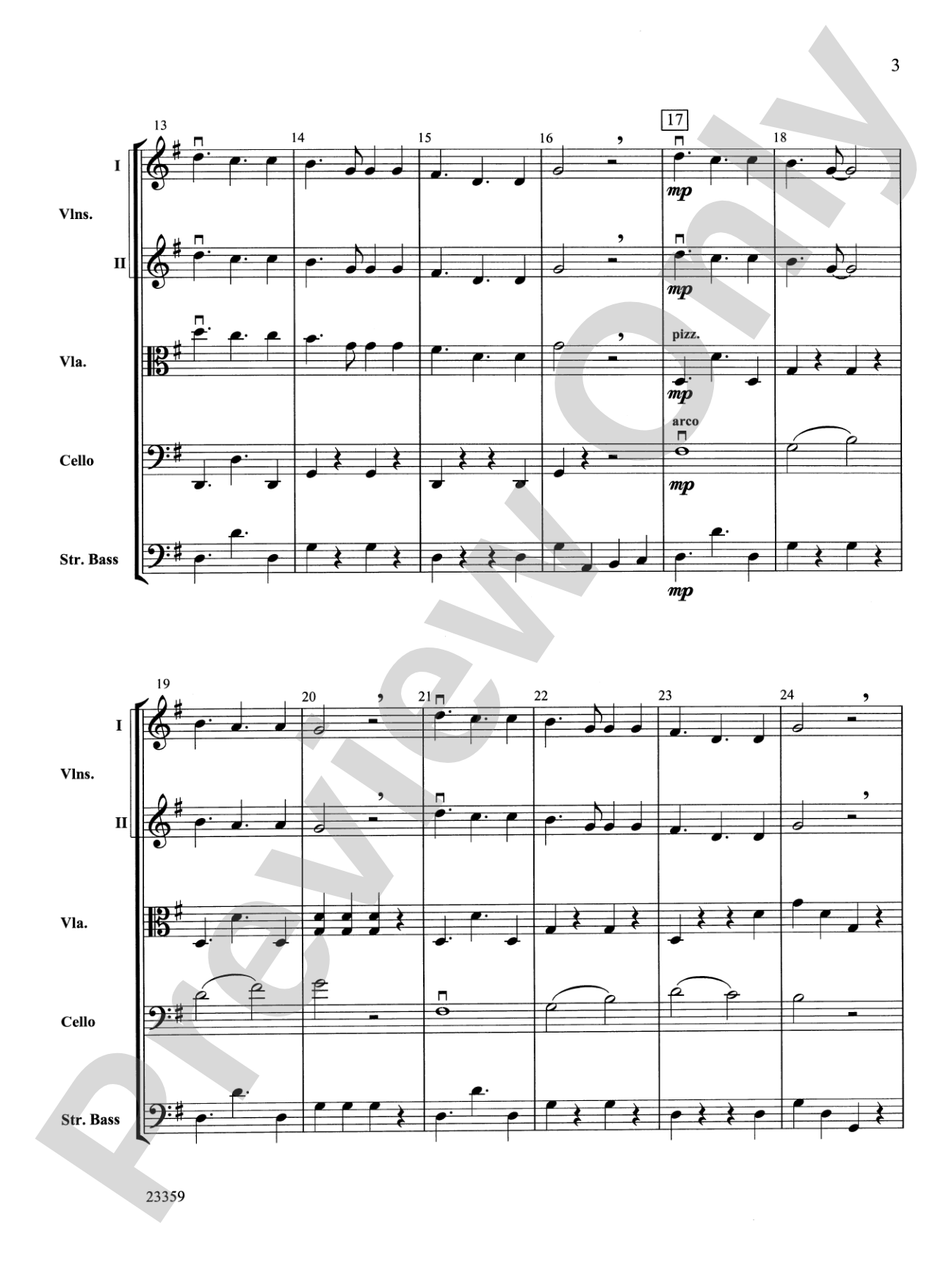
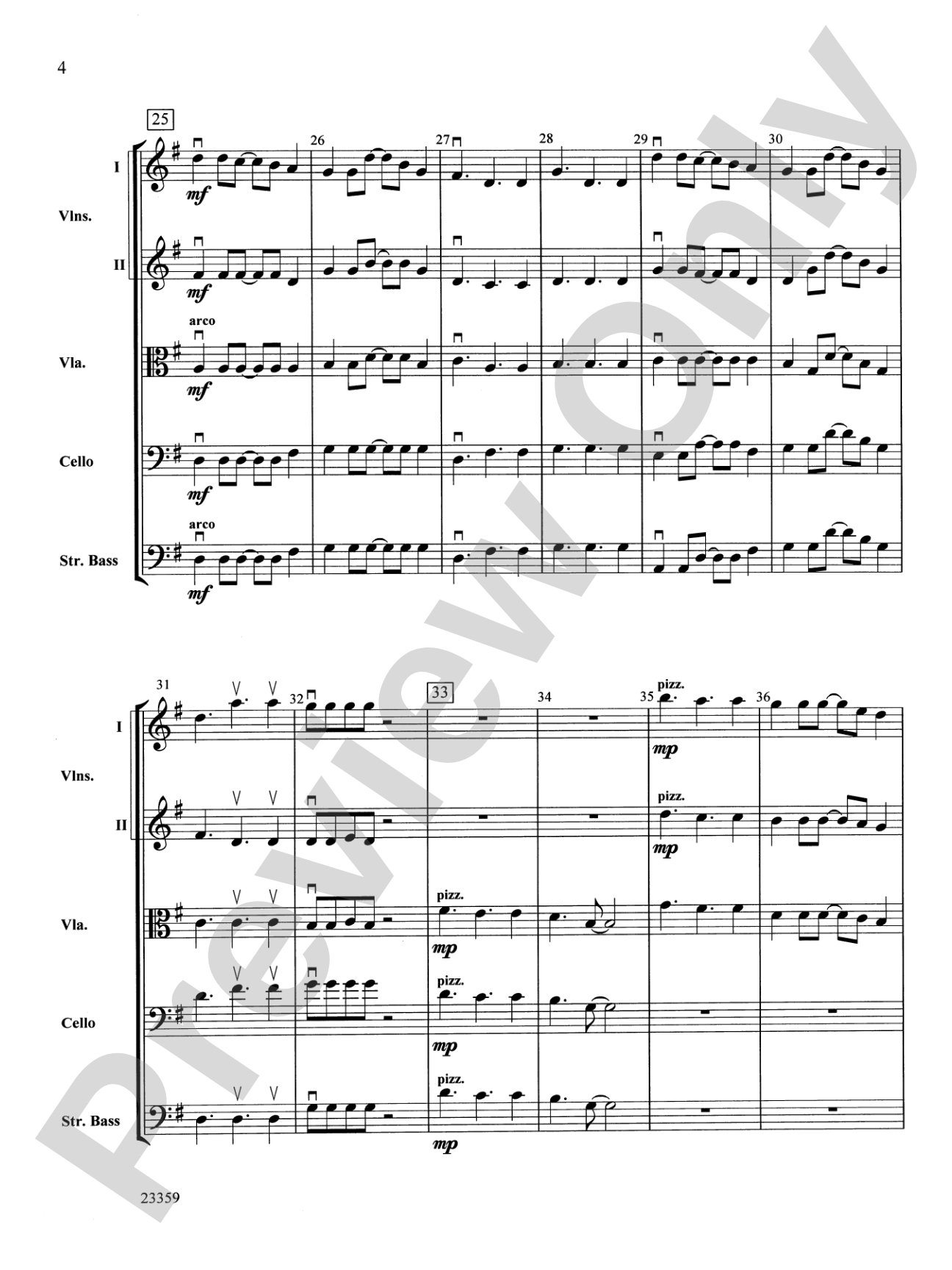
Catchy rhythms and a memorable melody are joyfully and playfully presented in this traditional children's greeting song from Angola. Set in the key of G, O Desayo requires minimal shifting for violin 1, cello and bass while violin 2 and viola remain in first-position throughout. Study points of this arrangement include syncopation and contrasting textures; a few accidentals add harmonic interest.


Don't just read it, hear it, play along with it, and watch your students grow with it. In MakeMusic Cloud, O Desayo: String Orchestra Conductor Score & Parts comes alive with professional accompaniment, adjustable tempo, and built-in practice tools that turn solo practice into real progress.
Open in the Player
Jump straight in and assign it today.
Start Your Free Trial
Open this title and explore the full library in minutes.
Sample Audio
1
Audio File
--:--
0:00
0:00
Sample Video
No sample videos found.
Additional Details
Series:
Highland/Etling String Orchestra
Publisher:
Alfred Music
Page Count:
62
SKU:
00-PK-0000712
More about this title
About the Arranger: Carrie Lane Gruselle
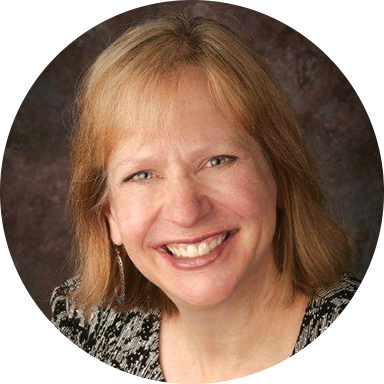
Carrie Lane Gruselle earned her Bachelor of Music Education from the University of Wisconsin–Eau Claire and her Master of Music Education from the University of Wisconsin–Stevens Point, where she specialized in Suzuki pedagogy. She teaches strings to elementary and middle school students in the Appleton Area School District and serves as cello instructor at the Lawrence University Arts Academy in Appleton, Wisconsin.
Why we love this
Gruselle captures the infectious energy of this Angolan greeting while respecting the technical limits of early intermediate players. The arrangement thoughtfully distributes the melodic material so that all four string parts stay engaged, and the syncopated rhythms give your students a genuine cultural touchstone rather than a generic exercise in coordination.
What to expect
O Desayo bounces with joy and movement. The traditional melody is warm and singable, while the syncopated accompaniment figures give the arrangement a contemporary lift that keeps student players engaged without overwhelming them. There's a playfulness here that comes from the piece's origins as a children's song, and that lightness invites performers to smile while they play.
Who it's for
String orchestras at the Grade 2.5 level benefit most from this piece, particularly ensembles ready to tackle syncopation and work with accidentals in a musical context rather than in isolation. It works equally well for conductors looking to introduce students to world music traditions or for programs seeking accessible multicultural repertoire.
How to get the most out of it
- Establish the syncopated groove clearly in rehearsal before adding parts. Have the ensemble tap the rhythm together while singing the melody so everyone understands where the pulse sits underneath the off-beat figures.
- Shape the contrasting textures by adjusting dynamics between sections. When the viola and cello trade the main melody, make that shift audible so the playful character comes through.
- Keep the tempo steady and light. This piece thrives on rhythmic precision and buoyancy, not on romantic rubato.
How to use it
Program this early in a concert to energize the audience and warm up your ensemble. Its accessible length and uplifting character make it an ideal opener or bridge between more substantial works, and its cultural roots offer a natural talking point for your program notes.
Skills your students will build
- Reading and executing syncopated rhythms in ensemble context
- Managing minimal position shifts on violin 1, cello, and bass
- Maintaining first-position security on violin 2 and viola
- Interpreting accidentals that create harmonic color
- Balancing melody and accompaniment across contrasting textures
- Sustaining ensemble rhythm while playing off-beat figures