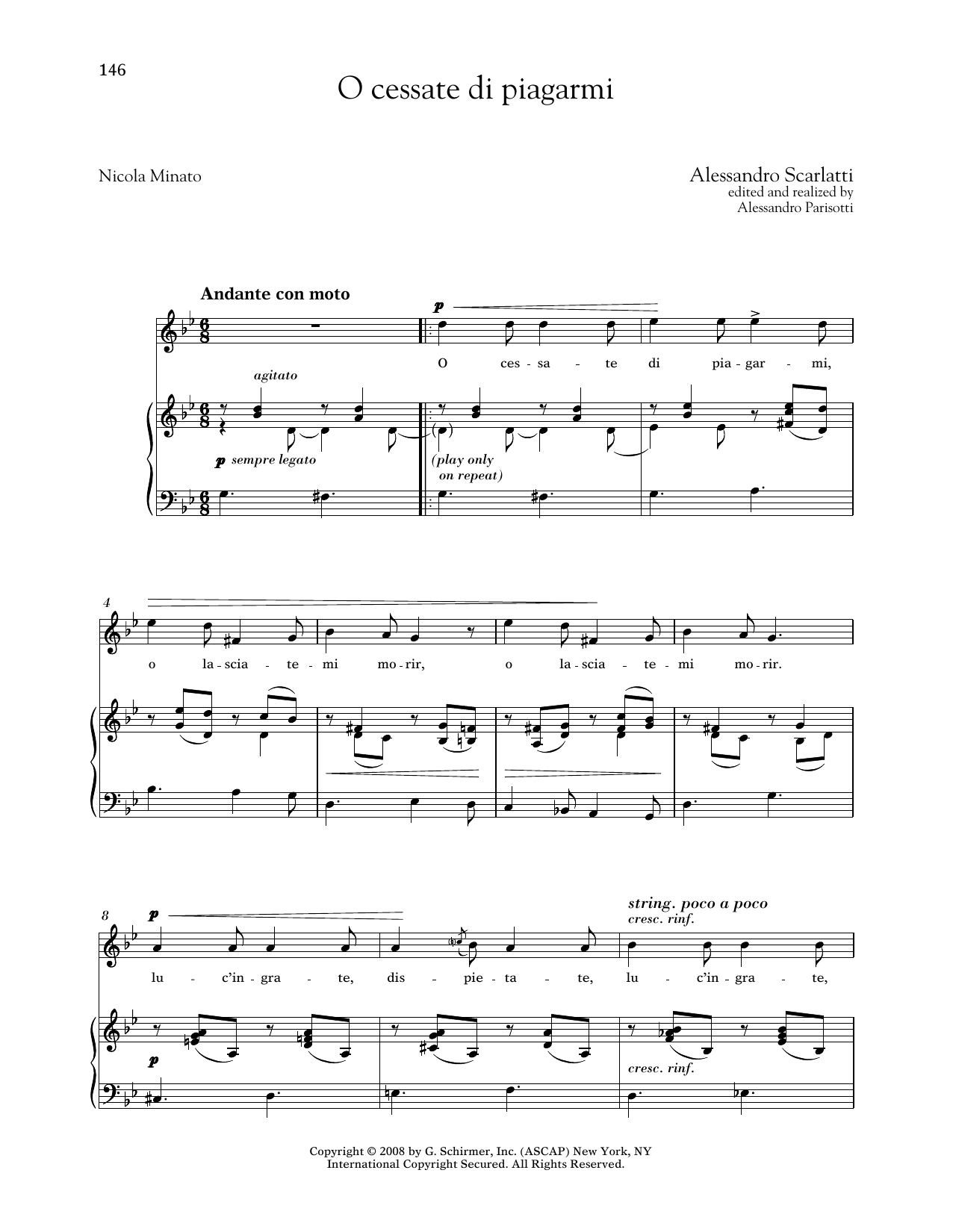
Alessandro Scarlatti (1660–1725) shaped the trajectory of Italian vocal music across two continents, establishing himself first in Naples and Rome before moving to Spain in service to Queen Maria Casimira. His output spans over 600 chamber cantatas, numerous operas, and sacred works that became foundational to vocal pedagogy. Scarlatti's gift for lyrical melody and harmonic sophistication influenced generations of singers and composers, making his music essential to anyone studying the Italian Baroque tradition.
As a master of the solo cantata form, Scarlatti understood intimacy. His works for voice and continuo demand both vocal elegance and emotional transparency, qualities that remain central to classical vocal training today.