
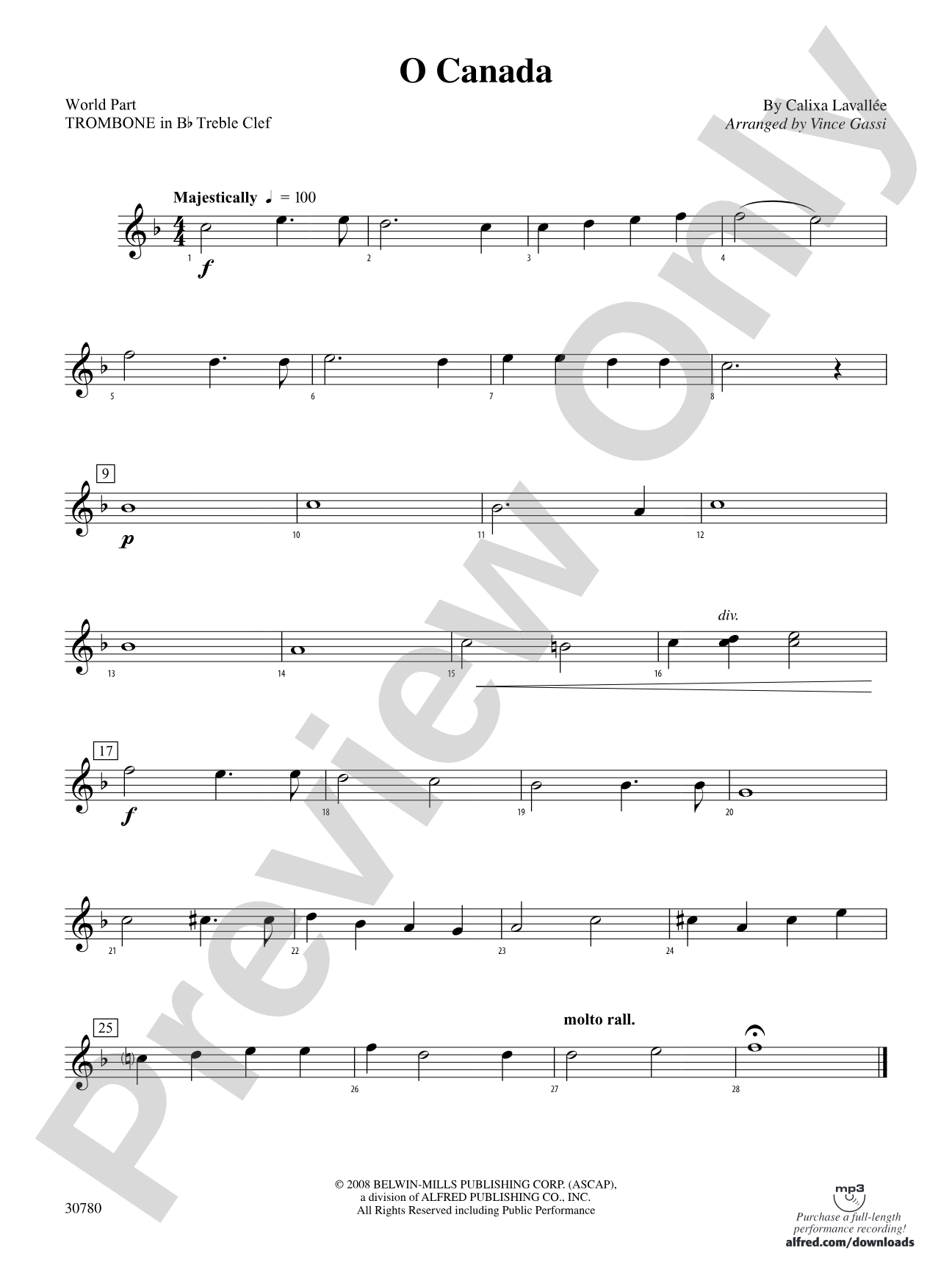

O Canada: (wp) 1st B-flat Trombone T.C.
By Calixa Lavallée / arr. Vince Gassi
Grade: 2 (Easy)
Item: 00-PC-0001674_wpTN1TC
$3.00
Pickup currently not available
Description
Finally we can pay tribute to our northern neighbors! Without a suitable arrangement available, we chose to utilize the skill of Vince Gassi, a Canadian composer and arranger, to prepare this heartwarming rendition. Attainable by most middle schools and all high school bands, this is a 'must have' for every library. Emotional and passionate, it's right on target.


Don't just read it, hear it, play along with it, and watch your students grow with it. In MakeMusic Cloud, O Canada: (wp) 1st B-flat Trombone T.C. comes alive with professional accompaniment, adjustable tempo, and built-in practice tools that turn solo practice into real progress.
Open in the Player
Jump straight in and assign it today.
Start Your Free Trial
Open this title and explore the full library in minutes.
Sample Audio
1
Audio File
--:--
0:00
0:00
Sample Video
No sample videos found.
Additional Details
Series:
Belwin Young Band
Publisher:
Alfred Music
Page Count:
124
SKU:
00-PC-0001674_wpTN1TC
More about this title
About the Composer: Calixa Lavallée
Calixa Lavallée (1842-1891) was a Canadian pianist, organist, and composer whose work helped establish a distinctive voice in North American classical music during the Romantic era. Born in Verchères, Quebec, he studied in Paris and performed across Europe before returning to Canada, where he became a central figure in Montreal's musical life as both a performer and educator.
Lavallée composed the melody that became "O Canada" in 1880, creating what would eventually serve as the nation's official anthem. His gift for crafting memorable, singable melodies with emotional depth made him a bridge between European Romantic traditions and the emerging Canadian musical identity. Beyond this iconic work, he contributed significantly to the concert hall and church music repertoires of his time.
Why we love this
Gassi's arrangement respects the emotional weight and accessibility that made this tune resonate across a nation, translating it into a concert band idiom that plays as naturally as it sounds. The Grade 2 voicing opens this cultural cornerstone to younger and less experienced ensembles without sacrificing the dignity and warmth of the original. A straightforward, expertly crafted piece that gives every student the experience of performing something genuinely significant.
What to expect
The piece carries a quiet dignity and patriotic warmth without bombast or overt nationalism. Lavallée's melody unfolds with unhurried grace, supported by full harmonic color from the band, creating space for reflection alongside celebration. There's an earnest, generous quality to the music that invites both performers and audiences into a moment of shared respect.
Who it's for
Middle school bands seeking repertoire that combines accessibility with genuine cultural significance, and high school ensembles looking to program a piece that connects students to a shared national heritage. This arrangement works equally well in concert settings and in school commemorative programs or international music celebrations.
How to get the most out of it
- Allow the melody to sing with steady, warm legato phrasing across the entire ensemble; the piece depends on confident, unified line singing more than technical display.
- Balance the accompaniment carefully so it supports rather than competes with the primary melodic voice, especially in sections where the melody passes between instrument families.
- Shape the piece with gentle dynamic swells at phrase peaks rather than abrupt changes; the emotional arc builds through sustained intensity, not contrast.
- Bring students together on the fermatas and ritardandos that frame key moments; these breaths give the piece its reflective character and prepare listeners for what comes next.
How to use it
Pair this as a concert opener or closer on programs celebrating Canadian culture, community identity, or international understanding. It also serves as a meaningful standalone tribute during assemblies or commemorative events. The Grade 2 scoring allows you to feature it early in the year once basic ensemble fundamentals are secure, building student confidence while establishing an expectation for musical maturity.
Skills your students will build
- Sustained legato phrasing across multiple phrases without loss of tone quality
- Dynamic shaping and balance in a predominantly homophonic texture
- Melodic awareness and support of principal voices from secondary parts
- Interpretation of expressive markings (ritardandos, fermatas, dynamic nuance) that convey emotional intent