O Canada Sheet Music Preview

O Canada: Piano

By Calixa Lavallée / arr. Melody Bober

Item: 98-DYA9006

Digital Download
$2.95
Description
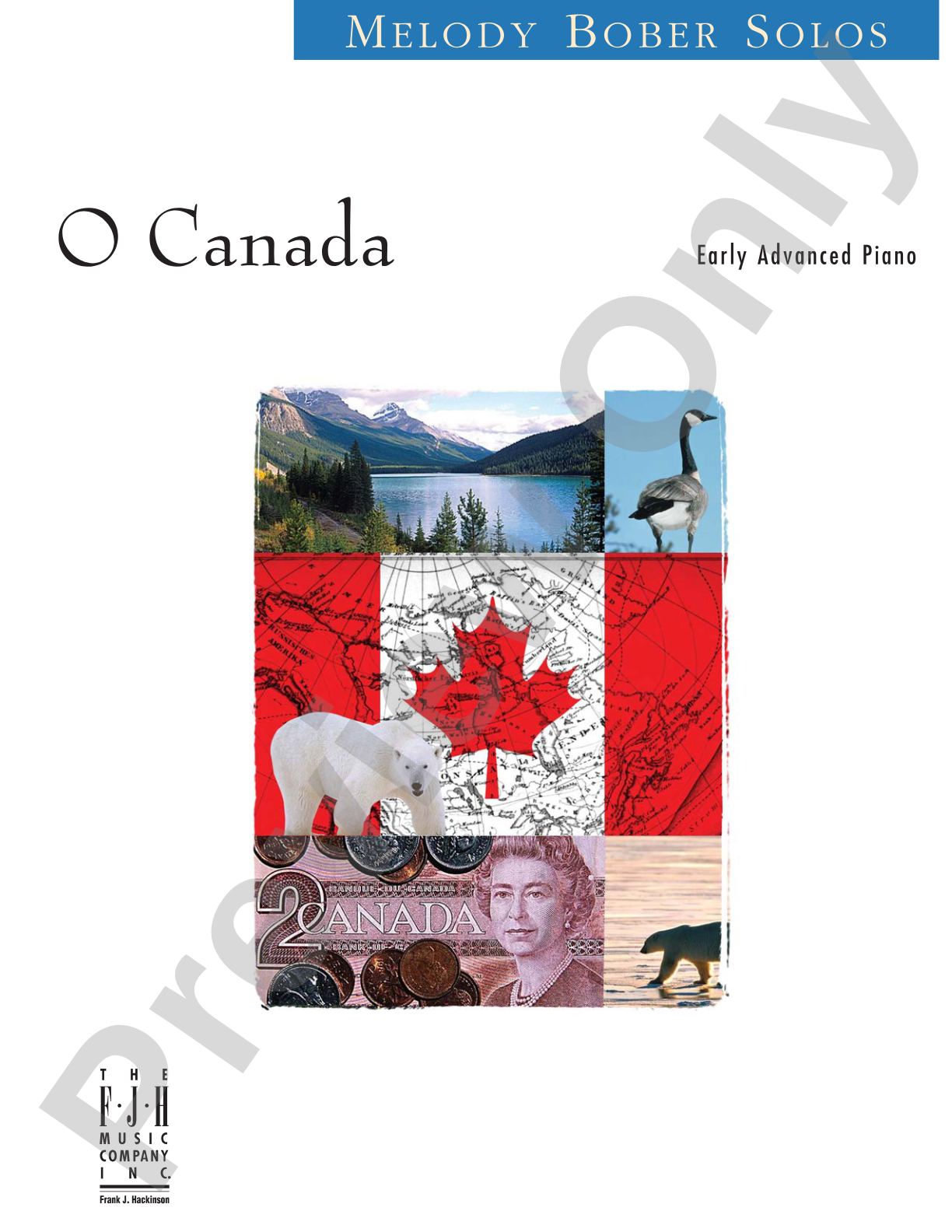
This piano solo arrangement of Canada's national anthem has a big, orchestral sound, with open, arpeggiated chords, sometimes hovering above, other times supporting the melody. The final section moves from 4/4 into 6/8 time, making room for rising triad inversions, and a sweeping 32nd-note cadenza. Written for the moderately advanced performer, it is a worthy recital piece that is sure to be a winner both in Canada and the United States.

O Canada: Piano isn't in MakeMusic Cloud just yet...but it could be. Let us know you'd like to see it, and you'll help shape what comes next. In the meantime, start a free trial and dive into thousands of interactive titles your students can play along with today.

Sample Audio
No sample audio found.
Sample Video
Additional Details
Series: Arranged For You
Publisher: The FJH Music Company, Inc.
SKU: 98-DYA9006

More about this title

About the Composer: Calixa Lavallée

Calixa Lavallée (1842, 1891) was a Canadian pianist, organist, and composer whose instrumental works helped define a distinctly Canadian musical identity in the late 19th century. He studied in Paris and established himself as a virtuoso performer across North America, but his most enduring legacy remains "O Canada," the national anthem he composed in 1880 for a French-Canadian patriotic gathering.

Lavallée's compositional voice blends European Romantic harmonic language with a gift for melody that resonates across generations. His ability to craft music of both concert-hall sophistication and popular accessibility made him a bridge between art music and the cultural expressions of his time.

Why we love this

Melody Bober's arrangement treats this iconic melody with genuine orchestral ambition rather than merely transposing it to piano. The interplay between arpeggiated accompaniment and melody, combined with the structural pivot into 6/8 and that cascading cadenza, gives performers a piece that sounds impressive without requiring virtuosic flash. It's patriotic music that demands musicianship.

What to expect

Stately and hopeful, with harmonic richness that honors Lavallée's Romantic sensibilities. The open spacing and arpeggiated textures create space for the melody to soar, while the final section builds momentum through textural and rhythmic intensity, arriving at that shimmering cadenza with earned grandeur.

Who it's for

Pianists at the early advanced level who want a recital piece with both national significance and genuine musical substance. This works equally well for Canadian students seeking repertoire connected to their cultural heritage and American performers looking for patriotic material that rises above the ceremonial.

How to get the most out of it

  • Shape the arpeggiated figures with intention. They're not background; they breathe alongside the melody and deserve dynamic clarity, especially where they shift register.
  • Prepare the meter transition into 6/8 by feeling the underlying pulse continue seamlessly. The rhythmic freedom of the cadenza lands with greater impact when the foundation stays steady.
  • Balance the rising triad inversions so each voice in the progression registers distinctly. Voicing control here separates a competent reading from a polished one.
  • Give yourself room in the 32nd-note cadenza to breathe musically rather than mechanically. Slight rubato honoring the harmonic content works better than metronomic precision.

How to use it

Use this as a standalone patriotic statement in recitals around national holidays or cultural celebrations, or pair it strategically with other keyboard works from the Romantic era to frame Lavallée's compositional identity. Its moderate length and strong conclusion make it an excellent concert opener that establishes tone and captures attention immediately.

Skills your students will build

  • Voicing arpeggiated chords across the keyboard with dynamic control and registration awareness
  • Executing meter changes (4/4 to 6/8) without losing harmonic or rhythmic continuity
  • Playing rapid scalar passage work (32nd-note cadenza) with musical phrasing rather than technical display
  • Balancing melody and accompaniment across different hand positions and textures
  • Managing dynamic range and color to support the emotional arc of a familiar national melody

You May Also Like