
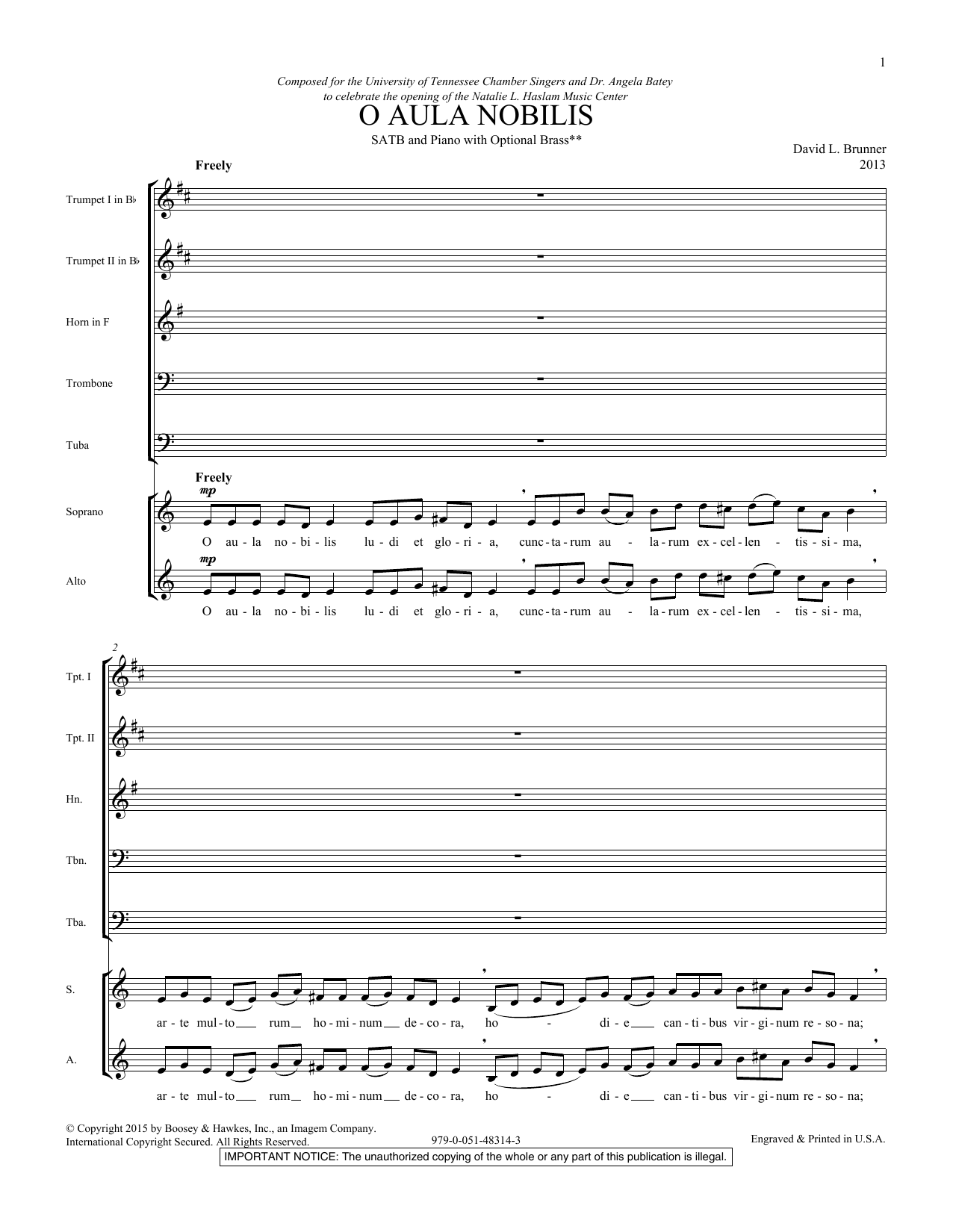

O Aula Nobilis: Choral Instrumental Pak
By David Brunner
Item: 35-PK00312851
$30.00
Pickup currently not available
Buy Extra Parts (Digital PDF Download)
Parts Added to Cart!
Description
After the unaccompanied chant opening in the women's voices, the music, though clearly based on the chant melody, takes on a highly rhythmic, asymmetrical and angular character, with a bright, resonant and festive quality. Opt. brass quintet.


O Aula Nobilis: Choral Instrumental Pak isn't in MakeMusic Cloud just yet...but it could be. Let us know you'd like to see it, and you'll help shape what comes next. In the meantime, start a free trial and dive into thousands of interactive titles your students can play along with today.
Request This Title
Tell us you want it.
Start Your Free Trial
Explore everything that's ready to play right now.
Sample Audio
No sample audio found.
Sample Video
No sample videos found.
Additional Details
Publisher:
Hal Leonard
SKU:
35-PK00312851
More about this title
Why we love this
Brunner takes a liturgical foundation and transforms it into something rhythmically alive and unpredictable. The contrast between the serene unaccompanied opening and the angular, propulsive section that follows creates real dramatic impact without requiring large forces. The optional brass quintet adds festive color when you have the players, but the piece stands firmly on its own with voices alone.
What to expect
The piece begins in quiet, reflective space before the ground shifts beneath you. Angular rhythms and asymmetrical phrasing create momentum and brightness that feels both modern and rooted in tradition. There's a joyful, almost dancing quality to the festive sections that energizes both singers and listeners.
Who it's for
Choirs with women's voices (soprano and alto) who can handle rhythmic independence and are looking for festival or concert material with real character. The optional brass part expands programming flexibility for groups with access to skilled brass players.
How to get the most out of it
- Shape the unaccompanied chant opening with clear phrasing and breath placement so women's voices establish the melodic anchor before rhythm enters the picture.
- Lock the rhythmic interlocking between voices and brass (when used) by rehearsing with a steady click at a tempo that feels natural rather than rushing through the asymmetrical figures.
- Balance the bright, resonant quality by keeping vowels unified across the ensemble; the angular character comes from rhythm and line, not from thinness of sound.
- If deploying the brass quintet, position them where they can see the conductor clearly, as the rhythmic complexity benefits from unified ensemble awareness.
How to use it
This works beautifully as a concert closer or festival opener, especially when you want something sacred but contemporary in spirit. Pair it with other choral works that explore the intersection of liturgical material and modern compositional language for a thematic program.
Skills your students will build
- Reading and sustaining asymmetrical rhythmic patterns across multiple voice parts
- Balancing independence within the ensemble during rhythmically complex passages
- Transitioning between unaccompanied and accompanied singing with secure intonation
- Collaborating with optional instrumental forces in a chamber setting