
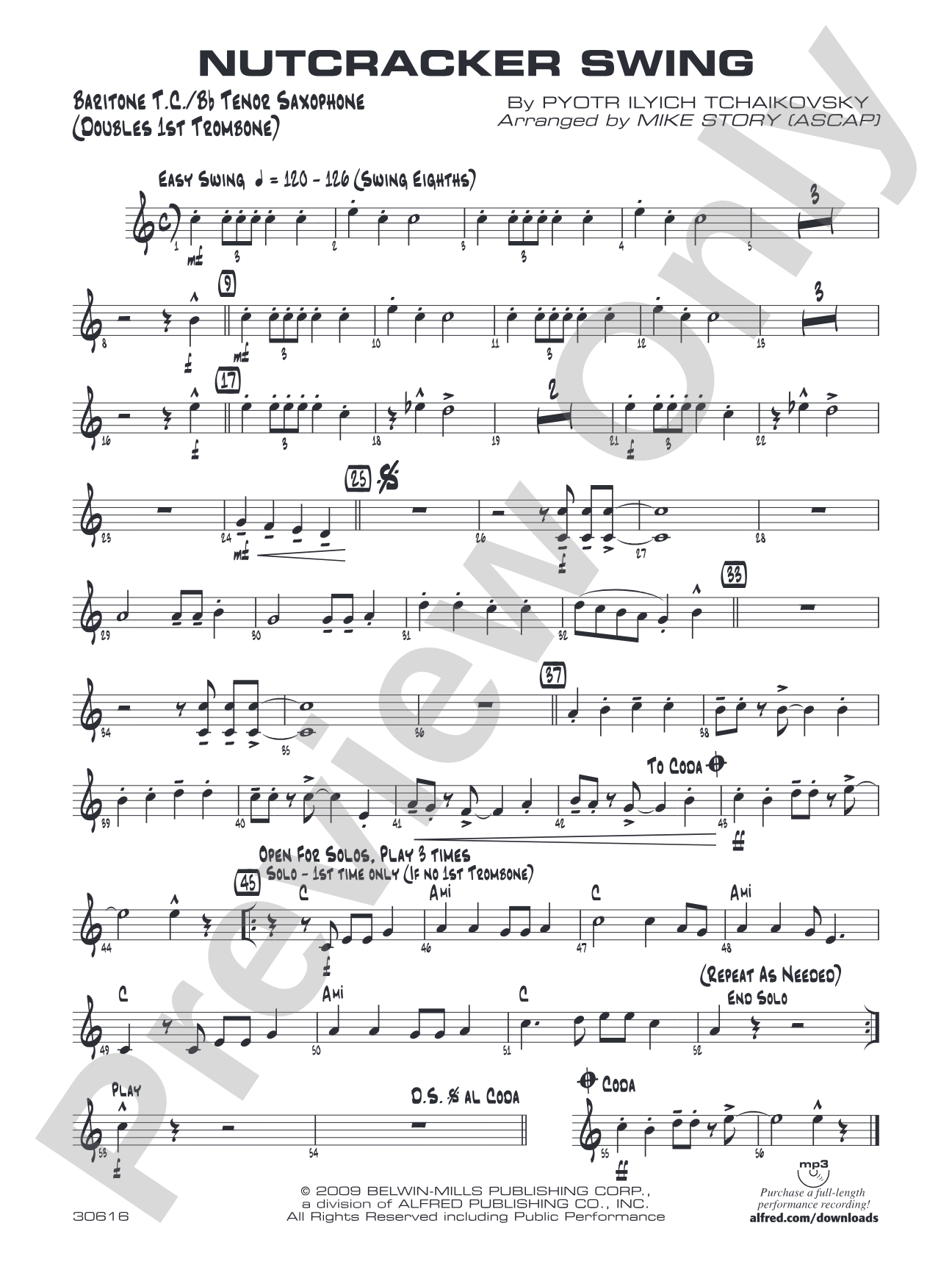

Nutcracker Swing: Baritone T.C.
By Pyotr Ilyich Tchaikovsky [Peter Ilyich Tchaikovsky] / arr. Mike Story
Grade: 1 (Easy)
Item: 00-PC-0017145_BTC1
$3.00
Pickup currently not available
Description
This is your swinging holiday chart! The familiar heralding brass opening turns into an easy swing feel with clear articulation throughout, easy rhythms, and written solos for alto, trumpet and trombone. Written to sound full with reduced instrumentation, plus all the usual optional parts, this chart is a best buy! (3:01)


Don't just read it, hear it, play along with it, and watch your students grow with it. In MakeMusic Cloud, Nutcracker Swing: Baritone T.C. comes alive with professional accompaniment, adjustable tempo, and built-in practice tools that turn solo practice into real progress.
Open in the Player
Jump straight in and assign it today.
Start Your Free Trial
Open this title and explore the full library in minutes.
Sample Audio
1
Audio File
--:--
0:00
0:00
Sample Video
Additional Details
Series:
First Year Charts for Jazz Ensemble
Publisher:
Alfred Music
Page Count:
56
SKU:
00-PC-0017145_BTC1
More about this title
About the Composer: Peter Ilyich Tchaikovsky
Peter Ilyich Tchaikovsky (1840–1893) stands among the most performed composers in the world, yet his path to recognition was anything but smooth. A Russian Romantic master, he wrote across every genre—ballets, symphonies, concertos, operas—and approached each with unflinching emotional directness. His gift for melody remains unmatched; entire passages lodge in the listener's ear after a single hearing.
For music educators, Tchaikovsky's work offers something rare: the combination of genuine artistic depth with immediate accessibility. His melodies sing naturally, his harmonies support clear learning, and his orchestral writing (even in jazz arrangements) maintains structural integrity. Teachers return to Tchaikovsky repertoire across decades and ensembles because it rewards both new and experienced players without condescension.
Why we love this
Mike Story's arrangement rescues the Nutcracker's iconic opening from predictability by grounding it in genuine swing language. The writing respects Grade 1 players while delivering the fullness and sophistication that makes a holiday concert memorable. Solo opportunities for alto, trumpet, and trombone transform what could be a section piece into a feature that lets your strongest players shine.
What to expect
Festive meets cool. The piece opens with that unmistakable Tchaikovsky fanfare, all brass and pageantry, then settles into a relaxed swing groove that feels both celebratory and effortless. There is genuine joy in the melody, but delivered with the understated swing sensibility that makes jazz ensemble music feel contemporary.
Who it's for
This works for any jazz ensemble with developing players who need repertoire that sounds polished without requiring advanced rhythmic or harmonic reading. Perfect for school jazz bands looking to fill a holiday concert with something more sophisticated than novelty arrangements, yet accessible enough to prepare quickly.
How to get the most out of it
- Lock the swing feel early in rehearsal by establishing the triplet subdivision clearly. Have the rhythm section (piano, bass, drums) anchor the groove before the full ensemble enters.
- The written solos work best with light, conversational phrasing rather than aggressive attacks. Encourage your soloists to listen to classic swing recordings where the melody breathes.
- Mark articulation crisply in the brass opening. The contrast between that staccato clarity and the laid-back swing that follows creates the arrangement's personality.
- Rehearse the transition from the herald fanfare into swing as a deliberate gear change. A slight breath or conductor gesture clarifies the style shift for the ensemble.
How to use it
Program this as an opener for a winter concert, using the familiar melody to draw listeners in before pivoting to other repertoire. It pairs well with both traditional holiday standards and contemporary jazz compositions, bridging generational taste in a single set. The length (3:01) and easy preparation time make it ideal for a school jazz ensemble that is juggling multiple concert obligations.
Skills your students will build
- Swing articulation and feel in both rhythmic and tonal context
- Reading and executing jazz chord changes and rhythmic notation
- Solo improvisation and performance in a lead voice role
- Ensemble balance and blend while maintaining individual voice clarity
- Stylistic contrast between fanfare and swing articulation