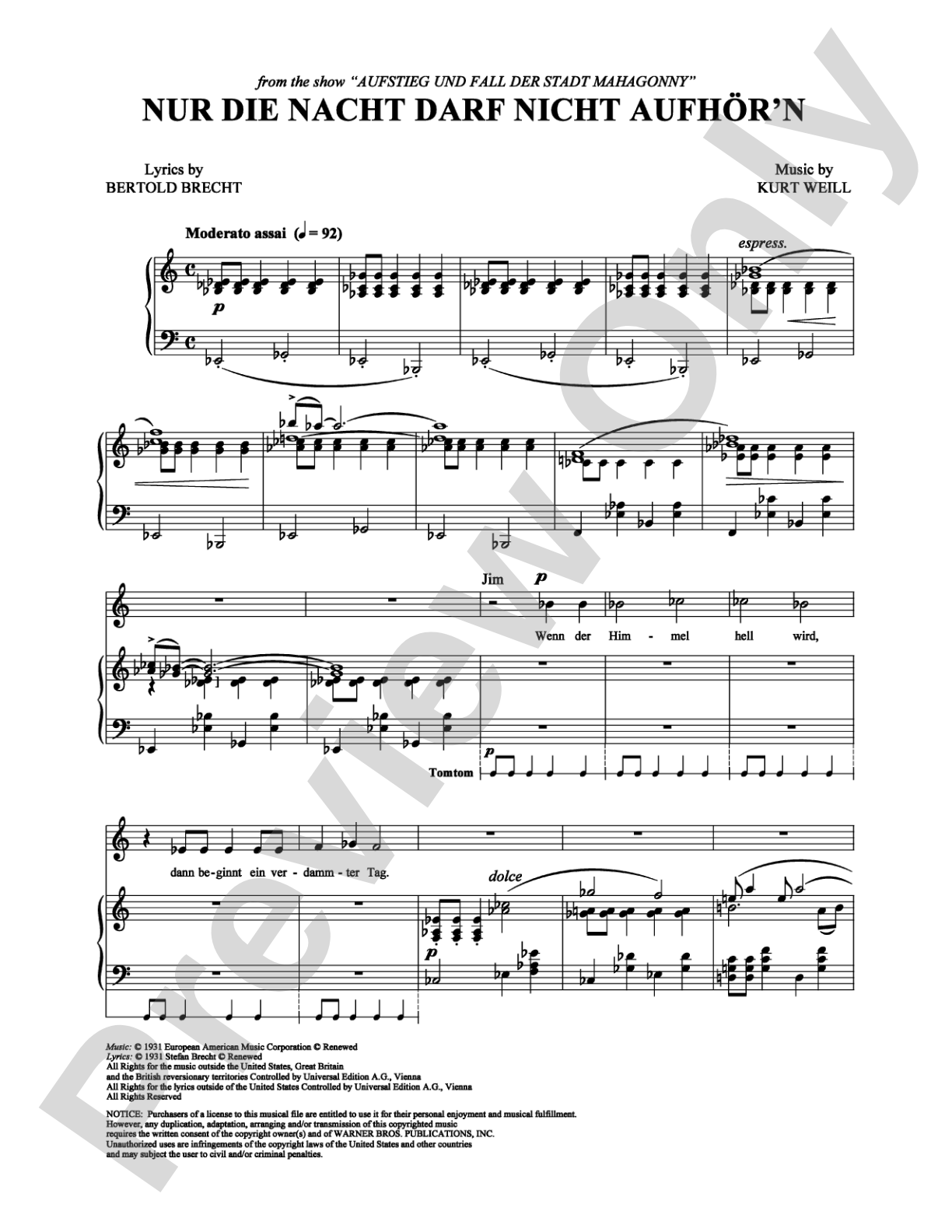
Nur Die Nacht darf nicht Aufhor'n: Piano/Vocal/Chords Digital Sheet Music

Nur Die Nacht darf nicht Aufhor'n: Piano/Vocal/Chords Digital Sheet Music

Kurt Weill

Item: 00-PS-0001666

Digital Download
$3.99
Description

Nur Die Nacht darf nicht Aufhor'n: Piano/Vocal/Chords Digital Sheet Music isn't in MakeMusic Cloud just yet...but it could be. Let us know you'd like to see it, and you'll help shape what comes next. In the meantime, start a free trial and dive into thousands of interactive titles your students can play along with today.

Sample Audio
No sample audio found.
Sample Video
Additional Details
SKU: 00-PS-0001666

More about this title

Why we love this

The German text and romantic sensibility make this a compelling choice for singers exploring art song repertoire beyond the standard canon. Piano and voice writing balance equally; neither dominates, which means your accompanist stays engaged throughout.

What to expect

Intimate and yearning. The title's promise that night must never stop speaks to a quietly insistent emotional landscape—lyrical but with underlying weight. The music unfolds with the unhurried pacing of introspection.

Who it's for

Vocalists preparing art song recitals, advanced high school singers, and college voice students working with German-language repertoire. The piano/vocal/chords format serves both classical singers learning the score and musicians who want lead-sheet flexibility for interpretation.

How to get the most out of it

  • Shape the vocal line with legit breath support; the poetry demands clarity even in sustained passages.
  • Coordinate with your pianist on tempo flexibility in the middle section; small ritardandi feel natural here but need agreement beforehand.
  • Let the chord symbols guide harmonic color choices; German Romantic harmony rewards subtle dynamic shaping at key changes.

How to use it

Pair this with other German Romantic songs in a recital focused on night poetry or romantic longing. It works equally well as a stand-alone piece in a cabaret-style concert or as part of a broader vocal program exploring 19th-century European song traditions.

Skills your students will build

  • German language text delivery and diction in song
  • Romantic-era harmonic interpretation using chord symbols
  • collaborative artistry between vocalist and pianist
  • sustaining lyrical lines with textual integrity

You May Also Like