
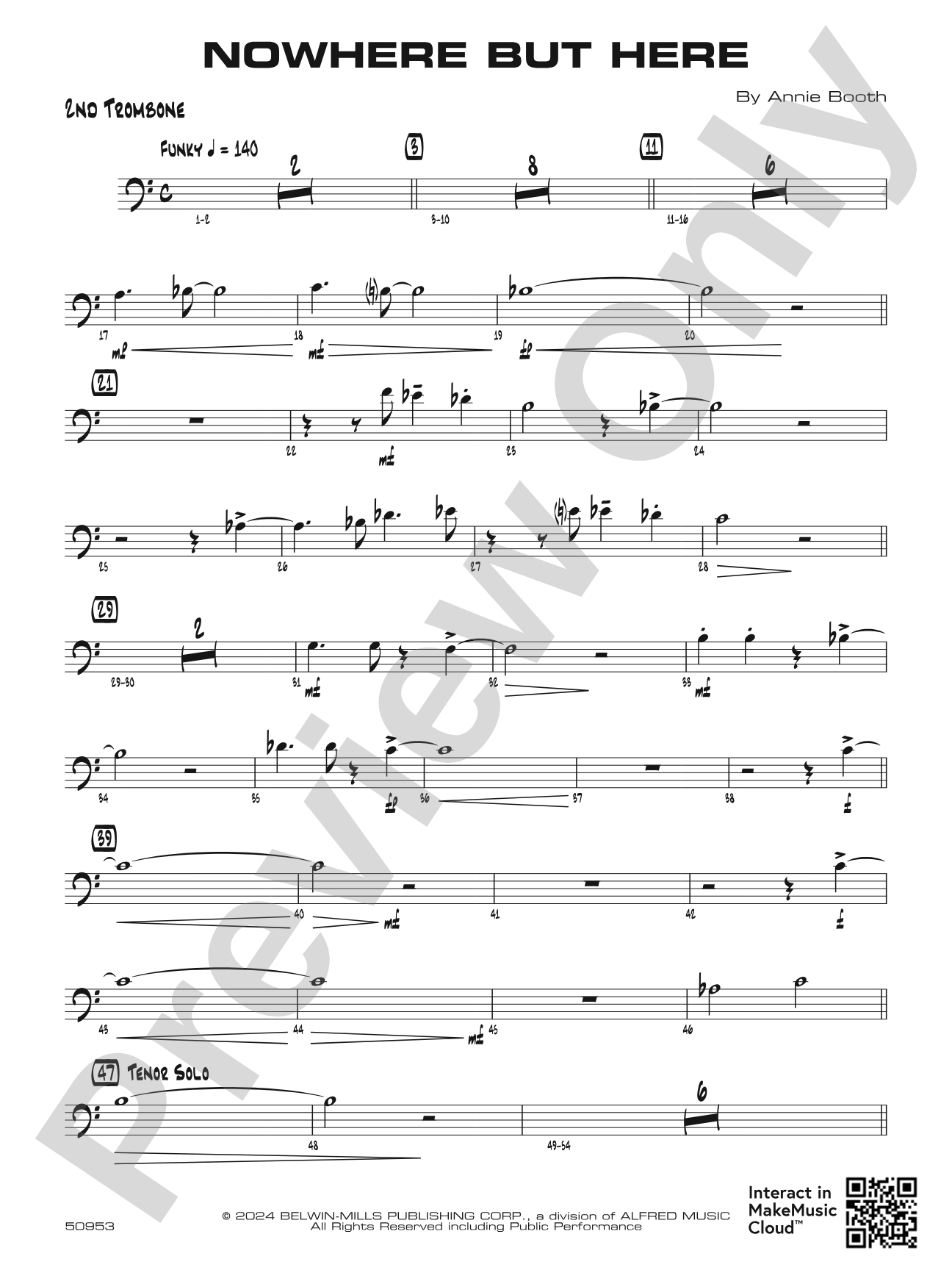

Nowhere but Here: 2nd Trombone
By Annie Booth
Grade: 3.5
Item: 00-PC-0019362_TN2
$3.00
Pickup currently not available
Description
An original with a funky groove with some powerful dynamic contrasts throughout. Played at 142 BPM, a suggested tenor 1 solo is provided and followed by an interlude that builds right into the finale. Lead trumpet range is to written B-flat above the staff with the usual optional parts plus vibes and flute. (4:00)


Don't just read it, hear it, play along with it, and watch your students grow with it. In MakeMusic Cloud, Nowhere but Here: 2nd Trombone comes alive with professional accompaniment, adjustable tempo, and built-in practice tools that turn solo practice into real progress.
Open in the Player
Jump straight in and assign it today.
Start Your Free Trial
Open this title and explore the full library in minutes.
Sample Audio
1
Audio File
--:--
0:00
0:00
Sample Video
Additional Details
Series:
Jazz Band Series
Publisher:
Alfred Music
SKU:
00-PC-0019362_TN2
More about this title
About the Composer: Annie Booth

Annie Booth brings together deep classical training, jazz fluency, and real ensemble leadership experience. As Assistant Professor of Jazz Studies at the University of Colorado Boulder, she mentors the next generation of jazz musicians while maintaining an active composing and arranging practice. Her work has earned recognition from Chamber Music America, ASCAP, and DownBeat Magazine, and she regularly appears as a guest conductor and clinician at high schools and universities across North America.
Booth's eight studio albums showcase her range as a bandleader, from intimate trio settings to larger chamber jazz ensembles. Her understanding of what works on the bandstand informs every note she writes; her pieces are written by someone who knows how jazz musicians actually play, what grooves stick, and how to build genuine ensemble energy.
Why we love this
Booth writes with the ear of a bandleader who understands the specific challenges and strengths of a working jazz ensemble at this level. The funky groove sits comfortably in rehearsal, the dynamic contrasts give your section leaders real material to shape, and the tenor solo with its built-in interlude creates natural drama without requiring your best improviser to carry the whole piece. This is repertoire written by someone who has stood in front of groups like yours and knows exactly what lands.
What to expect
Funky and propulsive from the opening, with a pocket that sits deep in the pocket. The dynamic contrasts hit like punctuation marks, building toward a tenor solo that feels like it has room to breathe before the ensemble pulls back and launches into a finale that justifies everything that came before. Four minutes of forward motion with personality.
Who it's for
Jazz directors working with Grade 3.5 ensembles who want material that swings hard without requiring advanced improvisation or technical pyrotechnics. This score works equally well for festival competition and for concert programming when you want to show your ensemble's ability to lock into a groove and respond to sophisticated dynamic writing.
How to get the most out of it
- Lock the groove at 142 BPM before worrying about dynamics. Once the rhythm section owns the pocket, layer in the dynamic contrasts section by section so they read as intentional builds rather than choppy.
- Feature your tenor 1 soloist early in rehearsal and let them explore the space Booth provides in the solo section. The interlude that follows is designed to support, not overshadow.
- Balance the lead trumpet's high range (written B-flat above the staff) with careful dynamics from the supporting voices. Push the lead player to project without forcing; the range is high but the context is groove-based, not screaming.
- Use the optional parts strategically. Vibes and flute add color and sophistication, but the core arrangement works without them. Add them when your personnel allows and when you want to shift the ensemble's texture heading into the finale.
How to use it
Program this as a centerpiece on a jazz concert alongside a ballad or more traditional swing tune to show ensemble range. It works well as a closer if you want to send the audience out energized. In a festival or competition setting, the combination of groove, dynamics, and soloistic spotlight showcases ensemble musicianship across multiple skill sets.
Skills your students will build
- Locking into a consistent funk groove and maintaining it under dynamic pressure
- Responding to sudden dynamic shifts while keeping rhythmic integrity intact
- Supporting and accompanying a featured soloist within an ensemble context
- Balancing lead trumpet range and projection with sensitive voicing in supporting parts
- Reading and executing optional/doubling parts to expand ensemble color