
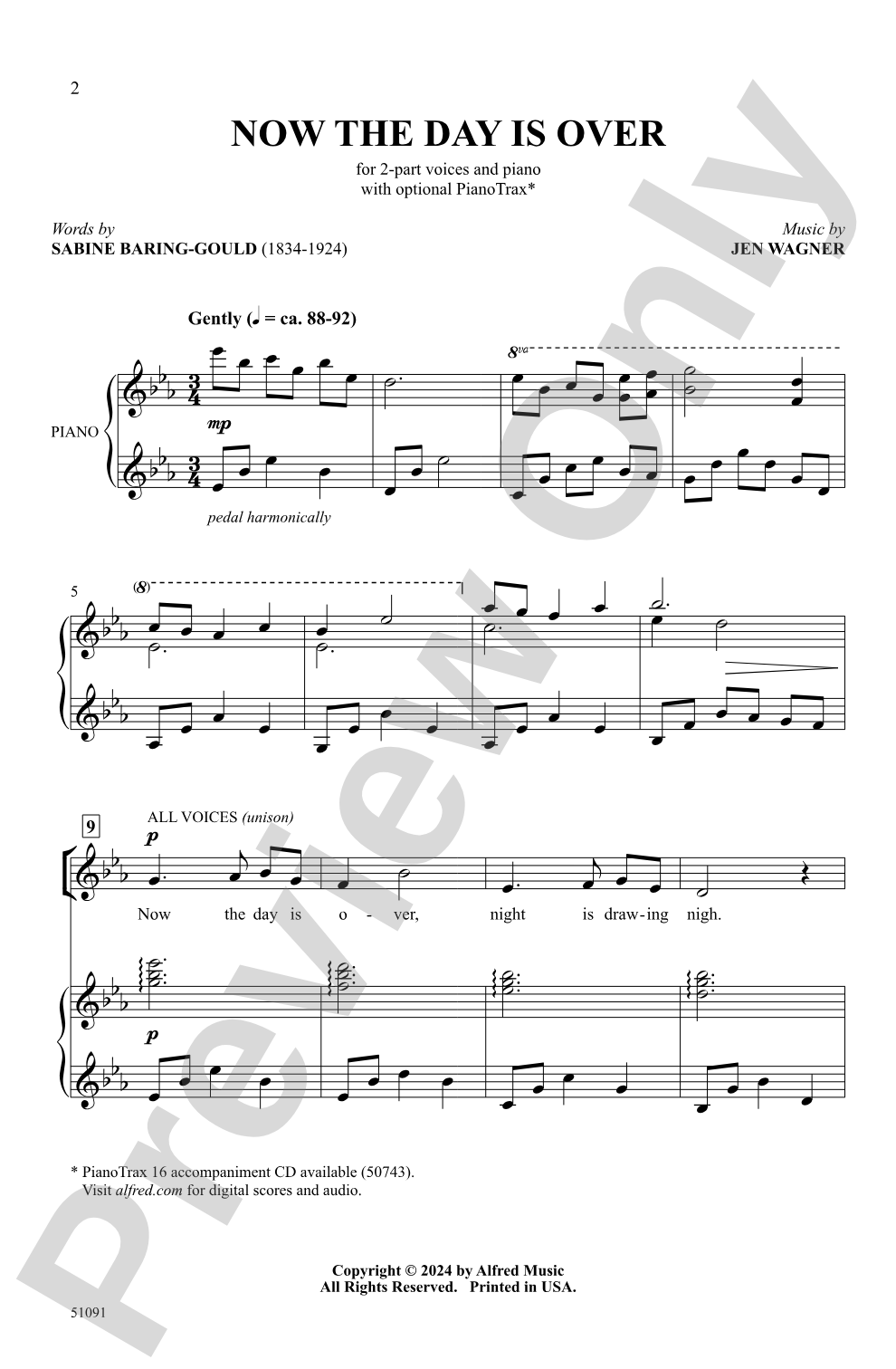
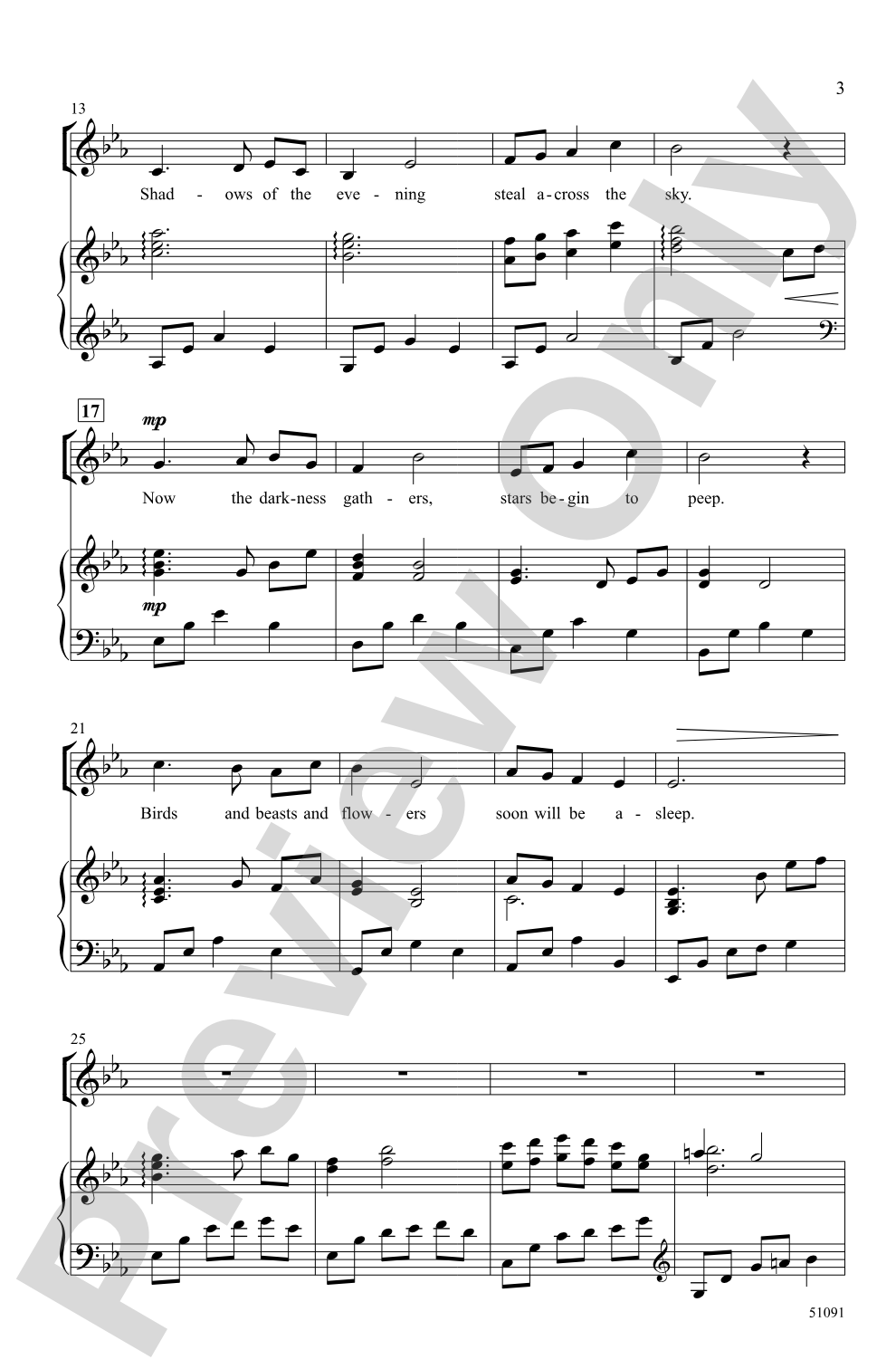

Now the Day Is Over: 2-Part Choral Octavo
Words by Sabine Baring-Gould, music by Jen Wagner
Item: 00-PO-0007227
$2.20
Minimum order quantity: 20 copies
Pickup currently not available
Description
Here's a traditional lullaby text set to original music in partner song style. At the heart of the piece, the flowing melody is paired with a descant-like counterline, creating lovely harmony. The supportive piano accompaniment, moderate vocal ranges, and careful attention to voice leading make this a solid choice for developing choirs.


Now the Day Is Over: 2-Part Choral Octavo isn't in MakeMusic Cloud just yet...but it could be. Let us know you'd like to see it, and you'll help shape what comes next. In the meantime, start a free trial and dive into thousands of interactive titles your students can play along with today.
Request This Title
Tell us you want it.
Start Your Free Trial
Explore everything that's ready to play right now.
Sample Audio
1
Audio File
--:--
0:00
0:00
Sample Video
Additional Details
Series:
Alfred Choral Designs
Publisher:
Alfred Music
Page Count:
8
SKU:
00-PO-0007227
More about this title
About the Composer: Jen Wagner

Jen Wagner brings both compositional ambition and classroom experience to her work. A clinician in high demand for middle and high school choirs across the country, she has conducted honors ensembles nationwide and seen her compositions performed at ACDA-sponsored festivals and All-State events. Her music appears through Alfred Music, GIA, Heritage Music Press, and her independent publishing company.
Wagner serves as Senior Division General Music Teacher and Choral Director at Milton Hershey School in Hershey, Pennsylvania, where her ensembles have recorded with GRAMMY-nominated artists, performed at the White House, and earned consistent recognition in competitive festivals since 2011. She holds a Master of Music in Choral Conducting from Messiah University and a Bachelor of Arts in Music Education from Bloomsburg University. She currently serves on the Pennsylvania board of the American Choral Directors Association and is active in the National Association of Music Education and the Pennsylvania Music Educators Association.
Why we love this
Wagner's gift for writing accessible yet musically substantive pieces shines here. The partner song structure gives developing singers a genuine musical challenge without overwhelming them, and the flowing melody paired with a true counterline teaches voice independence in the most natural way. This is the kind of repertoire that sounds richer every rehearsal as singers settle into their parts.
What to expect
Gentle and introspective, with a lullaby's natural sense of repose. The counterpoint between the two lines creates moments of unexpected harmonic richness, and the flowing melody feels both familiar and freshly imagined. The whole piece settles around you like a soft blanket.
Who it's for
Developing choirs and middle school ensembles ready to tackle partner songs with confidence. The moderate vocal ranges and careful voice leading make this approachable for singers still building stamina and sight-reading skill, yet the harmonic writing rewards solid ensemble musicianship.
How to get the most out of it
- Balance the two vocal lines by letting each group hear and match the independence of its own part during sectionals before full rehearsals; the countermelody should never disappear into the main line.
- Shape the phrases with long-line awareness even though the text is gentle; avoid lifeless phrasing by identifying the harmonic tension points where the lines interact.
- Use the recorded accompaniment early to anchor intonation on both parts, especially where the voices move in contrary motion.
- Take time with vowel unification between parts, since the piano texture is supportive and any mismatch in vowel color will be exposed in the two-part writing.
How to use it
Program this as a concert closer or opening number to establish an intimate, reflective mood. Its lullaby text and accessible difficulty make it ideal for winter or spring concerts where you want to contrast with more energetic repertoire. The partner song structure also makes it a strong selection for festival or contest performance, where the musical craftsmanship is clear to any adjudicator.
Skills your students will build
- Singing independent melodic lines within a partner song texture
- Maintaining harmonic awareness while performing a separate vocal line
- Balancing blend and diction across two different pitch centers
- Phrase shaping and pacing in supported vocal writing
- Reading and performing with piano accompaniment