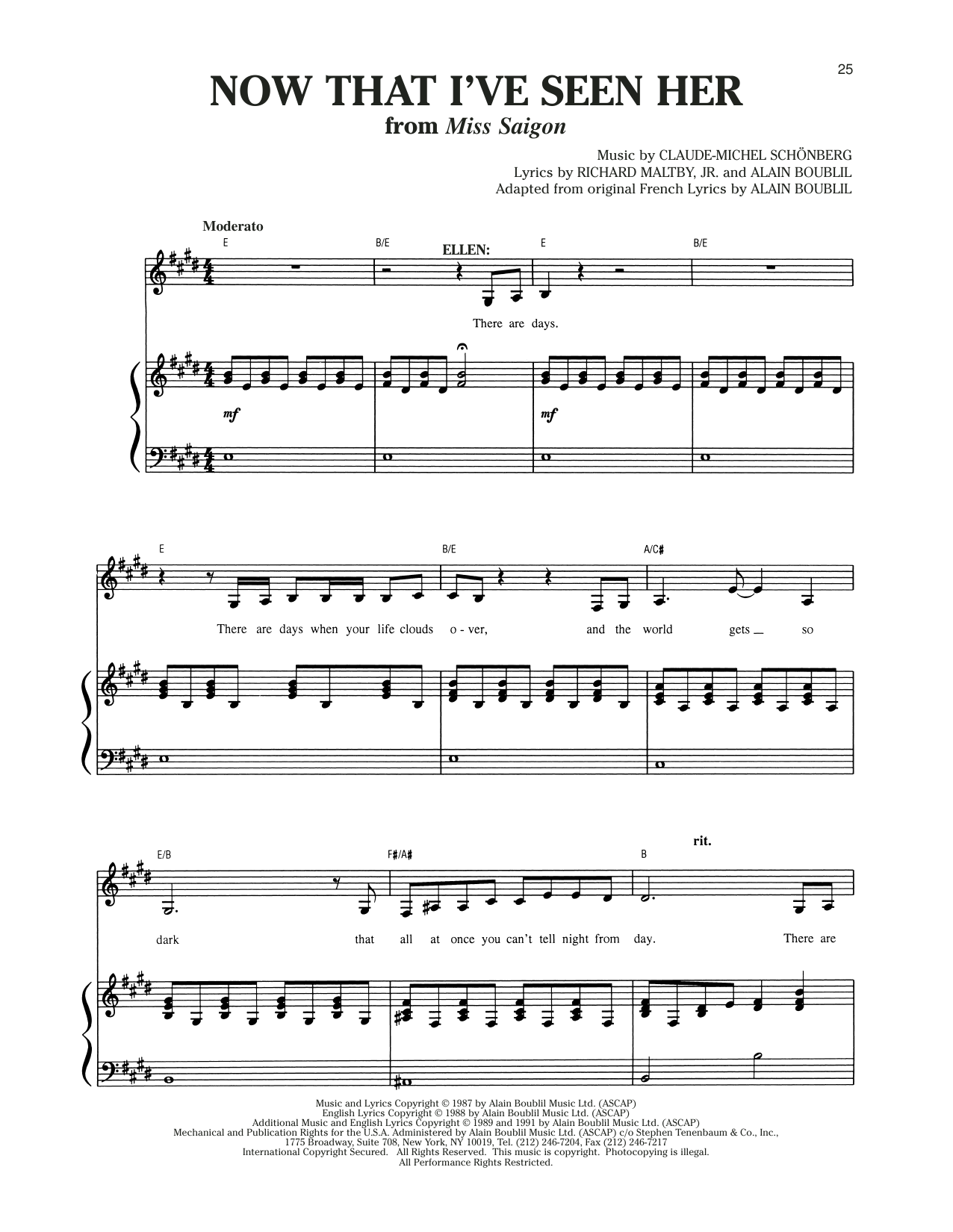
Now That I've Seen Her (from Miss Saigon) Sheet Music Preview

Now That I've Seen Her (from Miss Saigon): Piano Vocal

By Michel Legrand / By Claude-Michel Schönberg / As performed by Claude-Michel Schonberg

Item: 35-DS01824089

Digital Download
$5.99
Description

Now That I've Seen Her (from Miss Saigon): Piano Vocal isn't in MakeMusic Cloud just yet...but it could be. Let us know you'd like to see it, and you'll help shape what comes next. In the meantime, start a free trial and dive into thousands of interactive titles your students can play along with today.

Sample Audio
No sample audio found.
Sample Video
Additional Details
Publisher: Hal Leonard
Page Count: 5
SKU: 35-DS01824089

More about this title

About the Composer: Michel Legrand

Michel Legrand composed some of the most recognizable film scores and popular songs of the twentieth century, earning three Academy Awards and becoming a fixture in both concert halls and recording studios. His gift for melody was matched by his sophisticated harmonic sensibility; he moved fluidly between jazz, classical, and popular idioms, which is why his work remains so teachable across diverse musical contexts.

Why we love this

This song captures the emotional core of Miss Saigon with remarkable economy. The vocal line sits naturally for singers at an intermediate level, and the piano part offers enough harmonic color to sustain interest without overwhelming the voice or requiring advanced technique.

What to expect

Tender and introspective, with moments of longing. The harmonic language is warm without being saccharine, and there's a cinematic quality that invites the singer to inhabit a specific emotional moment. It sits somewhere between art song and contemporary popular music.

Who it's for

This arrangement works well for voice students studying contemporary music and song interpretation, as well as for pianist-vocalists preparing audition material or recital repertoire. It suits singers who have solid breath control and a sense of phrasing but need pieces that don't demand extreme range or vocal gymnastics.

How to get the most out of it

  • Shape the melody with the natural phrasing of speech; resist the urge to push through phrase endings. The power comes from restraint.
  • Let the piano accompaniment breathe in the intro and between phrases. These moments of space are essential to the song's vulnerability.
  • Explore the emotional arc from hesitation to clarity. The vocal line suggests uncertainty that gradually resolves; honor that journey rather than singing with a single mood throughout.
  • Balance the vocal line with the harmonic movement in the piano. When the chords shift, make sure they're heard; when they're stable, you can anchor the melody more firmly.

How to use it

Consider pairing this with other contemporary musical theater selections to create a focused recital set, or use it as a bridge between classical song literature and modern musical theater in a mixed vocal program. It also serves well as a teaching piece for understanding how vernacular melody and functional harmony can coexist with genuine emotional depth.

Skills your students will build

  • Phrasing and breath management in contemporary vocal music
  • Interpreting rubato and emotional nuance without disrupting the underlying pulse
  • Reading and performing expressive notation in a pop/musical theater context
  • Collaboration between vocalist and pianist, especially in passages that require flexible timing

You May Also Like