
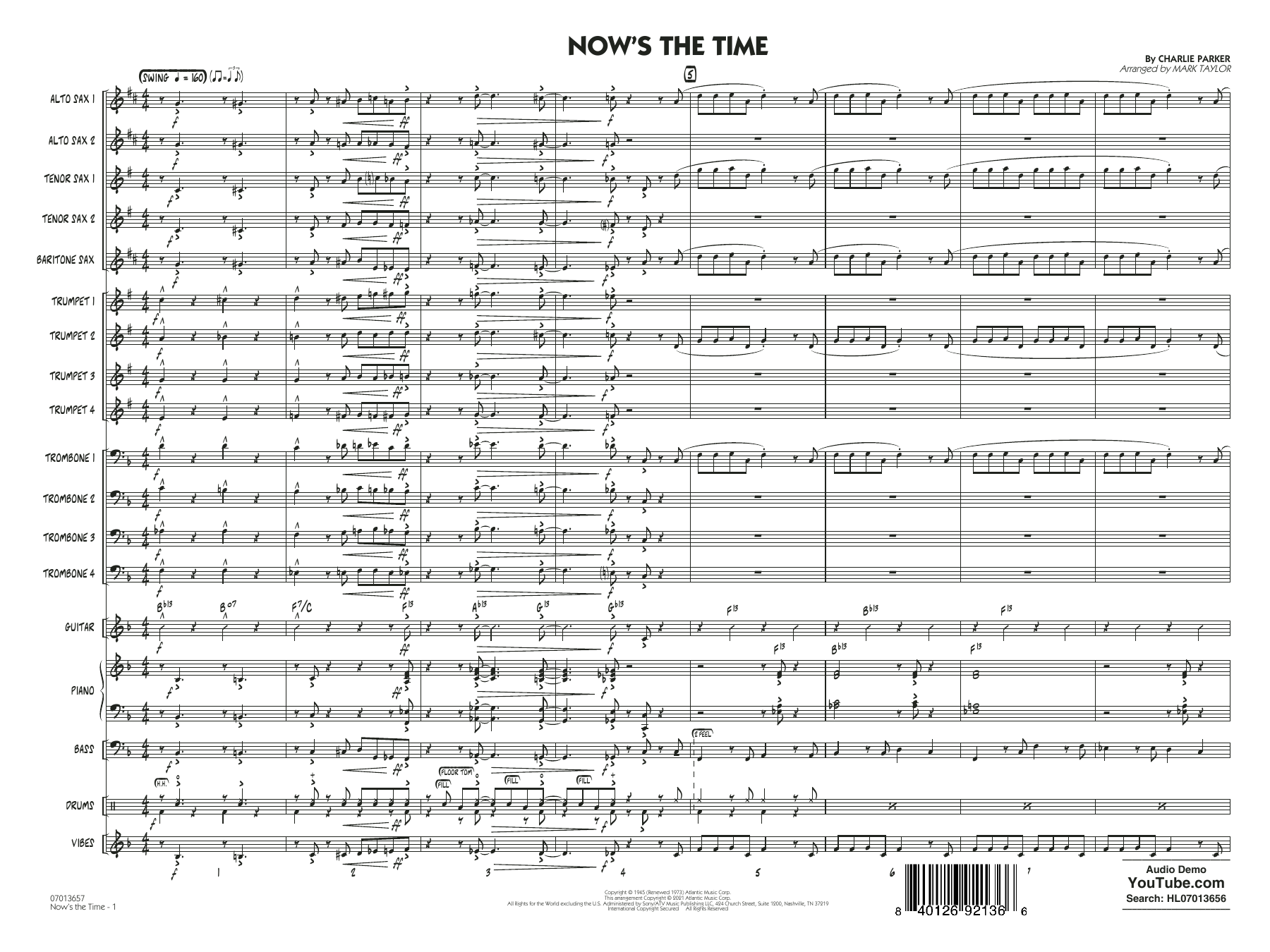

Now's the Time (arr. Mark Taylor): Jazz Ensemble Conductor Score & Parts
By Charlie Parker / Arranged by Mark Taylor
Item: 35-PK00480373
$50.00
Pickup currently not available
Buy Extra Parts (Digital PDF Download)
Parts Added to Cart!
Description
This swing classic from bebop legend Charlie Parker belongs in every jazz library. The easy melody and blues changes make this a perfect fit for younger players. Mark's classy chart spreads the melody around starting with a front line of three saxes, trumpet and trombone, followed by feature spots for the sax section, and finally a marvelous tutti for the entire ensemble. This chart's got it all!


Now's the Time (arr. Mark Taylor): Jazz Ensemble Conductor Score & Parts isn't in MakeMusic Cloud just yet...but it could be. Let us know you'd like to see it, and you'll help shape what comes next. In the meantime, start a free trial and dive into thousands of interactive titles your students can play along with today.
Request This Title
Tell us you want it.
Start Your Free Trial
Explore everything that's ready to play right now.
Sample Audio
No sample audio found.
Sample Video
No sample videos found.
Additional Details
Publisher:
Hal Leonard
SKU:
35-PK00480373
More about this title
About the Composer: Charlie Parker
Charlie Parker revolutionized jazz in the 1940s by combining virtuosic harmonic innovation with an instinctive melodic gift. His bebop style transformed the saxophone into an instrument capable of the same harmonic complexity and improvisational depth as piano or guitar, fundamentally shifting what jazz musicians could achieve. Parker's compositions remain teaching tools because they balance accessibility with genuine sophistication; even beginners can grasp the melody while advanced players find endless interpretive possibilities in the changes.
For educators, Parker's legacy centers on his influence over how we teach jazz vocabulary and phrasing. His lines reveal how to navigate changes logically, how to build solos that tell a story, and how swing articulation creates human warmth in precise playing. "Now's the Time" exemplifies this balance perfectly: it's simple enough for developing players yet deep enough to inspire serious musicians.
Why we love this
Mark Taylor's arrangement respects Parker's original concept while building orchestration interest that keeps younger ensembles engaged throughout. The melody passes logically between sections (front line, saxes, full band), creating natural entry points for students to connect with the tune while still serving the original blues changes without complication. It's the kind of chart that makes kids actually remember what they played in rehearsal because the structure makes musical sense.
What to expect
A relaxed swagger that never loses its sharp edge. The melody sits naturally in the middle register, giving the piece an approachable warmth, yet the blues changes and Taylor's orchestration choices keep everything swinging with understated confidence. It feels like walking into a jam session where everyone already knows the tune and is genuinely enjoying themselves.
Who it's for
This chart works for jazz ensembles just entering the bebop repertoire, including high school groups and adventurous middle school programs. It's also valuable for college jazz ensembles looking for a historically important standard to anchor a concert or workshop on jazz fundamentals.
How to get the most out of it
- Lock the rhythm section into a relaxed swing feel before layering the horns. Parker's phrasing depends entirely on the pocket, so spend rehearsal time letting the drums and bass establish the groove independently.
- Balance the saxophone section carefully when the melody passes there; the voicing will be thicker than the opening trumpet/trombone line, so watch that the ensemble stays proportional.
- Work the articulation in the tutti section with particular care. Swing jazz articulation requires a slightly separated, buoyant attack that's different from straight classical tonguing.
- Encourage soloists to reference Parker's original recorded versions so they understand how to shape phrases across the changes rather than playing written note values literally.
How to use it
Open a jazz concert with this to establish the blues vernacular immediately, or program it alongside other bebop standards to build a thematic set. It also works wonderfully as a teaching piece mid-year when your ensemble has enough ensemble cohesion to focus on style and articulation rather than basic technique.
Skills your students will build
- Swing articulation and phrasing in a bebop context
- Reading blues chord changes
- Balancing melody and harmony in multi-sectional orchestrations
- Listening to and replicating recorded jazz interpretations
- Trading solos and responding to other voices in ensemble settings