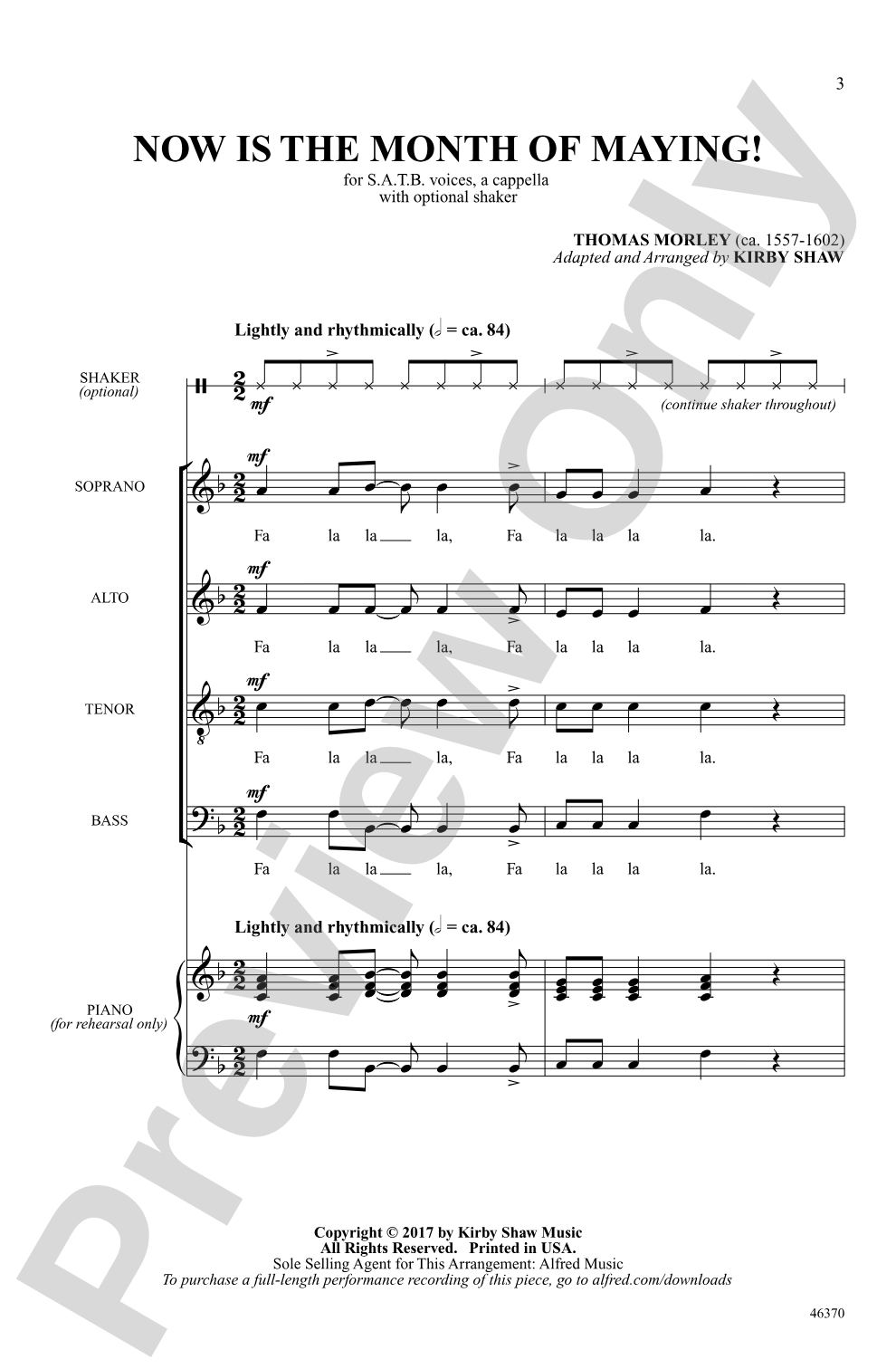
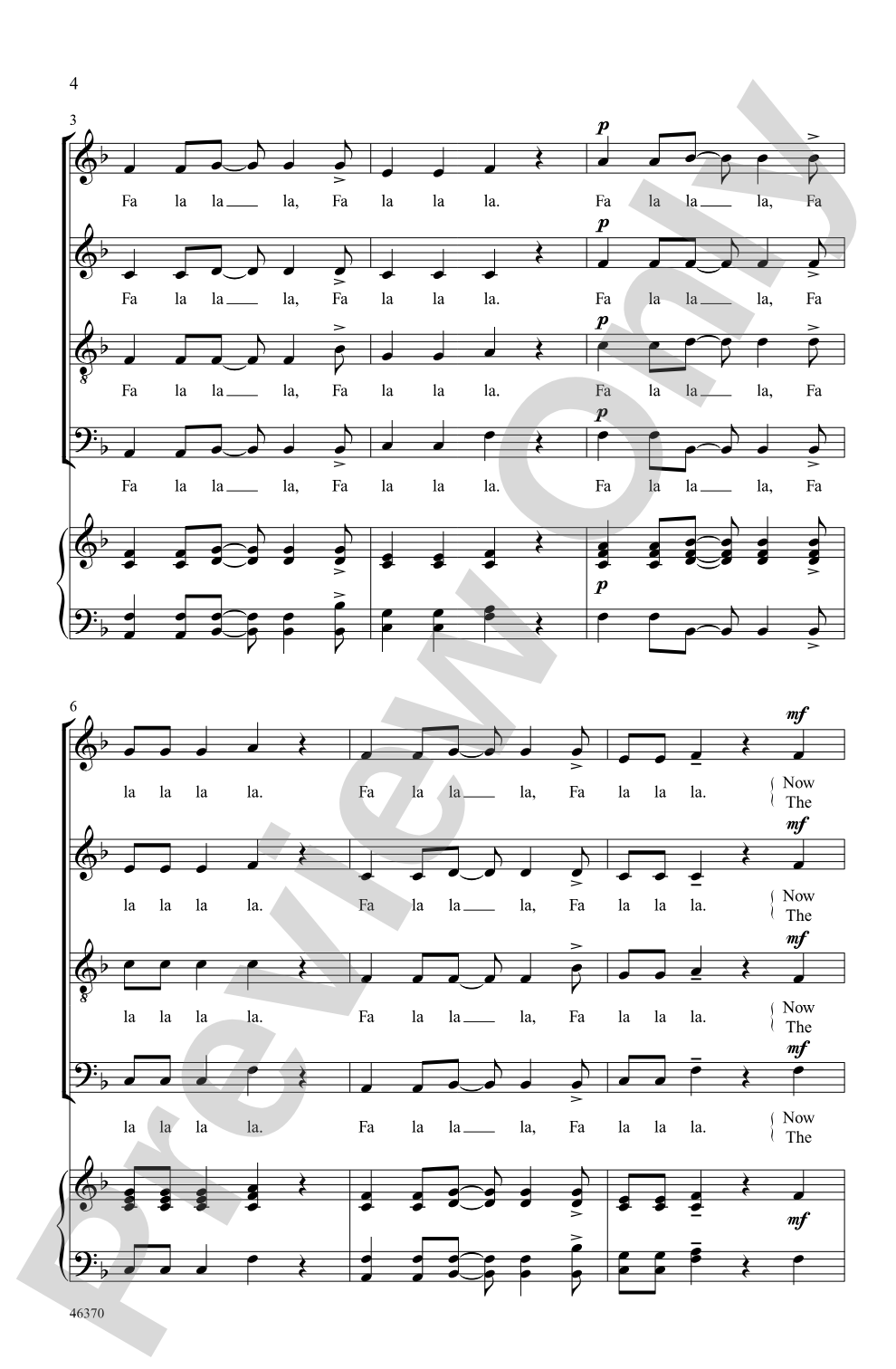
Now Is the Month of Maying! Sheet Music Preview

Now Is the Month of Maying!: SATB, a cappella Choral Octavo

By Thomas Morley / arr. Kirby Shaw

Item: 00-PO-0005617

Digital Download
$1.90

Minimum order quantity: 20 copies

Description
An intriguing mix of old and new, Kirby's treatment of the Thomas Morley madrigal retains the original vocal parts in dancing counterpoint, while adding a fresh rhythmic refrain at the beginning and end. With just a shaker accompaniment, this spritely a cappella arrangement builds ensemble skills such as intonation, flexibility, balance, and blend.

Now Is the Month of Maying!: SATB, a cappella Choral Octavo isn't in MakeMusic Cloud just yet...but it could be. Let us know you'd like to see it, and you'll help shape what comes next. In the meantime, start a free trial and dive into thousands of interactive titles your students can play along with today.

Sample Audio
0:00
0:00
Sample Video
Additional Details
Series: Alfred Choral Designs
Publisher: Alfred Music
Page Count: 12
SKU: 00-PO-0005617

More about this title

About the Composer: Thomas Morley

Thomas Morley (1557-1602) was among the most prolific and inventive English composers of the Renaissance, best known for his madrigals that brought Italian forms into the English musical vernacular. His secular vocal works, including "Now Is the Month of Maying," showcase his gift for setting text with rhythmic vitality and memorable melody. Morley also served as a music publisher and theorist, and his practical writings on composition remain influential in music education today.

As a composer for both the stage and the church, Morley understood how to write music that engaged performers and audiences alike. His madrigals balance structural sophistication with immediate appeal, making them enduring repertoire for choirs seeking to build ensemble maturity while connecting to musical history.

Why we love this

Kirby Shaw's arrangement preserves the integrity of a Renaissance masterwork while making it resonate with contemporary choirs. The original counterpoint remains front and center, but the added rhythmic refrain and shaker part give the piece forward momentum and a clearly defined structure that singers find gratifying to execute. This is the kind of arrangement that earns standing ovations at festivals because it sounds both historically grounded and musically fresh.

What to expect

Spring arrives in voices. The piece dances forward with Renaissance charm and modern energy, alternating between moments of intricate vocal interweaving and bright, rhythmically propulsive sections that feel almost celebratory. Singers experience both the intellectual satisfaction of singing counterpoint and the physical pleasure of moving together as one ensemble.

Who it's for

This octavo works for high school choirs, college ensembles, and adult groups seeking accessible Renaissance repertoire with contemporary appeal. Directors assembling festival or concert programs will find a piece that challenges ensemble musicianship (intonation, balance, blend) without requiring instrumental accompaniment or complex staging.

How to get the most out of it

  • Attend closely to the dance-like rhythmic character of the refrain sections. These moments should feel lighter and more propulsive than the madrigal portions, giving singers a clear tonal and stylistic shift to execute.
  • Balance the shaker part carefully. It should support the ensemble without becoming a percussive distraction; think of it as a gentle anchor rather than a driving pulse.
  • Shape the original madrigal passages with attention to text inflection and phrase breathing. The counterpoint should sing naturally, not sound mathematically precise.
  • Spend rehearsal time on the transitions between the refrain and madrigal sections. Ensure the ensemble recognizes these structural moments and can navigate them with musical conviction.

How to use it

Program this as a lively centerpiece in a set exploring Renaissance secular music, or use it as a contrast piece following something slower and more harmonically dense. Its a cappella format and modest page count make it ideal for both concert performances and festival competitions where you want music that demonstrates ensemble sophistication without lengthy stage setup.

Skills your students will build

  • Reading and executing Renaissance counterpoint in four parts
  • Tuning major and minor intervals within moving vocal lines
  • Blend and balance across changing harmonic densities
  • Stylistic flexibility between madrigal and refrain textures
  • Rhythmic precision and ensemble synchronization with a simple percussion part

You May Also Like