
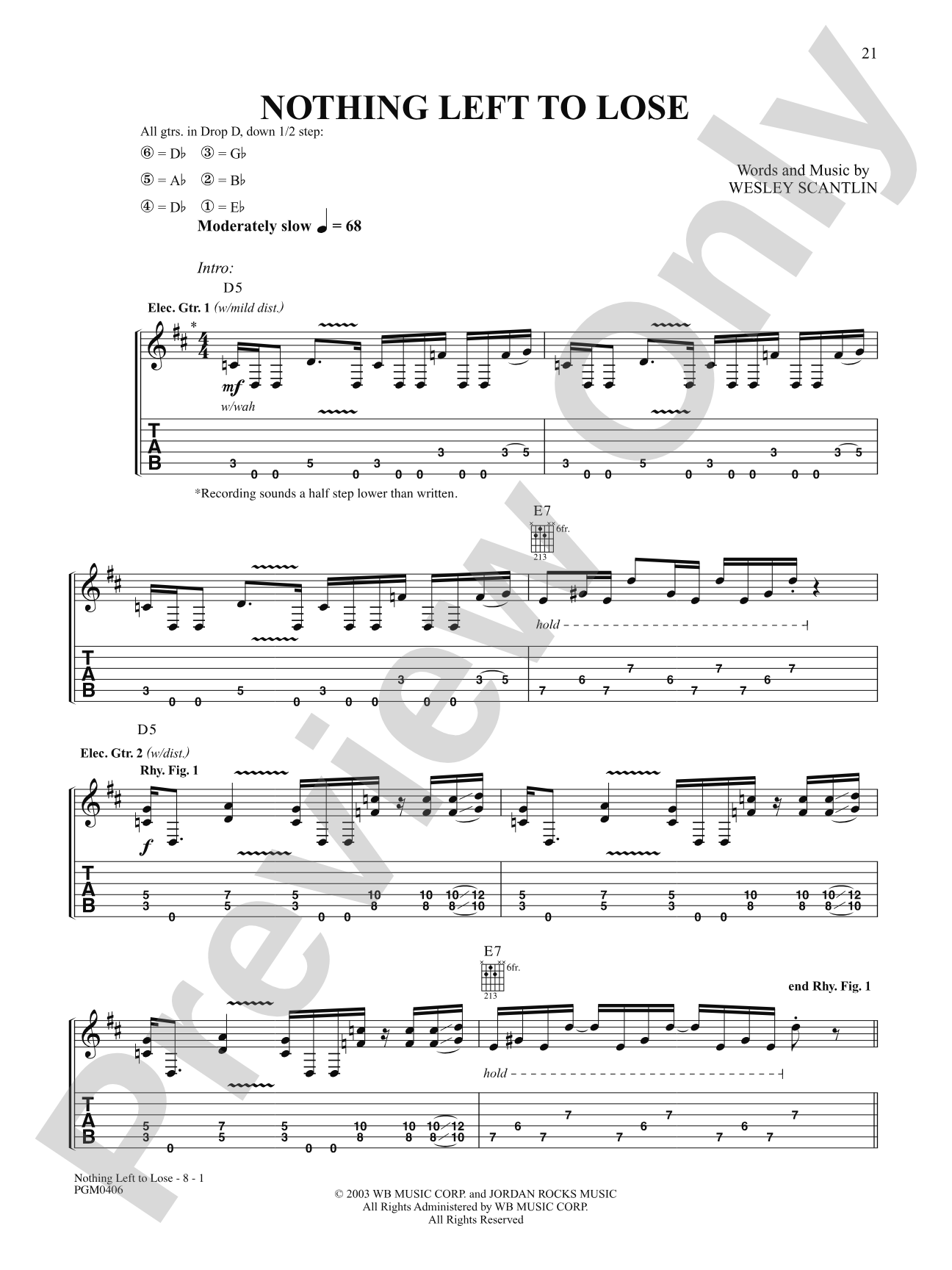
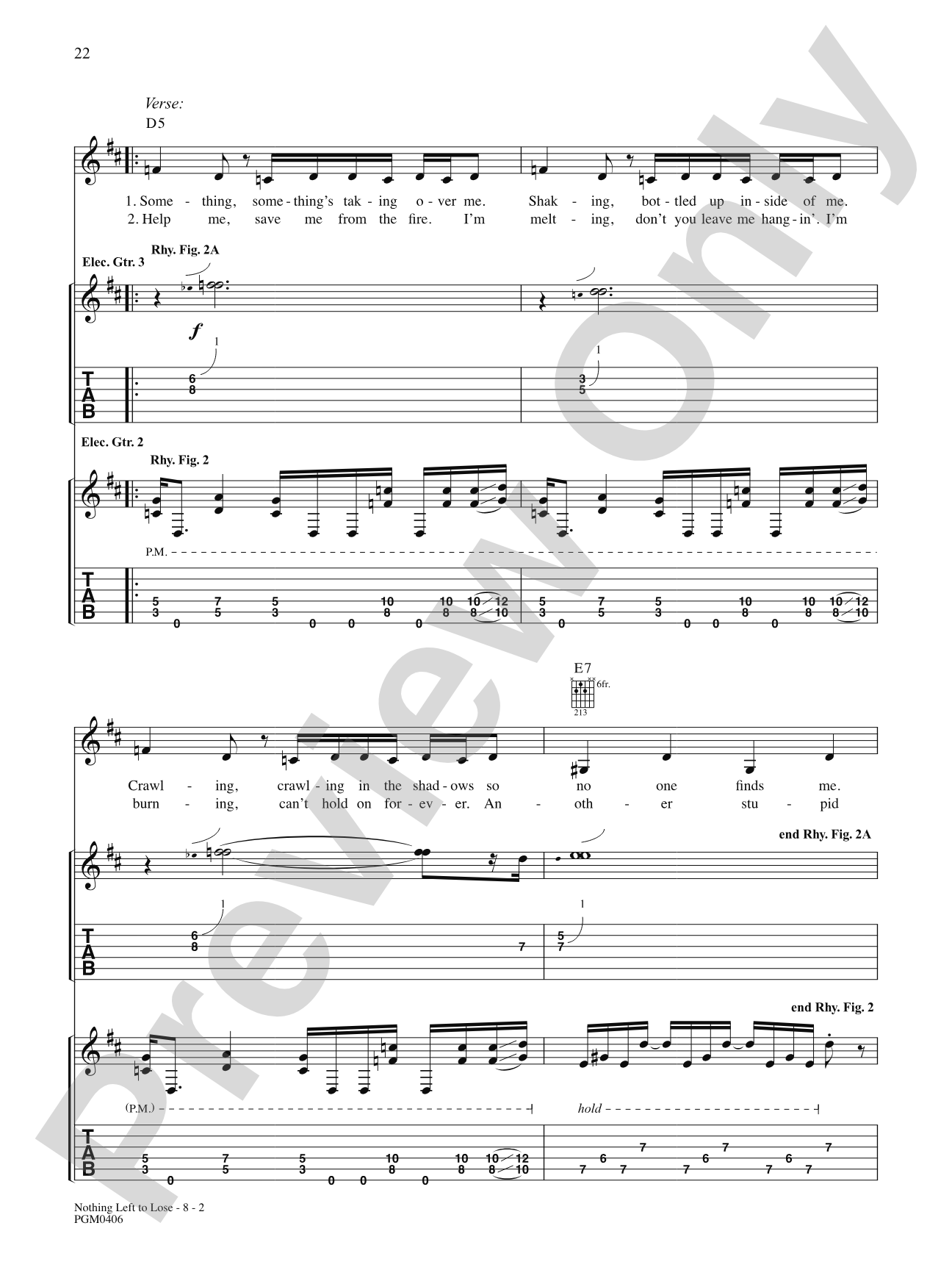

Nothing Left to Lose: Authentic Guitar TAB
Puddle of Mudd
Item: 00-PS-0012664
$5.99
One moment…
Related Items
Cloud 9: Authentic Guitar TAB |
$9.99
|
View | |
Freak of the World: Authentic Guitar TAB |
$5.99
|
View | |
Heel Over Head: Authentic Guitar TAB |
$5.99
|
View | |
Bottom: Authentic Guitar TAB |
$9.99
|
View | |
Already Gone: Authentic Guitar TAB |
$9.99
|
View | |
Sydney: Authentic Guitar TAB |
$5.99
|
View | |
Spin You Around: Authentic Guitar TAB |
$9.99
|
View | |
Time Flies: Authentic Guitar TAB |
$9.99
|
View | |
Think: Authentic Guitar TAB |
$5.99
|
View | |
Change My Mind: Authentic Guitar TAB |
$5.99
|
View |
Description
Puddle of Mudd was one of the many neo-grunge rock groups that burst onto the scene in 2001. With a sound that re-creates elements of Nirvana and Alice in Chains, their second album, Life on Display, is a polished revival of grunge with a hint of metal. Our album-matching folio includes a special photo montage of the members of the band. Titles are: Away from Me * Heel Over Head * Nothing Left to Lose * Change My Mind * Spin You Around * Already Gone * Think * Cloud 9 * Bottom * Freak of the World * Sydney * Time Flies.


Nothing Left to Lose: Authentic Guitar TAB isn't in MakeMusic Cloud just yet...but it could be. Let us know you'd like to see it, and you'll help shape what comes next. In the meantime, start a free trial and dive into thousands of interactive titles your students can play along with today.
Request This Title
Tell us you want it.
Start Your Free Trial
Explore everything that's ready to play right now.
Sample Audio
No sample audio found.
Sample Video
No sample videos found.
Additional Details
Publisher:
Alfred Music
Page Count:
124
SKU:
00-PS-0012664
More about this title
About the Composer: Wesley Scantlin
Wesley Scantlin fronted Puddle of Mudd during their rise in the early 2000s, a period when nu-metal and post-grunge rock dominated mainstream rock radio. As the band's primary songwriter and vocalist, Scantlin shaped their signature sound by blending heavy guitar work with accessible melodies, drawing influence from the Seattle grunge scene while adding harder edges typical of the era.
Why we love this
This folio gives guitarists direct access to the exact arrangements from a commercially successful rock album, complete with authentic transcriptions that capture the specific textures and voicings of the original recordings. The 124-page collection spans the full album, so you get both the chart-topping title track and deeper cuts that reward careful listening and deliberate practice.
What to expect
Heavy, driving, and occasionally introspective. The album balances crushing riffs and screamed vocals with moments of genuine melodic vulnerability, capturing the conflict between aggression and emotion that defined the era. From the immediate hook of the title track to the sonic sprawl of deeper cuts, this is guitar work that feels both accessible and intentionally crafted.
Who it's for
Intermediate to advanced rock guitarists who want to study real album arrangements from a commercially successful band, as well as players building a working repertoire of 2000s rock material. This collection also appeals to musicians interested in understanding the neo-grunge movement and how bands adapted Seattle influences for the modern rock radio landscape.
How to get the most out of it
- Map out the gain and tone settings needed across different songs before rehearsing; the album shifts between cleaner verses and heavily distorted choruses, so knowing your equipment transitions in advance keeps the set flowing.
- Nail the rhythmic pocket on the heavier tracks by locking into the drum patterns early; tracks like 'Freak of the World' rely on tight coordination between guitar and drums to land their impact.
- Use the photo montage as a reference point for understanding the band's aesthetic during this era; visual context often unlocks the emotional intent behind the playing.
- Practice the cleaner, more melodic passages with as much precision as the distorted sections; songs like 'Away from Me' prove that dynamic playing is what separates solid performances from memorable ones.
How to use it
Guitarists preparing a recital focused on 2000s rock repertoire will find a complete album's worth of material here, allowing for curated setlists that highlight different sides of the band's writing. You can also use individual tracks to teach specific techniques common to the era: palm muting, power chord voicings, and the balance between lead and rhythm parts within a single song.
Skills your students will build
- Reading and executing authentic rock guitar TAB with dynamic distortion and effects
- Understanding power chord voicings and their application in heavy riff writing
- Controlling palm-muted rhythms at varying tempos and intensities
- Translating recorded guitar tones into practical equipment and technique choices
- Learning song structure and arrangement decisions from a complete album context