Nothing At All (from How To Dance In Ohio) Sheet Music Preview

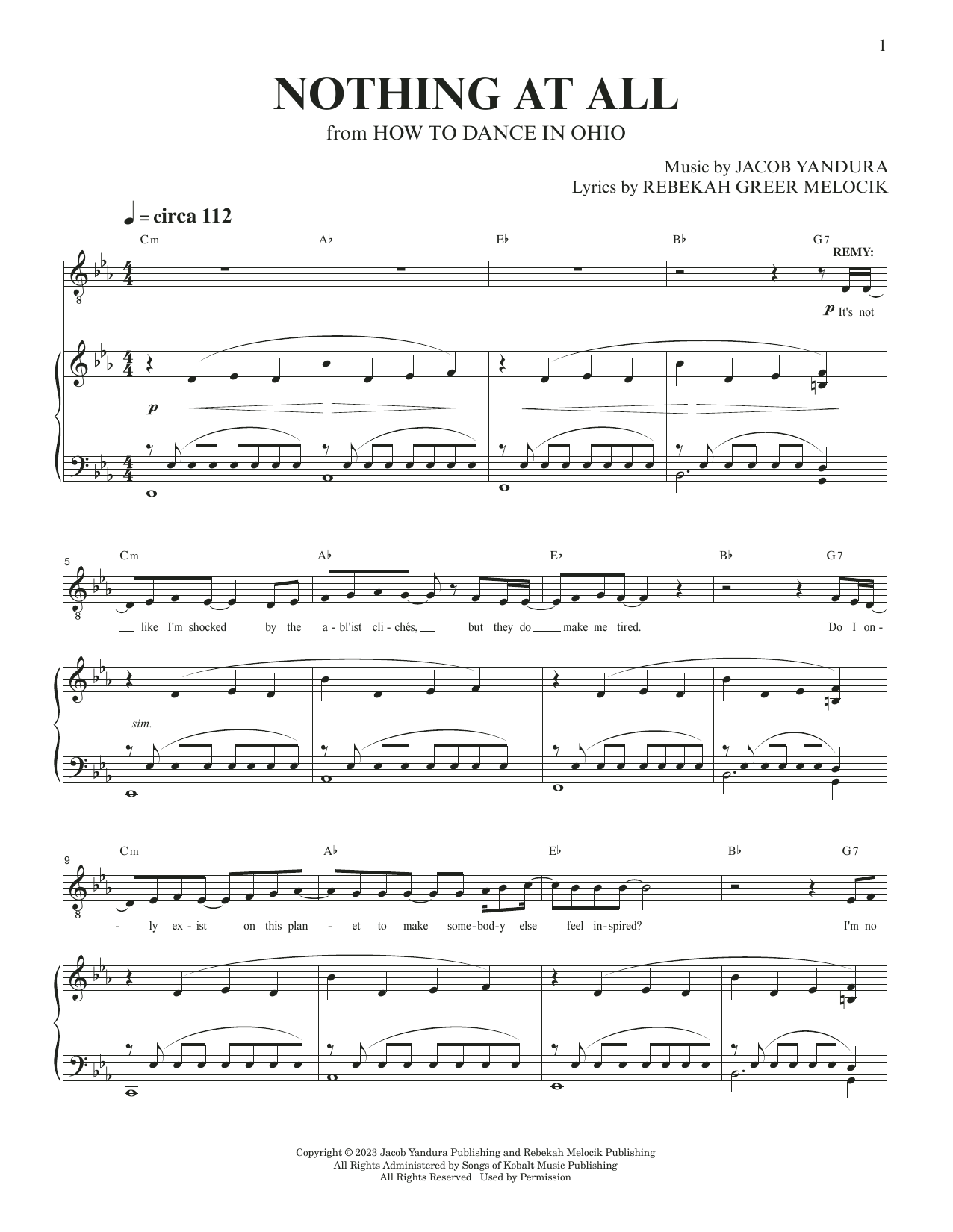
Nothing At All (from How To Dance In Ohio): Piano Vocal

Item: 35-DS01837964

Digital Download
$5.99
Description

Nothing At All (from How To Dance In Ohio): Piano Vocal isn't in MakeMusic Cloud just yet...but it could be. Let us know you'd like to see it, and you'll help shape what comes next. In the meantime, start a free trial and dive into thousands of interactive titles your students can play along with today.

Sample Audio
No sample audio found.
Sample Video
Additional Details
Publisher: Hal Leonard
Page Count: 10
SKU: 35-DS01837964

More about this title

About the Creator

How To Dance In Ohio is a musical that centers on a group of young people on the autism spectrum as they prepare for a dance. The show emerged from a documentary of the same name and transforms real stories into a vibrant theatrical experience. Its creators crafted a work that balances genuine emotional weight with moments of joy and humor, making space for characters who are often underrepresented in musical theater.

Why we love this

This song captures something rare in musical theater: vulnerability without sentimentality. The vocal line sits naturally for singers who aren't belters, and the piano part offers enough harmonic interest to keep accompanists engaged without overshadowing the lyric.

What to expect

The song inhabits a quiet moment of reckoning. It has the quality of someone sitting alone, turning something over in their mind, finding words for feelings that seemed too big or too small to name. There's a current of hope running underneath the uncertainty.

Who it's for

This works beautifully for upper-level high school singers, college vocalists, and adult community theater performers who want contemporary material with emotional depth. It suits singers with lyrical voices who excel at intimate storytelling over belting power.

How to get the most out of it

  • Resist the urge to oversell the emotional content. The power here lives in restraint and honest simplicity.
  • Work the dynamic arc carefully with your pianist so that accompaniment textures evolve naturally rather than spike suddenly.
  • Find the conversational quality in the phrasing; this isn't a character making a grand statement but rather processing something real.
  • Pay attention to where the melody lands on unexpected beats. These moments feel more authentic when they're not rushed.

How to use it

Pair this with other contemporary musical theater selections to round out a recital with modern voices. It also works as a solo feature in a concert celebrating musical theater's emotional range beyond the anthem tradition.

Skills your students will build

  • Sustaining lyrical phrasing across uneven phrase lengths
  • Balancing vocal transparency with emotional authenticity
  • Navigating contemporary vocal writing with unusual melodic contours
  • Collaborative listening between voice and piano accompaniment

You May Also Like