
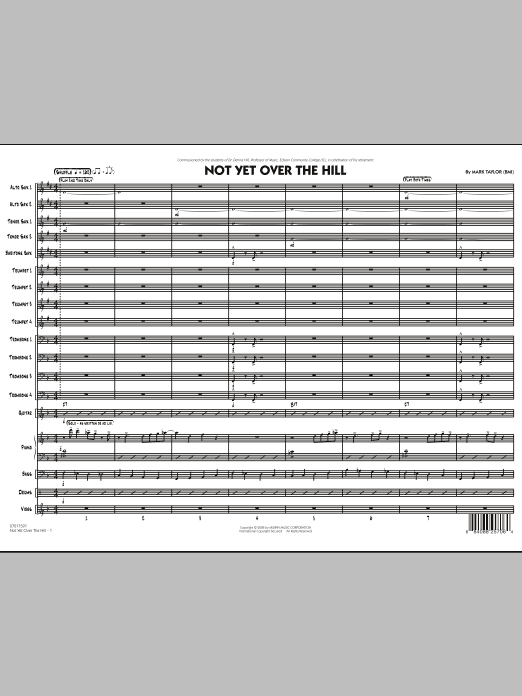

Not Yet Over the Hill: Jazz Ensemble Conductor Score & Parts
By Mark Taylor
Grade: 4
Item: 35-PK00118820
$50.00
Pickup currently not available
Buy Extra Parts (Digital PDF Download)
Parts Added to Cart!
Description
This cookin' original from Mark Taylor opens with the rhythm section setting up the groove before the saxes take the first statement of the head. Packed with energy throughout, this medium tempo blues chart features plenty of solid ensemble writing, solo space for trumpet and tenor, plus a final ensemble shout that includes some solo fills for your drummer. Powerful!


Not Yet Over the Hill: Jazz Ensemble Conductor Score & Parts isn't in MakeMusic Cloud just yet...but it could be. Let us know you'd like to see it, and you'll help shape what comes next. In the meantime, start a free trial and dive into thousands of interactive titles your students can play along with today.
Request This Title
Tell us you want it.
Start Your Free Trial
Explore everything that's ready to play right now.
Sample Audio
No sample audio found.
Sample Video
No sample videos found.
Additional Details
Publisher:
Hal Leonard
SKU:
35-PK00118820
More about this title
About the Composer: Mark Taylor
Mark Taylor has built a reputation as one of the most prolific and reliable voices in educational jazz composition. His arrangements and originals balance accessibility with musicianship, giving student ensembles charts that sound professional without requiring advanced virtuosity. Taylor's output spans multiple difficulty levels, making him a go-to resource for directors seeking material that actually engages young players.
Why we love this
This chart proves that a straightforward blues structure can carry a whole ensemble when the writing underneath is sharp. Taylor's use of call-and-response between sections, the clear separation between solo and ensemble passages, and that final shout with drum fills create natural momentum that keeps students invested from start to finish.
What to expect
Propulsive and grounded in the blues, this chart swings with a medium tempo that feels relaxed but never drags. The energy builds naturally from the rhythm section's opening through the full ensemble swell, creating a performance that feels complete and satisfying.
Who it's for
Grade 4 jazz ensembles ready to tackle solid ensemble writing alongside meaningful solo opportunities. This works for groups with developing soloists who need a supportive chart, as well as stronger sections that want to cut loose.
How to get the most out of it
- Lock the rhythm section's pocket tight before adding horns. Have your bassist and drummer rehearse the groove solo until it's absolutely locked, then layer in the comping.
- Give your trumpet and tenor soloists room to breathe during their statement. They don't need to play every note of every bar; encourage them to respond to what the rhythm section is laying down.
- Bring out the ensemble sax section on the head. These voices need clarity and blend, so isolate them early and check that they're moving together through the phrase.
- Let your drummer play the fills in the final shout. These moments are often where a performance shifts from sounding like a student band to sounding like musicians playing together.
How to use it
Drop this into a jazz concert as a program opener or closer. Its straightforward blues appeal and accessible energy make it an excellent bridge between more structured educational pieces and more experimental arrangements, and the solo opportunities give your standout players a showcase moment.
Skills your students will build
- Blues form and 12-bar chord changes
- Comping rhythms and jazz accompaniment patterns
- Trading sections and ensemble-soloist interaction
- Building and releasing ensemble energy
- Responding to rhythmic cues from the rhythm section