
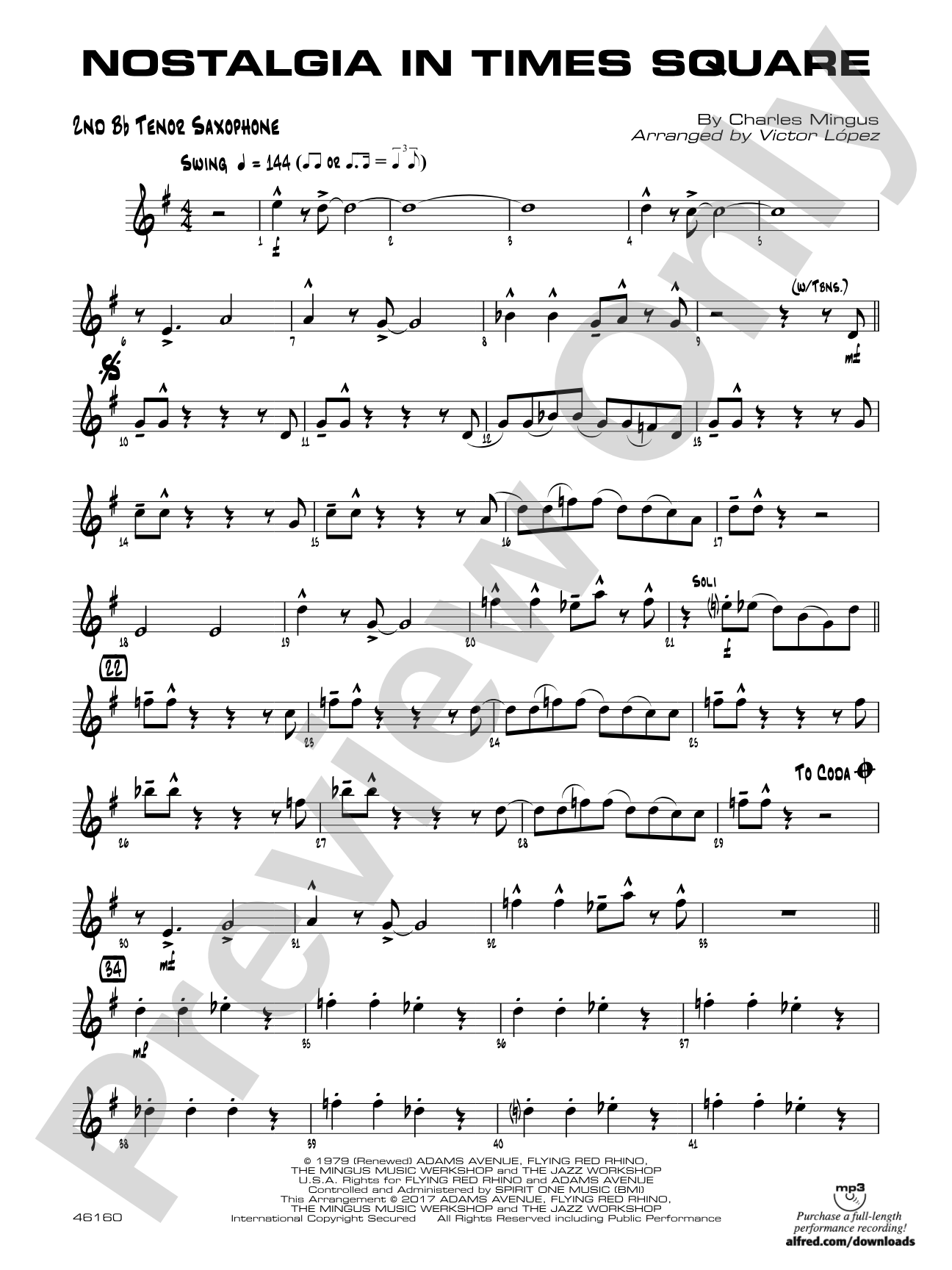

Nostalgia in Times Square: 2nd B-flat Tenor Saxophone
By Charles Mingus / arr. Victor López
Grade: 2.5 (Medium Easy)
Item: 00-PC-0017752_TX2
$3.00
Pickup currently not available
Description
Swinging at around 144 BPM, "Nostalgia in Times Square" arranged by Victor López, has superb suggested (written) solos for tenor and trumpet, accessible brass ranges, nice solis, and interludes. Just what you need for your concert! (4:05)


Nostalgia in Times Square: 2nd B-flat Tenor Saxophone isn't in MakeMusic Cloud just yet...but it could be. Let us know you'd like to see it, and you'll help shape what comes next. In the meantime, start a free trial and dive into thousands of interactive titles your students can play along with today.
Request This Title
Tell us you want it.
Start Your Free Trial
Explore everything that's ready to play right now.
Sample Audio
1
Audio File
--:--
0:00
0:00
Sample Video
Additional Details
Series:
Young Jazz Ensemble
Publisher:
Alfred Music
Page Count:
102
SKU:
00-PC-0017752_TX2
More about this title
About the Composer: Charles Mingus
Charles Mingus (1922-1979) was a bassist, composer, and bandleader whose work bridged bebop, hard bop, and free jazz with uncompromising artistic vision. His compositions, marked by complex harmonies, driving rhythms, and emotional directness, remain central to the jazz canon and continue to challenge and inspire musicians across all levels.
Mingus's legacy in music education extends beyond his recordings. His works have been adapted and arranged for student ensembles, making his harmonic sophistication and compositional inventiveness accessible to developing jazz musicians. Teachers and directors value his music for its balance of accessibility and artistic substance.
Why we love this
Victor López's arrangement brings Mingus's compositional character into a grade 2.5 setting without sacrificing the music's swagger and harmonic interest. The built-in tenor and trumpet solos give your players a genuine solo opportunity on a work by one of jazz's greatest voices, while the accessible ranges and clear part writing make this achievable for developing ensembles.
What to expect
Nostalgic, urban, and alive. The piece carries the energy of Times Square circa the mid-20th century: a bit of glamour, a hint of melancholy, and a steady propulsive swing. The interludes add breathing room and reflection without losing momentum, creating a performance that feels both structured and spontaneous.
Who it's for
This arrangement suits jazz ensembles at the high school and community level, including early-college programs, who want to program a legitimate Mingus composition without the complexity of a full big band score. It works equally well for directors building a contest or festival set list and for educators introducing students to jazz history through repertoire they can actually play.
How to get the most out of it
- Maintain the swing feel at 144 BPM without rushing. This tempo sits in a comfortable groove zone; lock in with your rhythm section and trust the pocket rather than pushing.
- Give your soloists room to breathe and interpret. The suggested solos are written out, but encourage the tenor and trumpet players to find their own phrasing and dynamics within the structure.
- Balance the solis sections carefully so they sit in the mix without overwhelming the ensemble. These interludes are part of the composition's architecture, not background filler.
- Shape the interludes as transitions, not just time markers. Each one sets up the next section; think about dynamics and ensemble cohesion to guide the listener through the form.
How to use it
Program this in a jazz showcase or festival submission where you want to represent the American jazz songbook seriously. It pairs well with bebop standards and contemporary jazz works, and its moderate length (4:05) and contest designation make it a natural fit for adjudicated events. It also works as a centerpiece in a concert exploring jazz history, giving audiences a chance to hear Mingus's voice through a student ensemble.
Skills your students will build
- Reading and interpreting swing rhythms at a moderate tempo
- Playing written solo sections with stylistic phrasing and independence
- Balancing ensemble sections with featured instrumental solis
- Understanding form and structure in a jazz composition
- Developing ensemble cohesion in a medium-complexity arrangement