
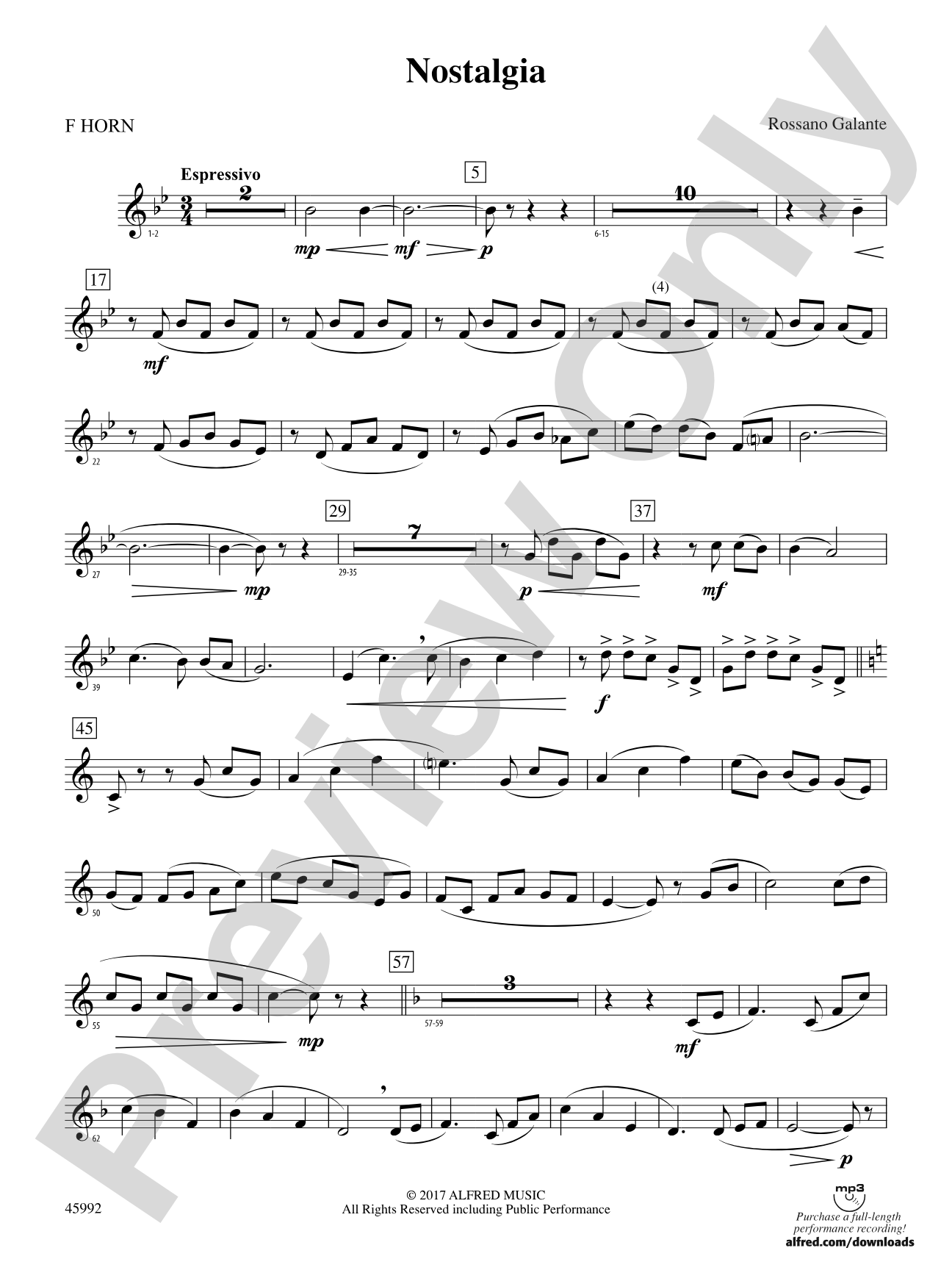

Nostalgia: 1st F Horn
By Rossano Galante
Grade: 3 (Medium)
Item: 00-PC-0017718_H1
$3.00
Pickup currently not available
Description
The term "nostalgia" refers to a sentimental longing or wistful affection for the past, typically for a period or place with happy personal associations. This composition incorporates two melodic themes that build to a climatic resolution utilizing the full ensemble. The music is lyrical, joyous, and ultimately hopeful, taking the listener to a place of harmonic bliss. (5:00) This title is available in MakeMusic Cloud.


Don't just read it, hear it, play along with it, and watch your students grow with it. In MakeMusic Cloud, Nostalgia: 1st F Horn comes alive with professional accompaniment, adjustable tempo, and built-in practice tools that turn solo practice into real progress.
Open in the Player
Jump straight in and assign it today.
Start Your Free Trial
Open this title and explore the full library in minutes.
Sample Audio
1
Audio File
--:--
0:00
0:00
Sample Video
Additional Details
Series:
Young Symphonic
Publisher:
Alfred Music
Page Count:
244
SKU:
00-PC-0017718_H1
More about this title
About the Composer: Rossano Galante

Rossano Galante grew up in Buffalo, New York, and earned his Bachelor of Arts in Trumpet Performance from SUNY Buffalo in 1992. That same year, he was selected as one of nineteen students worldwide to study in the University of Southern California's Film Scoring Program, where he worked under the mentorship of the late Jerry Goldsmith, Academy Award winner for The Omen.
Since relocating to California in 1999, Galante has built a prolific career as a film orchestrator and composer. He has collaborated with Oscar-nominated composers Marco Beltrami, Christophe Beck, and Brian Tyler on over eighty studio films, ranging from major franchises (Fast X, Venom: Let There Be Carnage, A Quiet Place 1 & 2) to animated features and prestige dramas. Alongside his film work, Galante maintains an active presence in the concert music world, with more than 68 published compositions distributed through Alfred, Schirmer, Hafabra, C.L. Barnhouse, and other leading publishers, earning commissions from ensembles and schools internationally.
Why we love this
Galante's orchestration background shines through in the scoring of Nostalgia: the way melodic material unfolds, passes between sections, and builds toward a genuine climax feels cinematic without ever feeling overwrought for young musicians. The harmonic language is rich enough to feel sophisticated and emotionally resonant, yet the Grade 3 voicing keeps parts singable and achievable for developing players.
What to expect
Nostalgia unfolds like a memory revisited with warmth and clarity. The opening themes are lyrical and inviting; as they develop and weave together, the piece builds toward a moment of genuine musical arrival. There's a sense of hope and affirmation throughout, never dark or ironic, with harmonic movement that feels grounded and satisfying.
Who it's for
Directors looking for a musically substantial concert piece that sits comfortably at Grade 3 but delivers genuine emotional impact. Young musicians benefit from the clear melodic focus and the chance to play material that feels grown-up and expressive without excessive technical demands.
How to get the most out of it
- Balance the two principal themes carefully so each retains its character as they develop; avoid letting the second theme overshadow the emotional weight of the first.
- Shape the harmonic movement toward the climax by gradually opening up dynamics and allowing the ensemble to breathe together as texture thickens.
- Attend to the lyrical quality throughout; this score rewards legato articulation and sustained singing tone rather than detached or mechanical phrasing.
How to use it
Program this as a concert centerpiece in your spring season, pairing it with a lighter opener and something more contemporary as contrast. Its five-minute duration and clear emotional arc also make it effective as the finale of a winter concert, leaving the audience with a sense of closure and warmth.
Skills your students will build
- Balancing multiple melodic lines while maintaining ensemble cohesion
- Sustaining legato articulation and singing tone across extended phrases
- Building dynamic intensity gradually toward a climactic moment
- Responding to harmonic movement and voice leading within a lyrical context