North Pole Workshop: Viola Sheet Music Preview

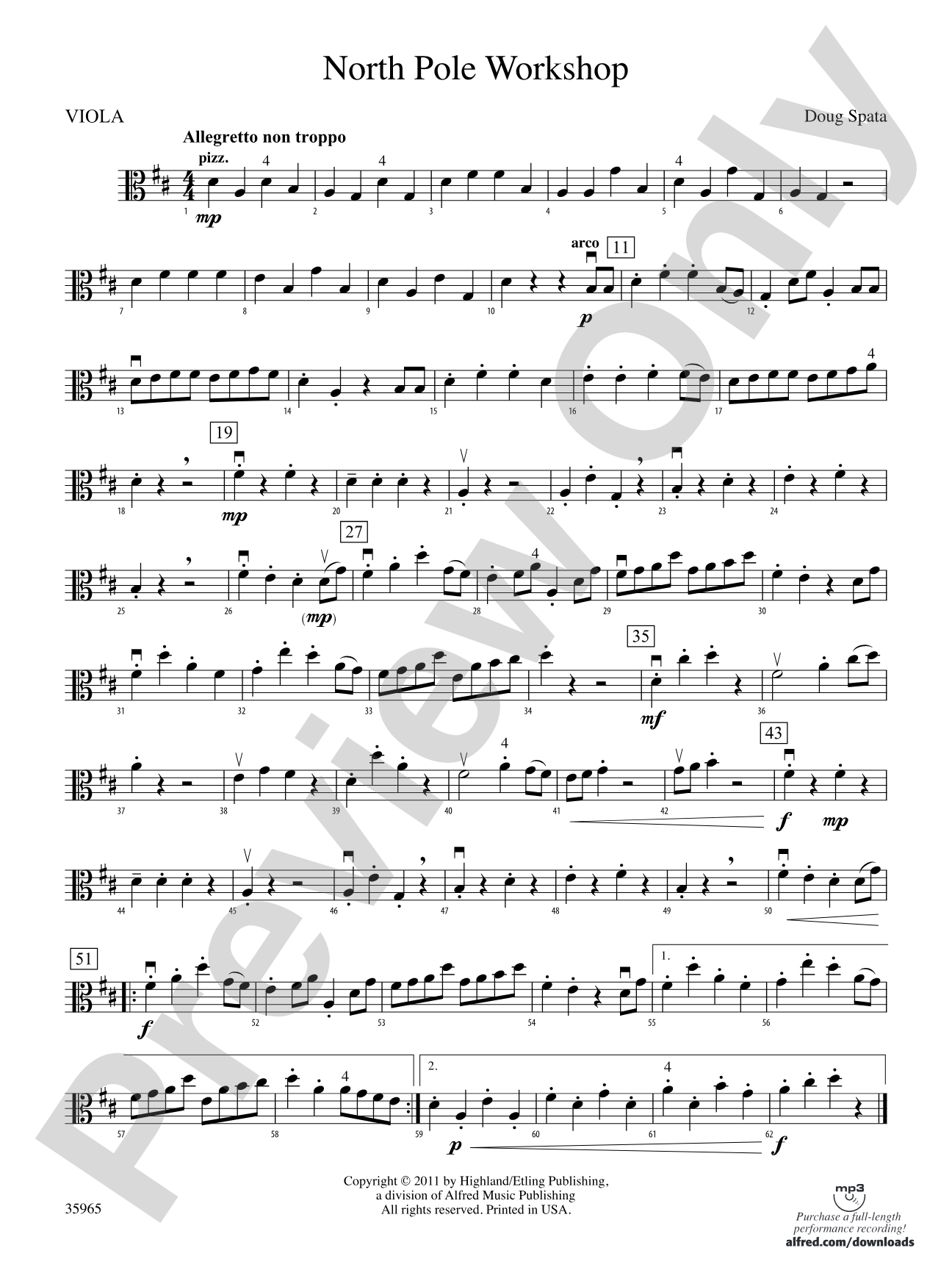
North Pole Workshop: Viola

By Doug Spata

Grade: 1.5

Item: 00-PC-0015040_VA1

Digital Download
$5.99
Description
Imagine a cheery tune Santa's elves might sing while making Christmas toys! This fun polka for beginners is aimed at developing dexterity and string-crossing skills in young musicians. Optional percussion parts add the workshop sound effects, but students will really enjoy the catchy melodies that start quietly and build to a rowdy finish.

Don't just read it, hear it, play along with it, and watch your students grow with it. In MakeMusic Cloud, North Pole Workshop: Viola comes alive with professional accompaniment, adjustable tempo, and built-in practice tools that turn solo practice into real progress.

Sample Audio
0:00
0:00
Sample Video
Additional Details
Series: Highland/Etling String Orchestra
Publisher: Alfred Music
Page Count: 68
SKU: 00-PC-0015040_VA1
Instrumentation: string w/ opt perc (Woodblock, Triangle, Cowbell or Powerdrill)

More about this title

About the Composer: Doug Spata

Doug Spata

Doug Spata trained as a clarinetist but found his compositional voice writing for strings, drawing on years spent teaching orchestra. His gift for crafting accessible yet engaging music has made him a trusted name in music education, with performances of his works spanning across the United States and internationally. Beyond student repertoire, he has composed operas, ballets, symphonies, and chamber works that showcase the range of his compositional imagination.

Why we love this

Spata nails the balance between charm and genuine pedagogical work. The polka framework gives students a familiar rhythmic structure to anchor their learning, while the string-crossing demands and dynamic arc from quiet to boisterous keep young players engaged and challenged rather than bored. The optional percussion parts invite your entire section to participate in building atmosphere without requiring advanced ensemble coordination.

What to expect

Picture the chaos of toy-making: a cheerful, purposeful whirlwind of activity that starts with quiet focus and builds into joyful pandemonium. The polka's lilting rhythm and accessible melodies make it instantly likable, while the workshop percussion effects create a playful narrative that young musicians can picture and perform into.

Who it's for

Beginning string orchestras (Grade 1.5) looking for a piece that develops practical skills without sacrificing fun. This works equally well for elementary school string programs and middle school orchestras new to the instrument, especially those hunting for winter concert material that doesn't require advanced musicianship.

How to get the most out of it

  • Establish the workshop bustle by rehearsing the percussion parts separately first; students get invested in the sound effects and will lock in more confidently when they rejoin the strings.
  • Work the crescendo deliberately across rehearsals rather than all at once. Have violins nail their quiet opening lines in isolation, then layer in violas and cellos one section at a time before the full orchestra builds.
  • Mark the string-crossing passages in pencil during the first read-through so students know exactly where the shift happens; calling them out verbally during rehearsal helps prevent hesitation.
  • Let the final rowdy section breathe a little; resist the urge to rush despite the excitement, since younger players tend to accelerate when the energy peaks.

How to use it

Perfect for a holiday concert opener or lighter second half of a program, especially when you want to showcase your young musicians' technical growth without demanding the interpretive depth of slower repertoire. The optional percussion parts make it ideal for involving players from other ensembles or younger students not yet reading full string parts.

Skills your students will build

  • String crossing between adjacent strings at moderate tempo
  • Dynamic control through a crescendo (ppp to fff)
  • Rhythmic precision in polka meter with varying note values
  • Ensemble blend and balance across changing orchestrations
  • Reading and executing simple articulation patterns (pizzicato and arco transitions)

You May Also Like