
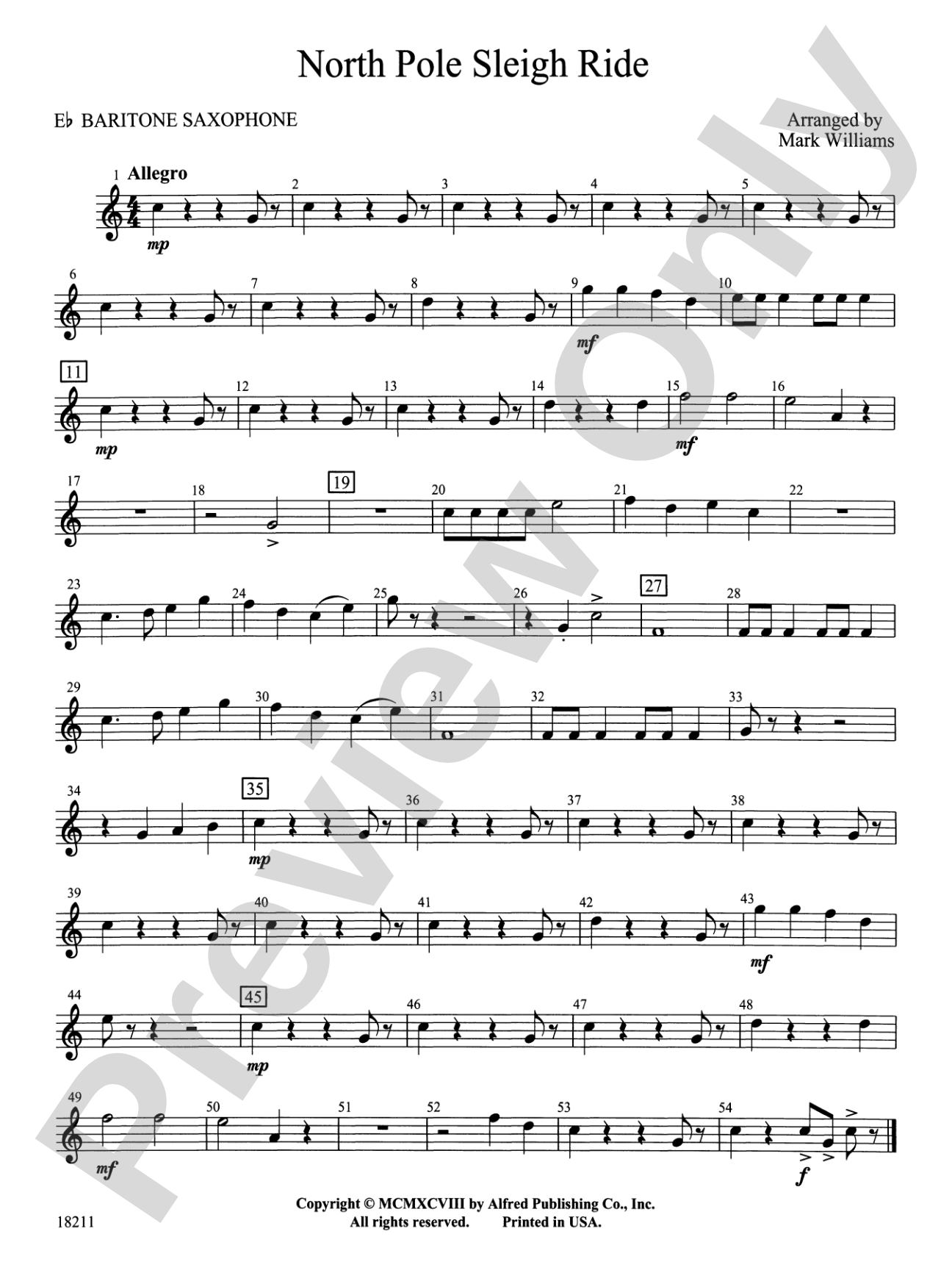

North Pole Sleigh Ride: E-flat Baritone Saxophone
Arr. Mark Williams
Grade: 1 (Very Easy)
Item: 00-PC-0014255_BTX
$3.00
Pickup currently not available
Description
This sparkling holiday medley creatively combines several favorite carols to produce a musical picture of a sleigh ride in the frozen north with Santa and his elves. An excellent selection for your next holiday program. Correlated with Accent on Achievement, Book 1, page 25.


Don't just read it, hear it, play along with it, and watch your students grow with it. In MakeMusic Cloud, North Pole Sleigh Ride: E-flat Baritone Saxophone comes alive with professional accompaniment, adjustable tempo, and built-in practice tools that turn solo practice into real progress.
Open in the Player
Jump straight in and assign it today.
Start Your Free Trial
Open this title and explore the full library in minutes.
Sample Audio
1
Audio File
--:--
0:00
0:00
Sample Video
No sample videos found.
Additional Details
Series:
Accent on Achievement
Publisher:
Alfred Music
Page Count:
114
SKU:
00-PC-0014255_BTX
More about this title
About the Composer: Mark Williams

Mark Williams shaped generations of young musicians through his prolific output of over 200 published works for band, orchestra, and choir. As co-author of the Accent on Achievement Band Method, he grounded his compositional voice in the realities of the school music classroom, earning him recognition across the continent through clinician visits to 34 states, 5 Canadian provinces, and Australia.
Born in Chicago and raised in Spokane, Washington, Williams spent his career teaching elementary band in Washington schools while building a parallel life as a performer and arranger. He held degrees from Eastern Washington University and served with the 560th Air Force Band as a woodwind performer and arranger. His achievements include the Western International Band Clinic's Gralia Competition and multiple ASCAP Special Awards. Beyond the page, Williams was an accomplished bassoon player and conductor of the Spokane British Brass Band.
Why we love this
Williams captures the magic of a holiday sleigh ride without overwhelming beginners, weaving recognizable carols into a single coherent musical narrative. The arrangement respects Grade 1 capabilities while delivering genuine musical satisfaction, making it feel less like an exercise piece and more like a genuine holiday celebration your band can be proud to perform.
What to expect
Picture snow swirling under moonlight, reindeer hooves crunching across frozen ground, and the warmth of familiar holiday melodies braided together in a single journey. The music sparkles with energy while maintaining the accessibility that lets young players hear themselves as a real ensemble.
Who it's for
First-year and developing concert bands ready to program something musically coherent for winter concerts. Students benefit from playing a piece that builds on fundamentals while delivering the satisfaction of ensemble cohesion and recognizable melody.
How to get the most out of it
- Balance the melody between sections as different instruments carry the carol themes; use rehearsal to identify who's exposed at each moment and lock those passages early.
- Shape the musical picture by varying dynamics and articulation with intention rather than playing evenly throughout. The frozen north setting invites both sparkle and warmth.
- Anchor the ensemble's rhythmic confidence by having the rhythm section (low brass and percussion) establish the sleigh ride pulse before adding upper voices.
- Prepare students for any key or meter changes between carol sections during a sightreading warm-up so transitions feel natural rather than awkward.
How to use it
This works beautifully as a standalone holiday feature or paired with other seasonal selections to anchor the festive portion of your winter concert. Its Grade 1 accessibility also makes it a smart opening or closing number for mixed-difficulty programs, offering audience appeal alongside musical growth for your ensemble.
Skills your students will build
- Blending multiple melodies and recognizing when to support versus feature the melody
- Sight-reading and transitioning between carol themes with different rhythmic and textural characteristics
- Dynamic shaping and phrasing beyond uniform playing
- Ensemble listening and rhythmic precision across sustained passages
- Understanding the arrangement process and how composers repurpose familiar material