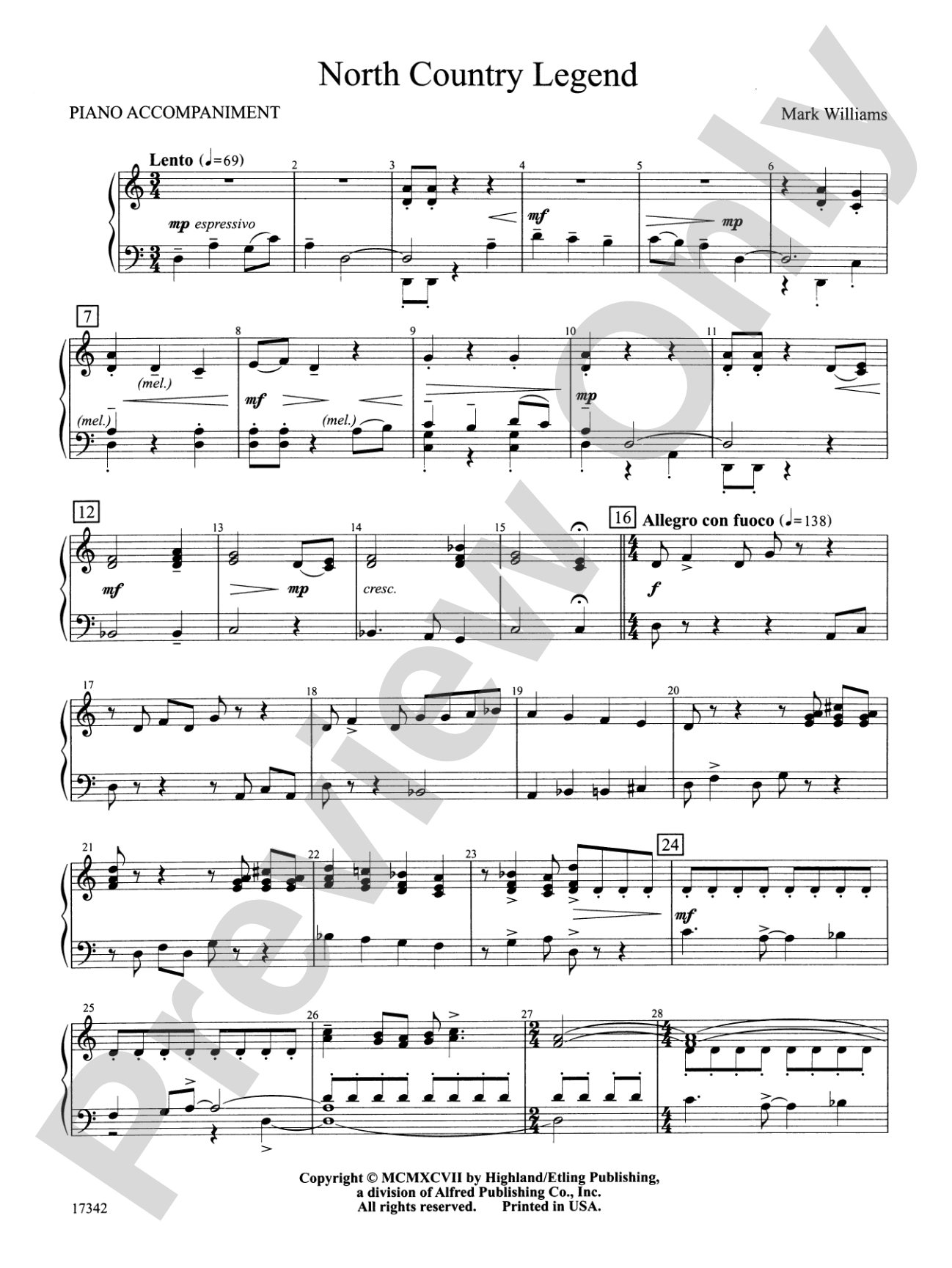
North Country Legend: Piano Accompaniment Sheet Music Preview

North Country Legend: Piano Accompaniment

By Mark Williams

Grade: 1

Item: 00-PC-0000224_K

Digital Download
$5.99
Description
Beginning with a slow introduction featuring the viola section (with optional 3rd violin), the pace quickly changes to one of vigorous activity. Your students will love this composition with its strong sonorities and driving rhythms. Correlated with Strictly Strings, Book 2, page 13. This title is available in MakeMusic Cloud.

Don't just read it, hear it, play along with it, and watch your students grow with it. In MakeMusic Cloud, North Country Legend: Piano Accompaniment comes alive with professional accompaniment, adjustable tempo, and built-in practice tools that turn solo practice into real progress.

Sample Audio
0:00
0:00
Sample Video
Additional Details
Series: Highland/Etling Strictly Strings
Publisher: Alfred Music
Page Count: 36
SKU: 00-PC-0000224_K

More about this title

About the Composer: Mark Williams

Mark Williams

Mark Williams built a distinguished career writing for young musicians across North America and beyond. With more than 200 compositions for band, orchestra, and choir to his name, he became known for crafting music that challenged students while remaining genuinely enjoyable to perform. His work as co-author of the Accent on Achievement Band Method shaped instrumental music education for generations.

Williams spent decades teaching music in Washington State, focusing much of his energy on elementary band programs. He earned degrees from Eastern Washington University and served as a woodwind performer and arranger for the 560th Air Force Band while also leading the Spokane British Brass Band. His achievements include recognition from the Western International Band Clinic and multiple ASCAP Special Awards, reflecting the respect he commanded among music educators and clinicians across the country.

Why we love this

Williams understands how to keep young string players engaged: the slow viola-centered opening gives your ensemble time to settle in, then the shift to vigorous rhythmic activity sustains their attention and energy. The strong sonorities and driving pulse make this piece rewarding to conduct, and your students will feel the satisfaction of building from lyrical writing to something with real forward momentum.

What to expect

The piece opens with quiet contemplation centered in the viola section, creating an intimate moment before the music transforms into something energetic and propulsive. Once the tempo shifts, the driving rhythms and full sonorities give students a chance to feel the power of ensemble playing.

Who it's for

Beginning string orchestras at the Grade 1 level will find this piece accessible yet musically substantial. It works especially well for ensembles ready to move beyond unison playing into more independent part-writing, particularly those using the Strictly Strings curriculum at Book 2.

How to get the most out of it

  • Balance the viola introduction carefully so those players feel their part carries genuine musical weight; this opening sets the character for everything that follows.
  • Lock in the rhythmic drive when the pace quickens; the piece's impact depends on clear, confident pulse from your section leaders.
  • Shape the viola line with warmth in the slow section; expressive playing here will hold the audience's attention before the energy shifts.
  • Use the optional 3rd violin part strategically based on your section size, adding it where you need more body in the viola texture without overwhelming the solo voice.

How to use it

This is an ideal festival or contest selection for Grade 1 orchestras seeking a piece with contrasting sections and clear musical arc. Program it early in your concert to showcase your ensemble's range, or pair it with a more lyrical work to demonstrate versatility across moods and tempos.

Skills your students will build

  • Ensemble balance in multi-part texture with focal lines that shift between sections
  • Contrasting articulation and dynamic control between slow and fast passages
  • Rhythmic precision and coordination in the driving fast section
  • Independent part-playing with viola featured as a melodic voice

You May Also Like