

Non Si Ceda: SSA Choral Octavo
(Sing for Freedom)
Music by Wolfgang Amadeus Mozart / ed. and arr., with English words, by Patrick M. Liebergen
Item: 00-PO-0001774
$1.85
Minimum order quantity: 20 copies
Pickup currently not available
Description
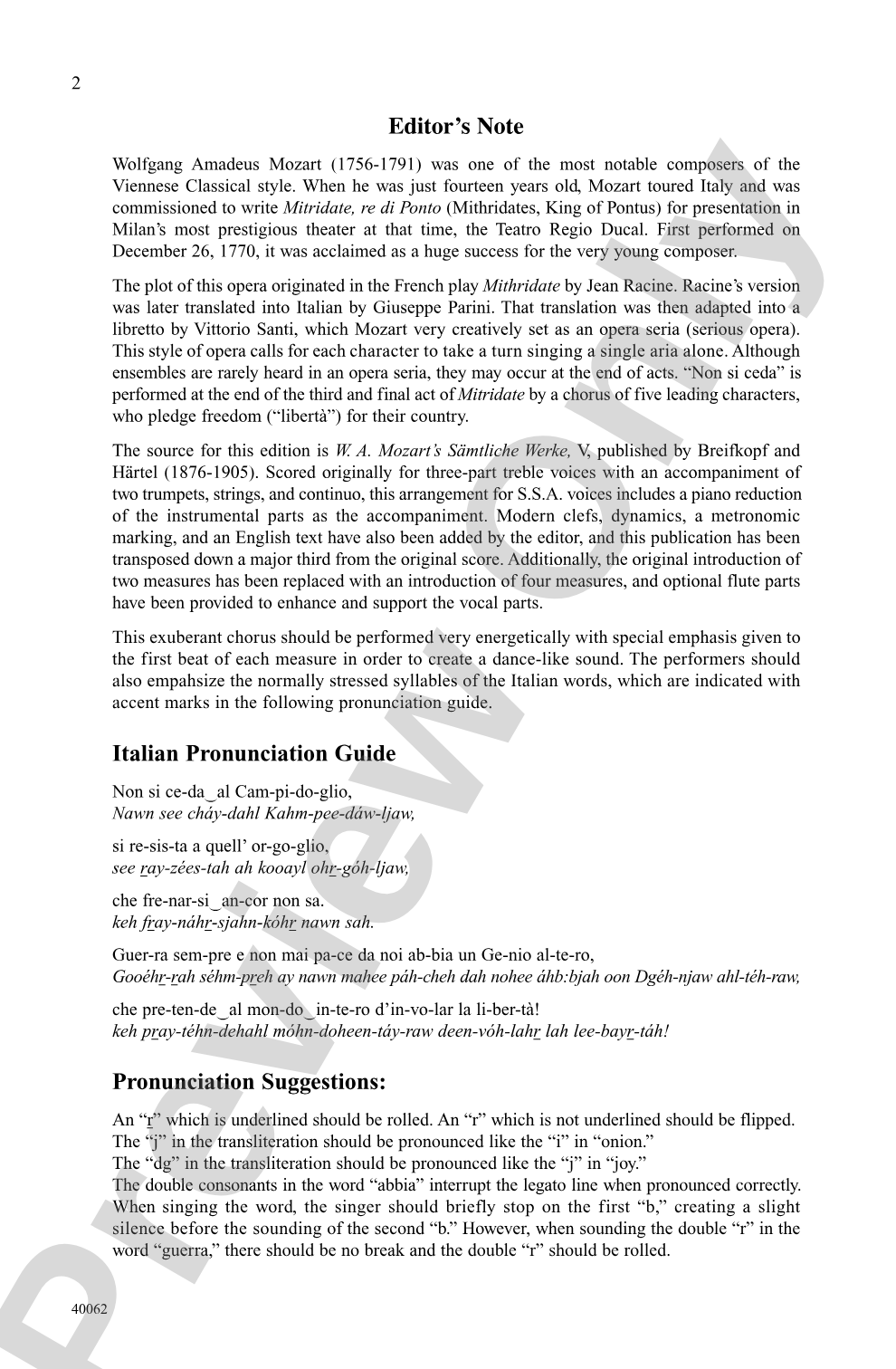
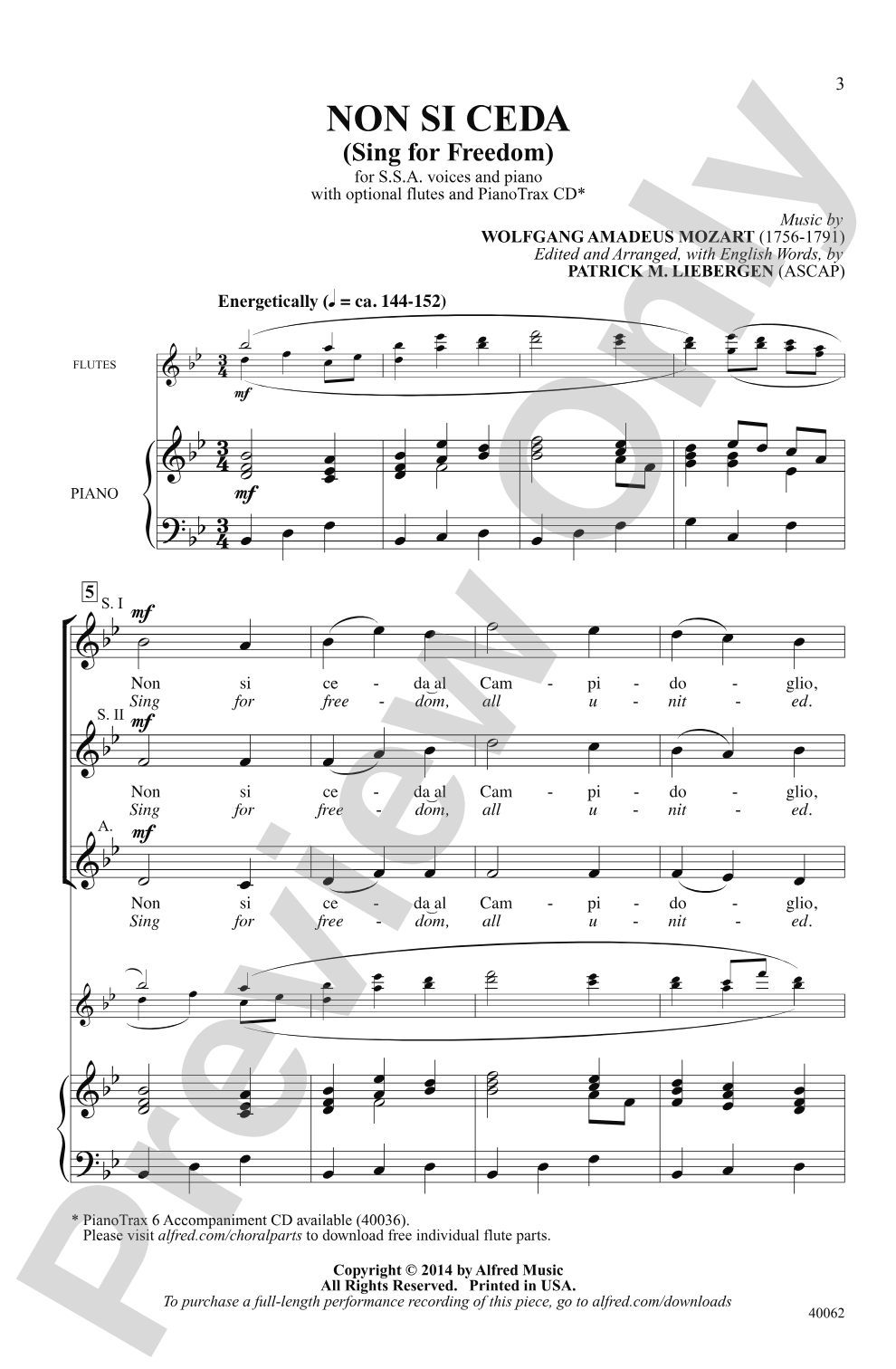
This classical opera chorus is performed at the end of Mozart's Mitridate by five leading characters who pledge freedom for their country. An optional English text is printed in the octavo, or a phonetic pronunciation guide makes the Italian easy to learn. Two flutes (available free at alfred.com/choralparts) add to the joy.


Non Si Ceda: SSA Choral Octavo isn't in MakeMusic Cloud just yet...but it could be. Let us know you'd like to see it, and you'll help shape what comes next. In the meantime, start a free trial and dive into thousands of interactive titles your students can play along with today.
Request This Title
Tell us you want it.
Start Your Free Trial
Explore everything that's ready to play right now.
Sample Audio
1
Audio File
--:--
0:00
0:00
Sample Video
No sample videos found.
Additional Details
Series:
Alfred Choral Designs
Publisher:
Alfred Music
Page Count:
12
SKU:
00-PO-0001774
More about this title
About the Composer: Wolfgang Amadeus Mozart
Wolfgang Amadeus Mozart (1756–1791) composed across every major genre of his era and fundamentally shaped the sound of Classical music. His operas remain cornerstones of the repertoire, prized for their melodic brilliance, dramatic clarity, and gift for writing lines that sit beautifully in the human voice. For choral directors, Mozart offers music that challenges singers to balance technical precision with infectious lyricism.
Why we love this
This finale from Mitridate arrives as a five-part patriotic declaration, and Patrick M. Liebergen's SSA adaptation captures the ceremonial grandeur of the original while making it accessible to treble choirs. The optional English text and phonetic guide remove the barrier of Italian diction without sacrificing the dramatic weight of the moment. The flute parts (freely available) elevate the arrangement from simple to genuinely special without demanding extended instrumentation.
What to expect
The music radiates formal elegance and patriotic fervor in equal measure. Mozart's melody is immediately singable yet refined, and the harmonic underpinning gives weight to every phrase. Performing this piece creates a ceremonial atmosphere that feels larger than the page, especially when the optional flutes join in.
Who it's for
This octavo suits treble choirs at the intermediate to advanced level who have solid intonation and can handle the harmonic language of the Classical era. It works equally well for festival competition, concert programming, or classroom study of opera and Mozart. Directors seeking crossover repertoire that connects choral singing to the operatic tradition will find real value here.
How to get the most out of it
- Shape the text with clarity regardless of language choice. If singing English, let the natural rhythm of the words guide your phrasing; if Italian with the phonetic guide, keep articulation crisp so the language sounds intentional rather than approximate.
- Balance the harmonic movement carefully in the middle sections. Mozart's voice leading is precise, and sloppy intonation in the inner parts will expose weak preparation.
- If performing with flutes, ensure they enter with confidence in their opening statements. They carry the joy Mozart intended, and timid playing undermines the whole effect.
- Build momentum toward the final declarations. This is a pledge, not a meditation, so the final measures need conviction and a clear sense of arrival.
How to use it
Program this as a standout finale to a concert featuring other Classical or operatic repertoire. Its theatrical character and compact length make it an excellent choice for festival competition categories honoring classical masters. Alternatively, use it as a teaching score to show singers how opera composers write for chorus and how dramatic context shapes musical choices.
Skills your students will build
- Navigating Classical harmonic language and functional harmony
- Sustaining pure vowels across longer phrases without collapse
- Balancing multiple independent melodic lines (five-part texture)
- Italian diction and phonetic literacy for opera repertoire
- Performing with conviction in a formal, ceremonial style