Noel Nouvelet (arr. Ruth Dwyer) Sheet Music Preview

Noel Nouvelet (arr. Ruth Dwyer): SATB Divisi Choral Octavo

Arranged by Ruth Dwyer

Item: 35-DS01353105

Digital Download
$2.99
Description

Noel Nouvelet (arr. Ruth Dwyer): SATB Divisi Choral Octavo isn't in MakeMusic Cloud just yet...but it could be. Let us know you'd like to see it, and you'll help shape what comes next. In the meantime, start a free trial and dive into thousands of interactive titles your students can play along with today.

Sample Audio
No sample audio found.
Sample Video
Additional Details
Publisher: Hal Leonard
Page Count: 14
SKU: 35-DS01353105

More about this title

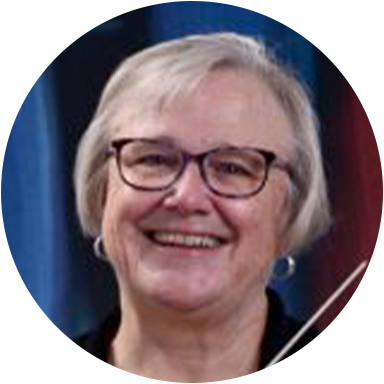
About the Arranger: Ruth Dwyer

Ruth Dwyer

Ruth Dwyer has spent more than three decades shaping young singers as a conductor and director of education with the Indianapolis Children's Choir, while simultaneously founding and leading the Columbus Indiana Children's Choir. Her reputation as a Kodály educator and treble choir specialist has made her a sought-after guest conductor for ACDA All-State Choirs, the OAKE National Children's Choir, and festivals across North America, Europe, and Brazil.

Beyond her work in the rehearsal room, Dwyer has established herself as an advocate for music's broader impact on communities. She founded Philanthropy Through Song, which used choral festivals to support anti-drunk driving education, and serves as Founder and Artistic Director of the Hoosier Hills Choral Festival in Southern Indiana. Her ensembles have performed at Carnegie Hall, Avery Fisher Hall, and in collaboration with major orchestras and opera companies. Dwyer recently received the Organization of American Kodály Educator's Lifetime Achievement Award and has been named Composer in Residence by the Indianapolis Children's Choir.

Why we love this

Dwyer brings her deep experience with children's and treble choirs to this arrangement, creating a version that respects the carol's timeless character while giving SATB choirs genuine musical substance. The divisi writing opens interpretive possibilities without overwhelming singers, and her Kodály-informed sensibility means every voice part serves the whole. This is the work of someone who understands how to balance accessibility with artistry.

What to expect

There is a quiet authority in this music. The divisi moments create subtle layers of light rather than dramatic breaks, and the overall arc feels unhurried and reverent. Singing it gives performers the sense of being part of something both ancient and newly discovered.

Who it's for

SATB choirs seeking a fresh approach to a beloved Renaissance carol without abandoning its meditative essence. This arrangement works beautifully for ensembles that value musicianship over technical showiness and for directors who want their singers to experience how skillful divisi writing deepens harmonic understanding.

How to get the most out of it

  • Protect the carol's hymn-like quality by maintaining consistent phrasing across the divisi sections; resist the urge to over-articulate at divisi points.
  • Shape dynamics gently across phrases rather than adhering strictly to marked changes; this approach honors the contemplative nature of the text.
  • Let the lower voices anchor the harmonic foundation, particularly when the sopranos and altos divide; balance is about support, not volume.
  • Consider doubling or reinforcing unison passages with light instrumental support if performing in a larger space; the carol's intimacy matters more than projection.

How to use it

Pair this with other Renaissance carols in a winter concert to build a thematic program exploring different historical treatments of the same texts. Its 14-page length and moderate difficulty make it substantial enough for a featured slot without demanding months of rehearsal time. It also serves well as an accessible entry point for choirs beginning to explore divisi writing.

Skills your students will build

  • Reading and executing divisi SATB parts with textural awareness
  • Maintaining intonation in close harmonic voicings
  • Balancing individual voice lines within a unified ensemble sound
  • Interpreting text with musical sensitivity in Renaissance style
  • Phrase shaping and breath management across longer melodic arcs

You May Also Like