

Nocturnes, Book 2: 6 Romantic-Style Solos for Piano: Piano
6 Romantic-Style Solos for Piano
By Dennis Alexander
Level: Intermediate / Late Intermediate
Item: 00-PB-0000549
$8.99
Pickup currently not available
Related Items
Nocturnes, Book 2: Piano Book |
$8.99
|
View |
Description
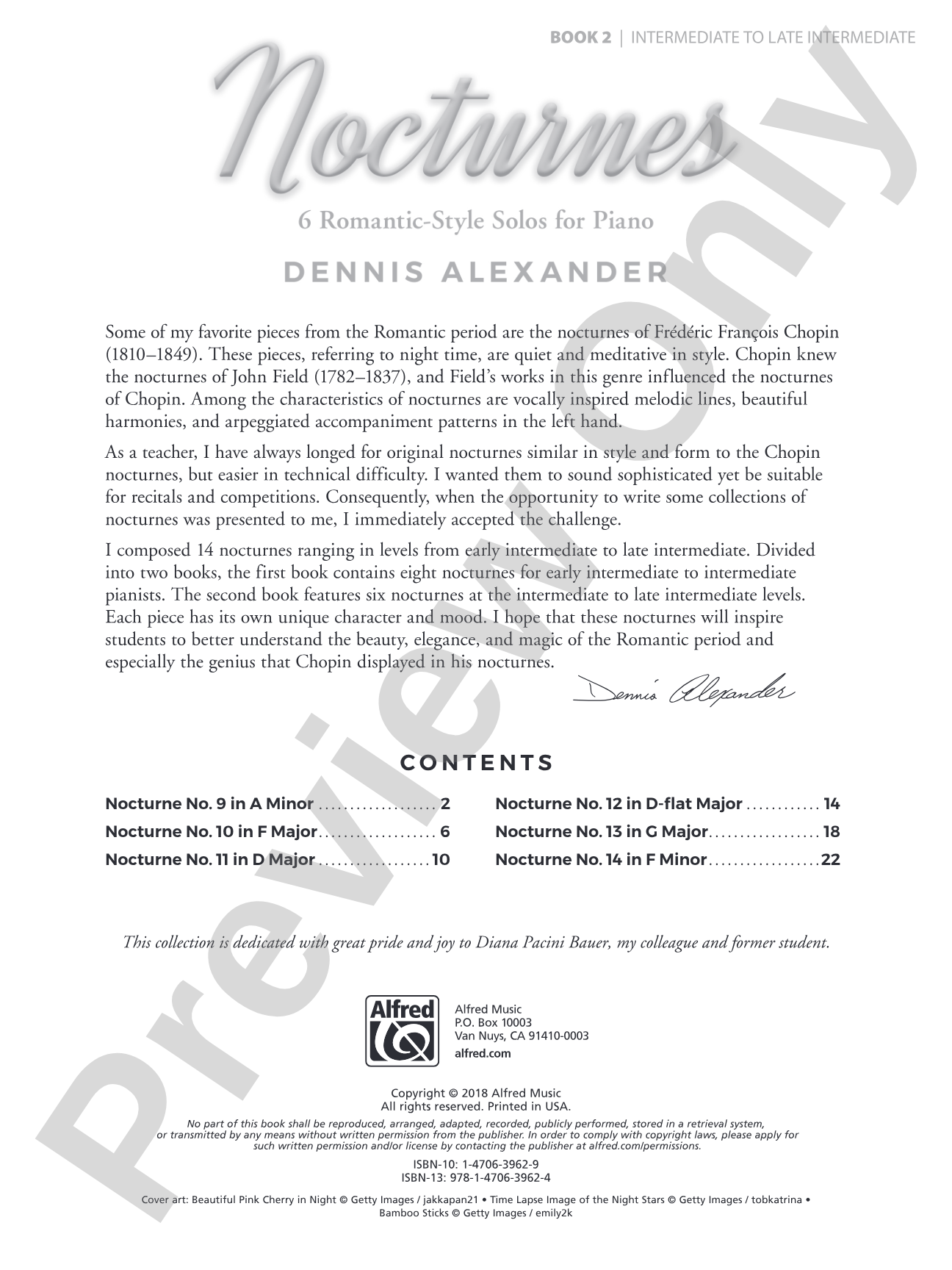
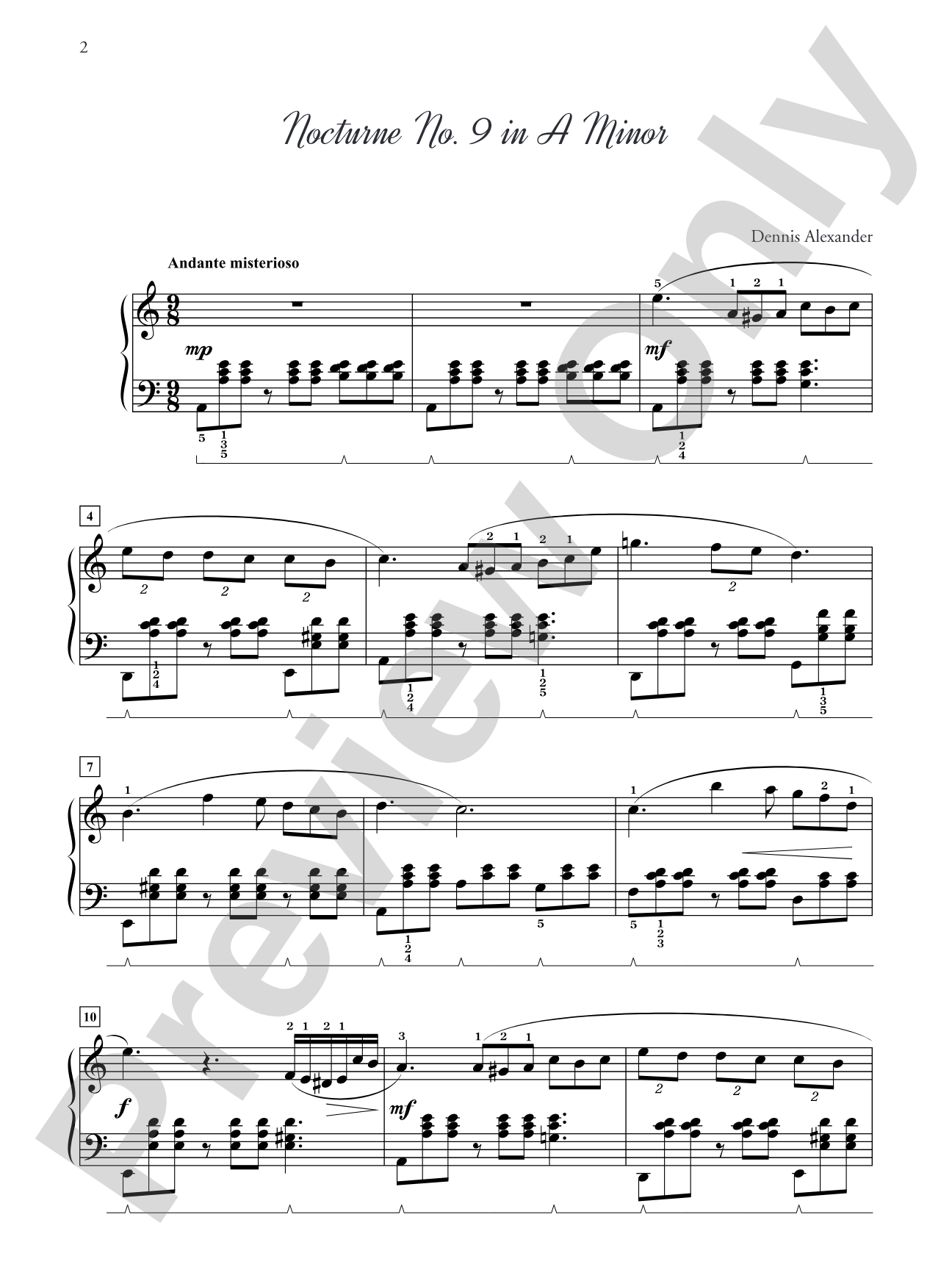
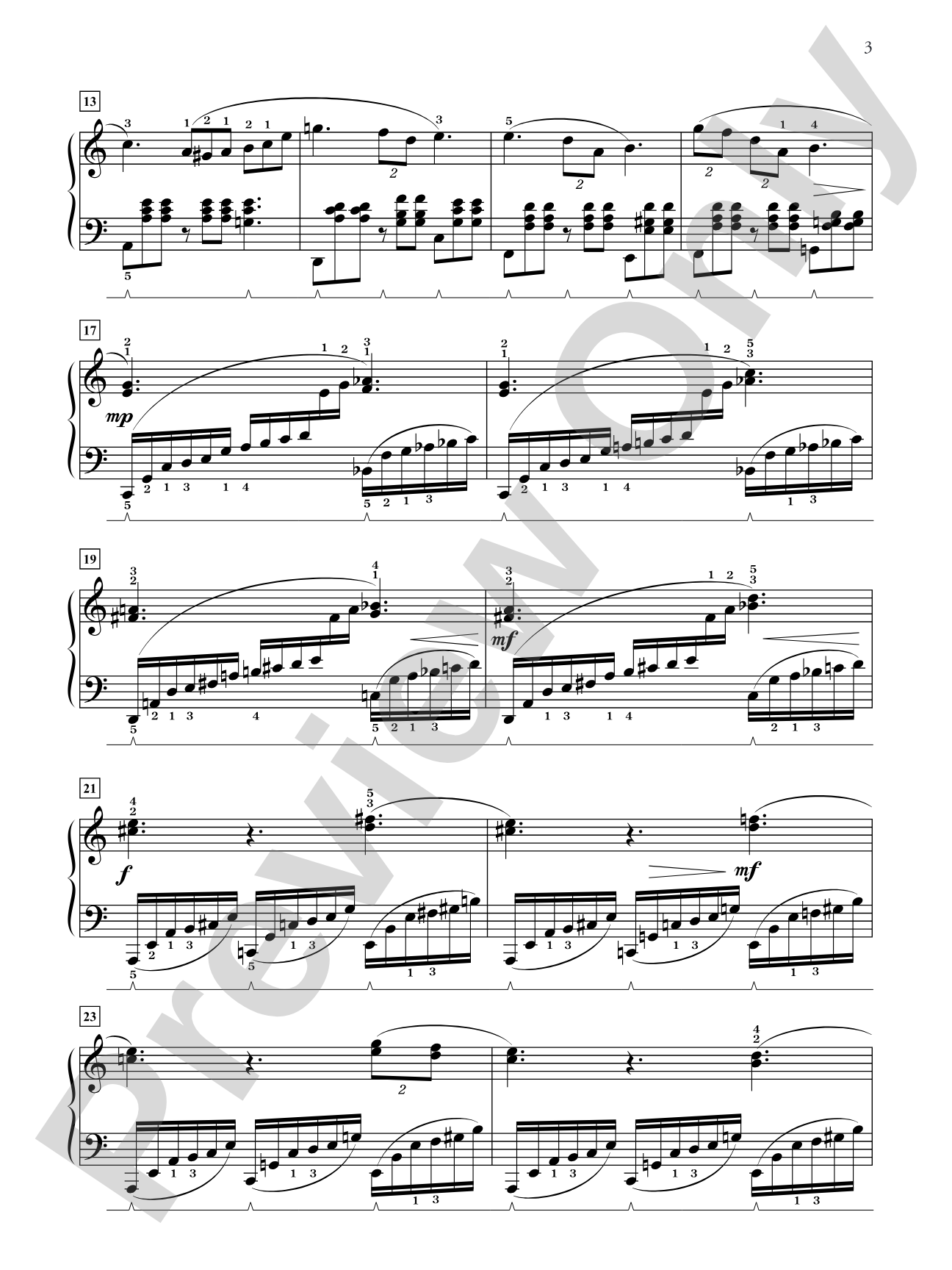
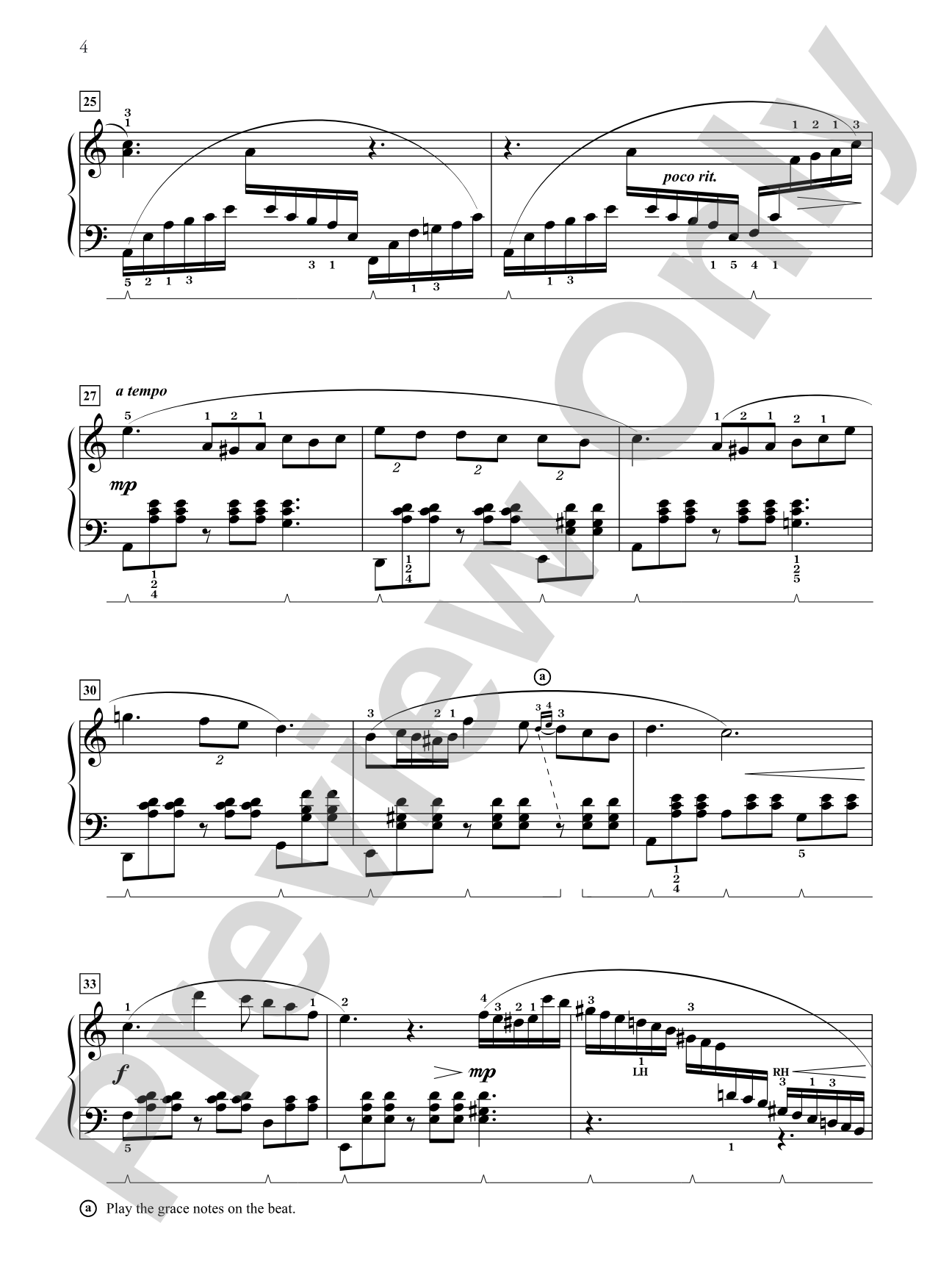
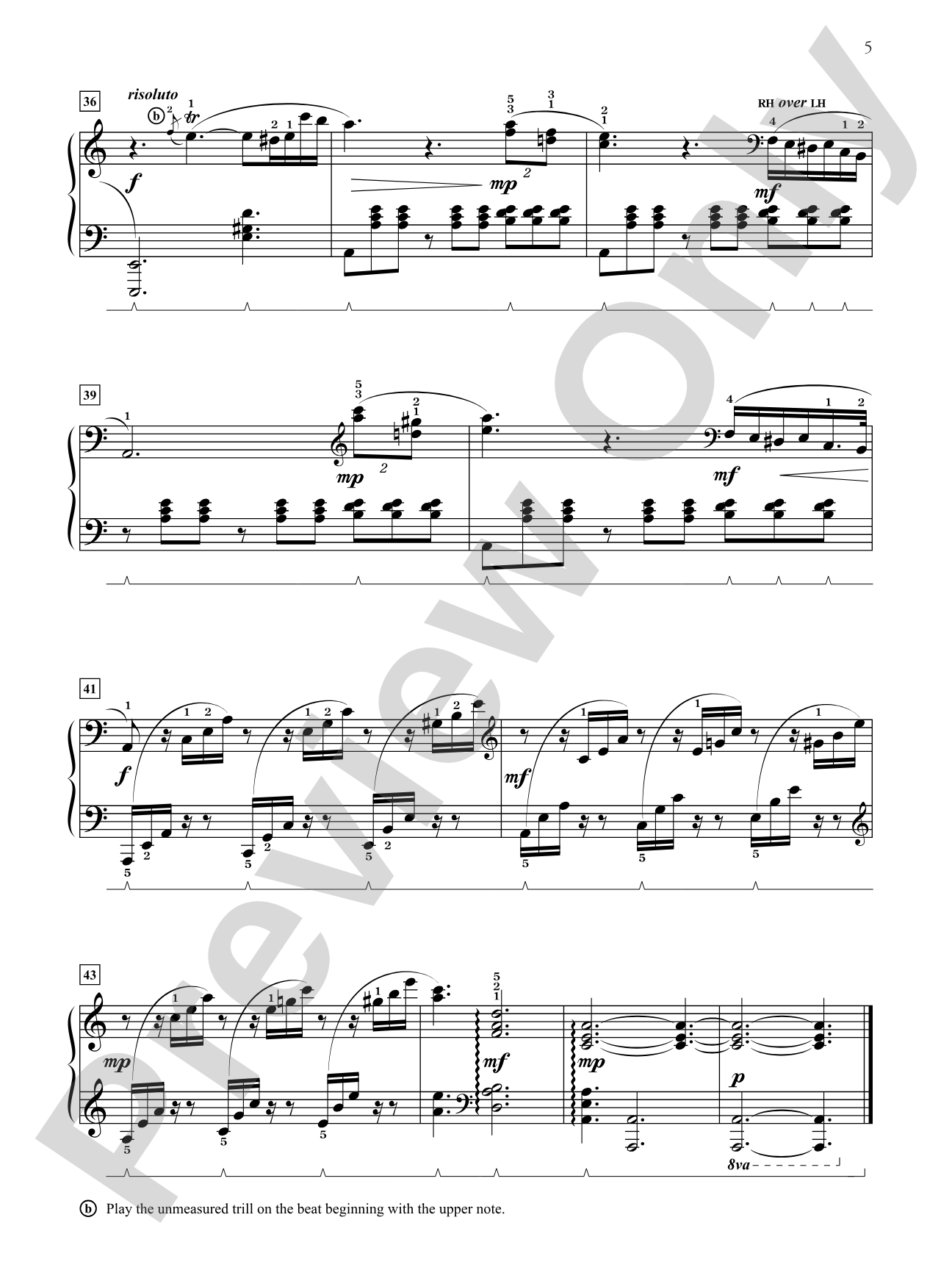
Nocturnes represent quiet and meditative night music. Typically found in nocturnes are lyrical melodic lines, beautiful harmonies, and left-hand arpeggiated accompaniment patterns. Each nocturne in this collection has these qualities along with their own unique character, mood, and sophisticated sound. The pieces are meant to encourage students to better understand the beauty and elegance of the Romantic-period style. Similar in style and form to those of Fréderic Chopin, these technically accessible nocturnes are suitable for student recitals and competitions.
Book 2 contains the last 6 of 14 nocturnes at the intermediate to late intermediate levels. Titles: Nocturne No. 9 in A Minor * Nocturne No. 10 in F Major * Nocturne No. 11 in D Major * Nocturne No. 12 in D-flat Major * Nocturne No. 13 in G Major * Nocturne No. 14 in F Minor. A Federation Festivals 2024-2028 selection.


Book 2 contains the last 6 of 14 nocturnes at the intermediate to late intermediate levels. Titles: Nocturne No. 9 in A Minor * Nocturne No. 10 in F Major * Nocturne No. 11 in D Major * Nocturne No. 12 in D-flat Major * Nocturne No. 13 in G Major * Nocturne No. 14 in F Minor. A Federation Festivals 2024-2028 selection.
Nocturnes, Book 2: 6 Romantic-Style Solos for Piano: Piano isn't in MakeMusic Cloud just yet...but it could be. Let us know you'd like to see it, and you'll help shape what comes next. In the meantime, start a free trial and dive into thousands of interactive titles your students can play along with today.
Request This Title
Tell us you want it.
Start Your Free Trial
Explore everything that's ready to play right now.
Sample Audio
1
Nocturne No
--:--
2
Nocturne No
--:--
3
Nocturne No
--:--
4
Nocturne No
--:--
5
Nocturne No
--:--
6
Nocturne No
--:--
Nocturne No
0:00
0:00
Sample Video
1 / 7
Additional Details
Series:
Nocturnes
Publisher:
Alfred Music
Page Count:
24
SKU:
00-PB-0000549
More about this title
About the Composer: Dennis Alexander

Dennis Alexander has shaped generations of piano students through his work as a composer, pedagogue, and performer. Since joining Alfred Music Publishing in 1986, he has created over 400 publications that span all levels of piano study, establishing himself as one of the most widely performed composers of educational piano repertoire worldwide. His academic career included 24 years teaching piano pedagogy at the University of Montana, where he also served as piano department chair, followed by faculty positions at Cal State Fullerton and Cal State Northridge.
Beyond the studio and classroom, Alexander maintains an active performing schedule as soloist, accompanist, and chamber musician. He has collaborated with internationally recognized artists and has been commissioned by numerous music organizations to create new works. A clinician at state and national conventions, Alexander has also served as adjudicator for competitions across the globe, including masterclass instruction at the MTNA national convention. His deep understanding of what students need to develop as musicians informs every piece he writes.
Why we love this
Alexander captures the essence of Chopin's nocturne tradition without requiring virtuosic technical demands, making genuine Romantic-period artistry accessible to intermediate pianists. Each piece in Book 2 stands alone as a complete musical statement with its own character and harmonic sophistication, giving your students material worthy of serious artistic attention rather than mere exercises in style. The variety of keys and moods across the six nocturnes makes programming flexible, whether you're building a recital around a single piece or featuring multiple nocturnes to show stylistic range.
What to expect
These nocturnes evoke the quiet contemplation of late evening, with flowing arpeggios that suggest gentle motion beneath introspective melodies. Each piece balances technical accessibility with sophisticated harmonic language, creating music that feels genuinely expressive rather than decorative. The varied moods across the six works invite pianists into intimate musical storytelling, from wistful minor-key introspection to warm, singing major-key passages.
Who it's for
Intermediate to late intermediate pianists preparing for recitals and festival competitions will find these pieces offer genuine artistic depth without excessive technical hurdles. Students who have developed solid technique and are ready to explore Romantic-period interpretation will thrive with Alexander's carefully crafted accompaniment patterns and singable melodies. Teachers seeking repertoire that develops musicianship alongside technical skill will appreciate how these nocturnes encourage pedal awareness, phrase shaping, and understanding of harmonic function.
How to get the most out of it
- Let the left-hand arpeggios breathe and flow; resist the urge to mechanize them. These accompaniment patterns should feel like a gentle, ongoing pulse that supports rather than dominates the melodic line.
- Shape the melody with long-line phrasing rather than measure-to-measure. Nocturnes invite singers at the keyboard, so listen for where the line naturally wants to swell and release tension.
- Pedal sparingly and change it precisely with harmonic shifts. Blur too much and the beautiful harmonies muddy; change too frequently and you lose the nocturne's dreamy quality.
- Differentiate each nocturne's character in your interpretation. The minor-key pieces (A Minor, F Minor) invite introspection; the major-key works (F Major, D Major, G Major) offer lyrical warmth.
How to use it
Program individual nocturnes as contrasting recital selections within a larger concert; their varied keys and characters allow you to place them strategically to showcase different facets of your student's musicianship. Book 2 also works beautifully as a focal point for a themed recital exploring Romantic piano literature, where you can pair these pieces alongside early Chopin or other accessible nocturne-style writing. Festival competitions value the combination of artistic maturity and technical appropriateness that these pieces deliver, making them ideal for 2024-2028 Federation Festivals.
Skills your students will build
- Sustaining long melodic lines across natural phrasing boundaries
- Coordinating left-hand arpeggiated accompaniment patterns with right-hand melody
- Pedal control and harmonic awareness through chord changes
- Understanding Romantic-period harmonic language and voice leading
- Expressive interpretation of text-free instrumental music
- Transposition awareness and adaptation across multiple keys