

Nocturnes, Book 1: 8 Romantic-Style Solos for Piano: Piano
8 Romantic-Style Solos for Piano
By Dennis Alexander
Level: Early Intermediate / Intermediate
Item: 00-PB-0000548

$8.99
Pickup currently not available
Related Items
Nocturnes, Book 1: Piano Book |
$8.99
|
View |
Description
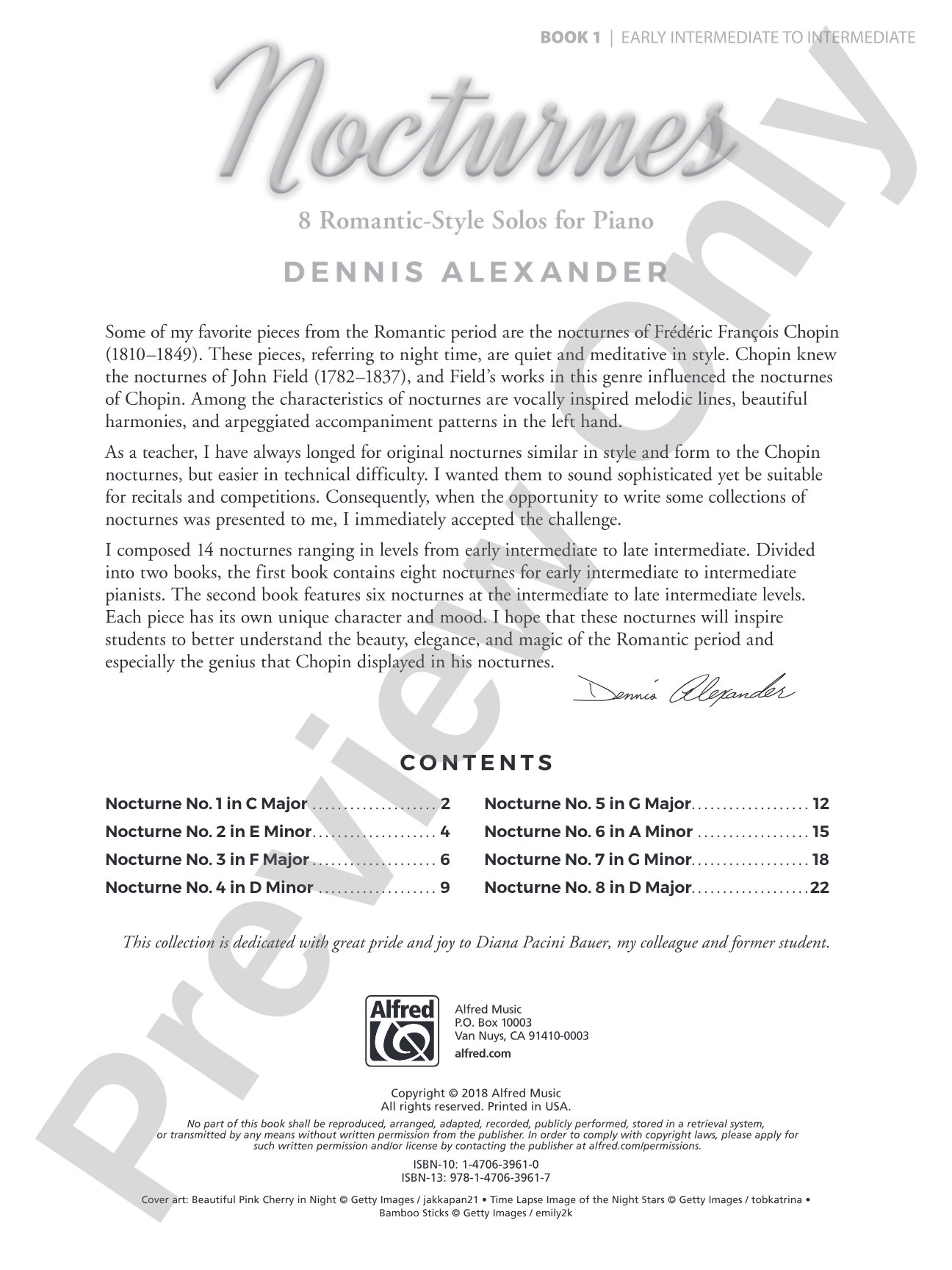
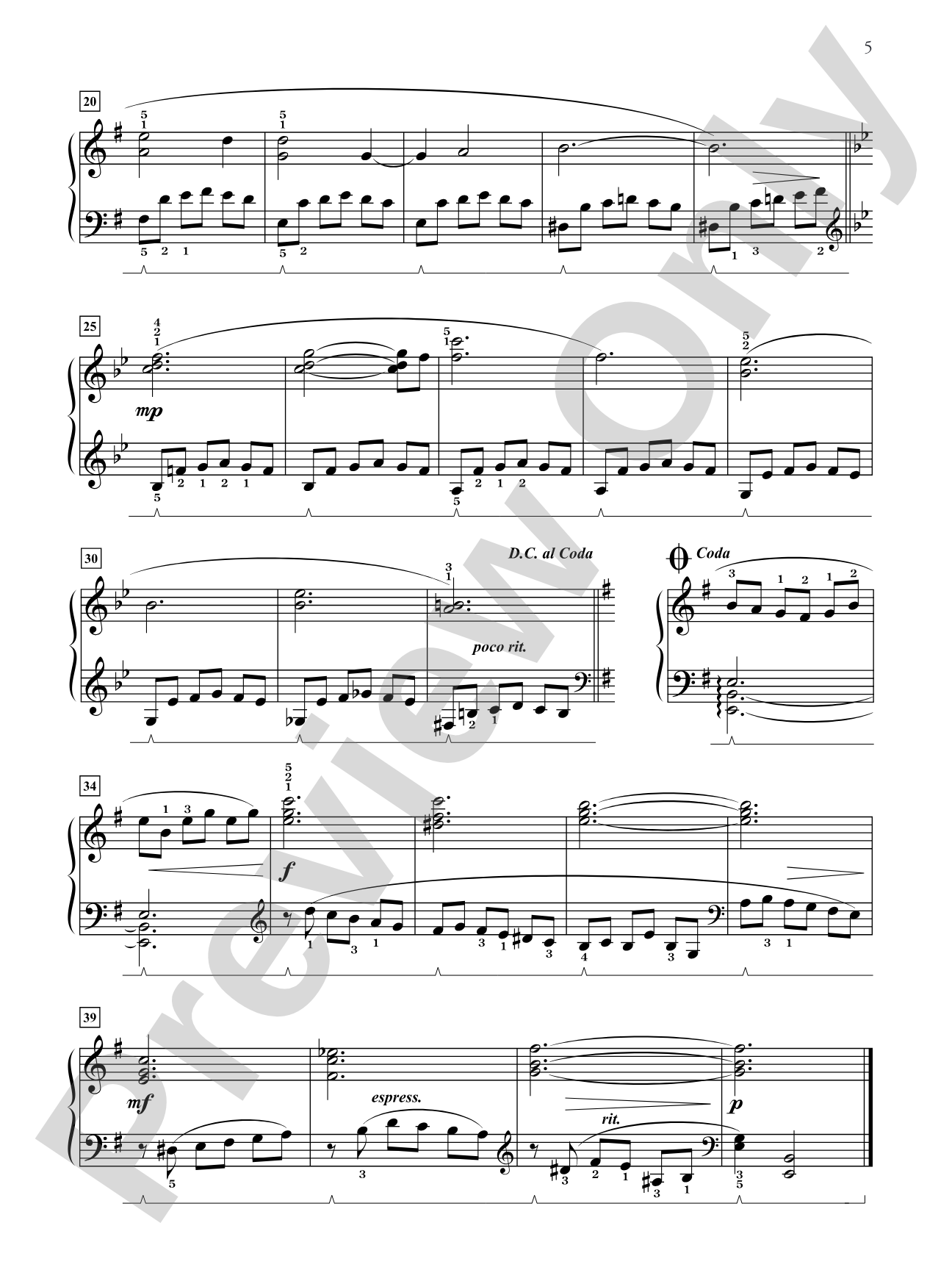
Nocturnes represent quiet and meditative night music. Typically found in nocturnes are lyrical melodic lines, beautiful harmonies, and left-hand arpeggiated accompaniment patterns. Each nocturne in this collection has these qualities along with their own unique character, mood, and sophisticated sound. The pieces are meant to encourage students to better understand the beauty and elegance of the Romantic-period style. Similar in style and form to those of Fréderic Chopin, these technically accessible nocturnes are suitable for student recitals and competitions.
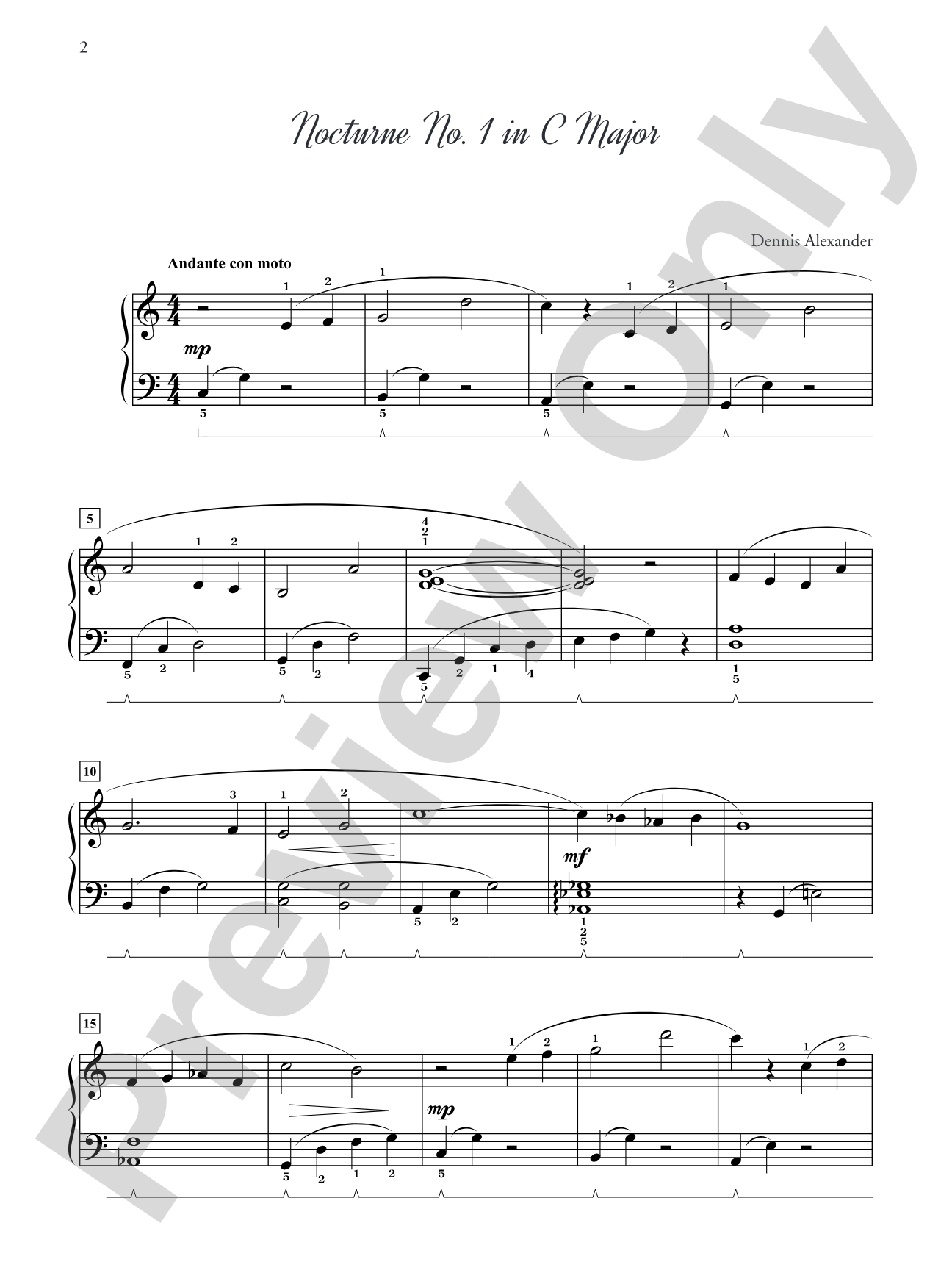
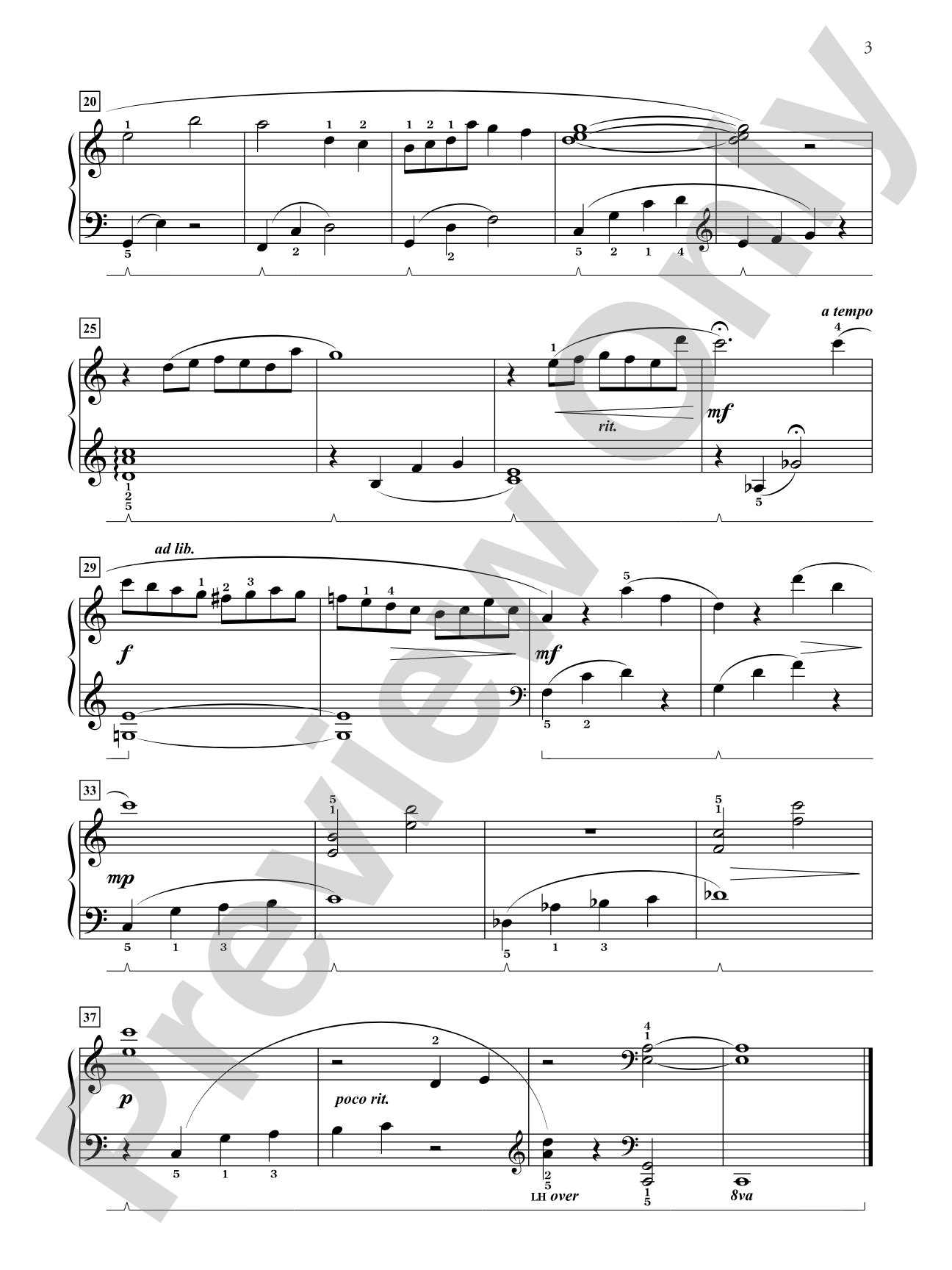
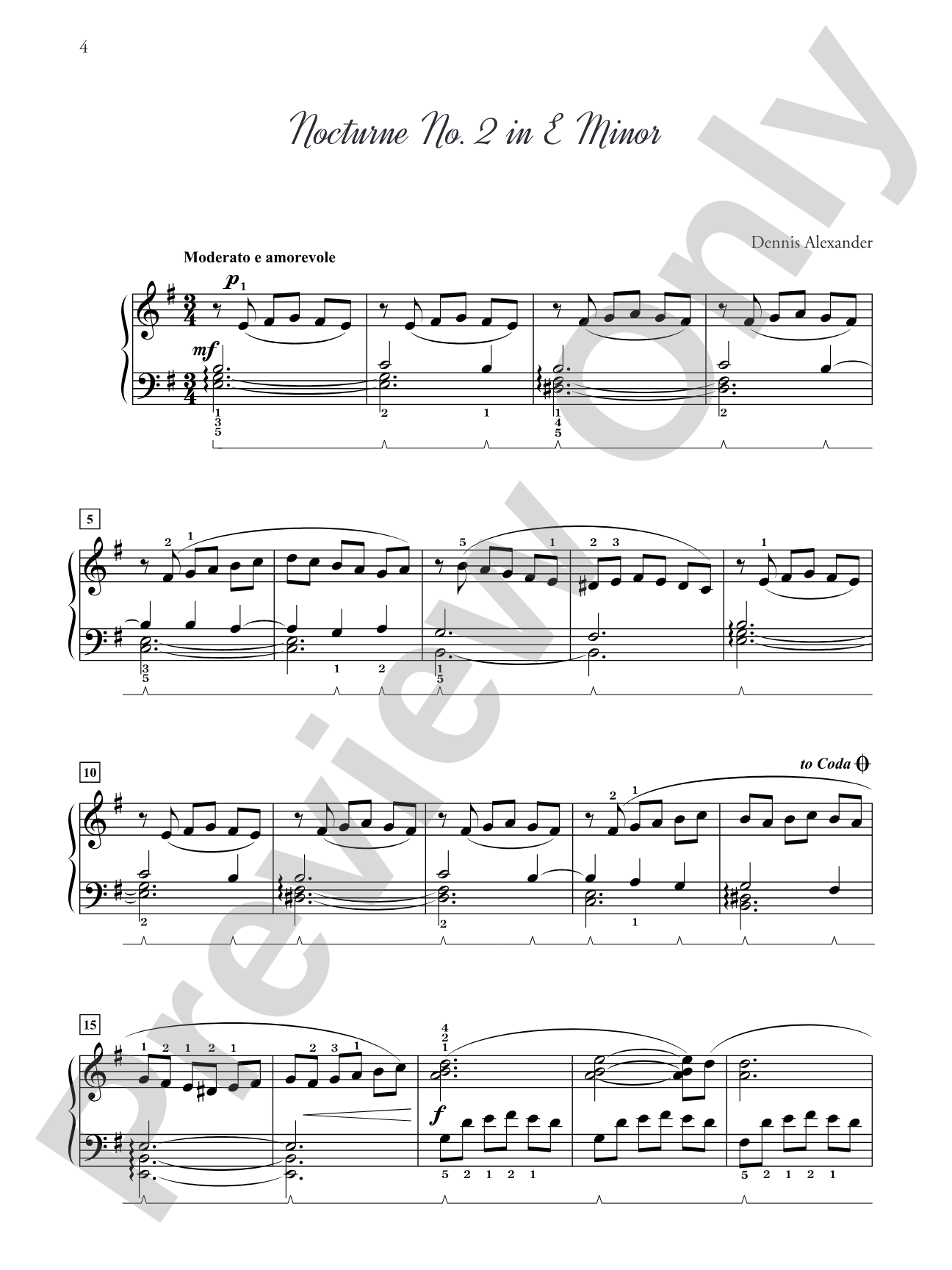
Book 1 contains the first 8 of 14 nocturnes for early intermediate to intermediate pianists. Titles: Nocturne No. 1 in C Major * Nocturne No. 2 in E Minor * Nocturne No. 3 in F Major * Nocturne No. 4 in D Minor * Nocturne No. 5 in G Major * Nocturne No. 6 in A Minor * Nocturne No. 7 in G Minor * Nocturne No. 8 in D Major. A Federation Festivals 2024-2028 selection.


Book 1 contains the first 8 of 14 nocturnes for early intermediate to intermediate pianists. Titles: Nocturne No. 1 in C Major * Nocturne No. 2 in E Minor * Nocturne No. 3 in F Major * Nocturne No. 4 in D Minor * Nocturne No. 5 in G Major * Nocturne No. 6 in A Minor * Nocturne No. 7 in G Minor * Nocturne No. 8 in D Major. A Federation Festivals 2024-2028 selection.
Don't just read it, hear it, play along with it, and watch your students grow with it. In MakeMusic Cloud, Nocturnes, Book 1: 8 Romantic-Style Solos for Piano: Piano comes alive with professional accompaniment, adjustable tempo, and built-in practice tools that turn solo practice into real progress.
Open in the Player
Jump straight in and assign it today.
Start Your Free Trial
Open this title and explore the full library in minutes.
Sample Audio
1
Nocturne No
--:--
2
Nocturne No
--:--
3
Nocturne No
--:--
4
Nocturne No
--:--
5
Nocturne No
--:--
6
Nocturne No
--:--
7
Nocturne No
--:--
8
Nocturne No
--:--
Nocturne No
0:00
0:00
Sample Video
1 / 9
Additional Details
Series:
Nocturnes
Publisher:
Alfred Music
Page Count:
24
SKU:
00-PB-0000548
More about this title
About the Composer: Dennis Alexander

Dennis Alexander has shaped music education for decades through his work with Alfred Music Publishing, beginning in 1986 and continuing with prolific output that has made him a globally recognized voice in piano pedagogy. His career spans teaching positions at the University of Montana (where he chaired the piano department for 24 years), Cal State Fullerton, and Cal State Northridge, alongside an active performance life that includes a Carnegie Recital Hall debut and extensive collaborative work with soloists and chamber ensembles.
Beyond the classroom and concert hall, Alexander remains deeply invested in the music teaching community. He has served as a clinician at state and national conventions, judged international competitions in India, and toured East Asia conducting masterclasses and performances. His commissions from music organizations and state associations reflect the respect he commands among educators and performers alike.
Why we love this
These nocturnes deliver genuine Romantic-era sophistication without the technical barrier that can intimidate early intermediate pianists. Alexander captures the essential character of the form—singing melodies, rich harmonies, accessible left-hand patterns—while giving each piece its own distinct voice, making this collection as rewarding for recital programs as it is for student competitions.
What to expect
Quiet contemplation meets refined expression. Each nocturne invites you into an intimate, unhurried space where lyrical melody floats above gently rolling accompaniment patterns, creating an atmosphere of peaceful introspection that feels both timeless and personal. The harmonies are generous and warm, with minor keys offering particularly evocative emotional landscapes.
Who it's for
Early intermediate to intermediate piano students ready to explore Romantic-era style with authenticity and elegance. These pieces work equally well for student recitalists seeking repertoire with genuine musical depth and for competitive performers aiming toward upper-level festival selections.
How to get the most out of it
- Shape the melodic line with careful dynamic shaping and subtle rubato; the arpeggiated accompaniment can breathe slightly to support the vocalist quality of the right hand.
- Listen closely to the harmonic progression and allow yourself time to hear the color of each chord, especially in the rich minor-key nocturnes which reward a warm, unhurried touch.
- Balance transparency in the left hand with the prominence of the melody; arpeggios should gently support rather than compete with the singing voice.
- Prepare the key centers and tonal areas before performance; understanding how each piece sits within its particular key signature will deepen your interpretive choices.
How to use it
Use these nocturnes as anchor pieces for recitals focused on Romantic repertoire, or program a single selection as a bridge between more virtuosic works to demonstrate stylistic range. Their meditative quality makes them effective opening numbers or quieter moments within a mixed program, and their inclusion as Federation Festivals selections ensures they meet competitive performance standards.
Skills your students will build
- Singing tone production and melody shaping in the right hand
- Left-hand arpeggiation patterns typical of Romantic-era accompaniment
- Dynamic control and subtle rubato within tonal frameworks
- Harmonic listening and voice leading awareness
- Interpretation of nocturne form and character development across a single movement
- Pedal technique for color and resonance in minor keys