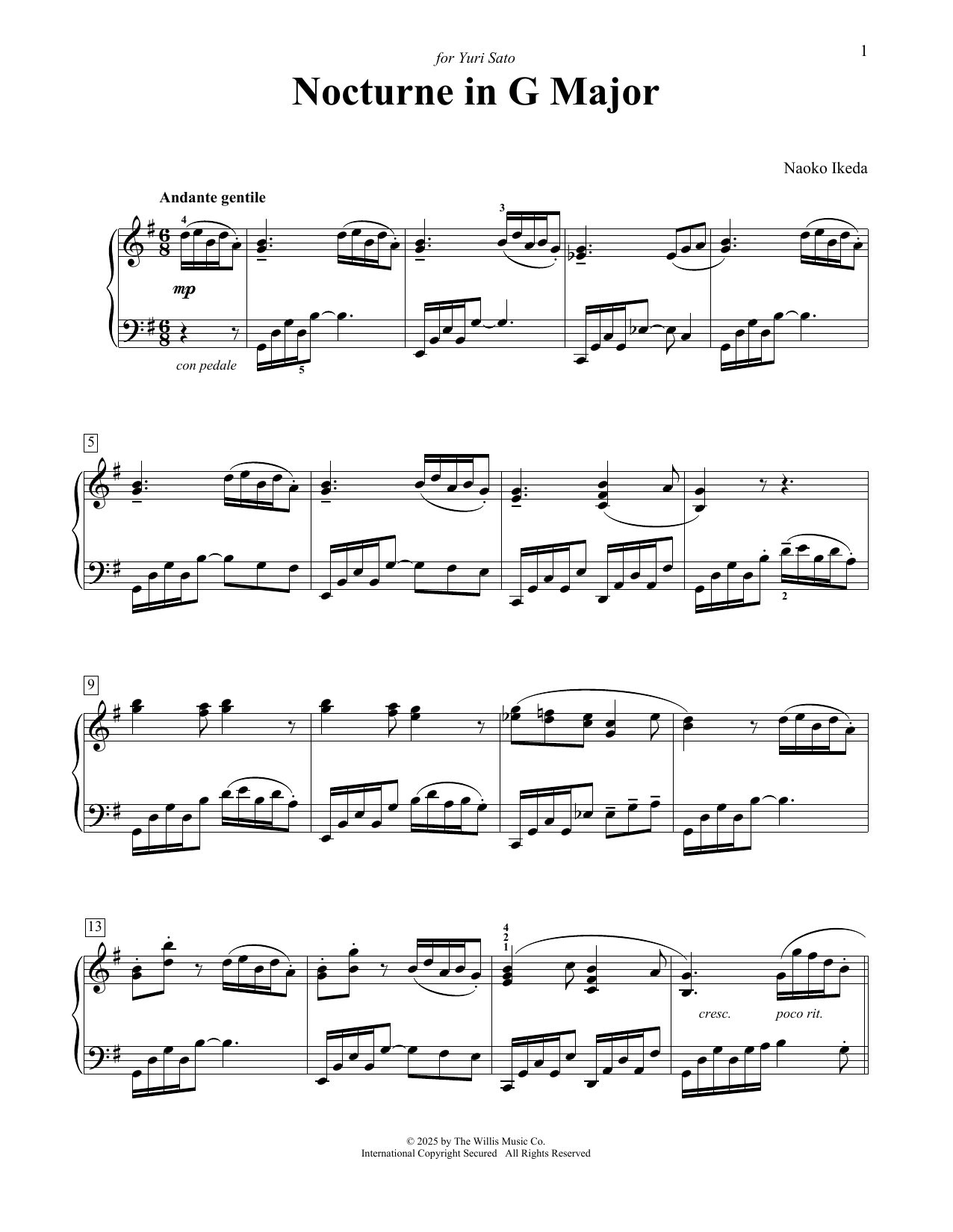
Naoko Ikeda is a Japanese composer and pianist whose educational works bridge classical tradition with contemporary pedagogical sensibility. Her compositions for piano students demonstrate a keen understanding of how to build technical facility while nurturing musicality at intermediate levels.
Why we love this
This nocturne captures the reflective character audiences expect from the form without demanding the hand independence or harmonic sophistication that stops many intermediate pianists cold. Ikeda writes with genuine lyricism rather than merely filling space with pedagogical exercises.
What to expect
Intimate and wistful. The piece unfolds with the unhurried quality of someone lost in quiet reflection, creating space for genuine emotional expression without drama. There's a gentle, almost conversational quality to how the melody emerges and settles.
Who it's for
Intermediate pianists developing comfort with longer musical phrases and the coordination between melody and accompaniment. Students ready to move beyond simpler forms into the expressive territory of character pieces will find this accessible without feeling condescending.
How to get the most out of it
Shape the melodic line with subtle weight shifts in the right hand; avoid playing it as a succession of equal notes despite the flowing figurations.
Balance the accompanying figures in the left hand so they support rather than overwhelm the primary voice. This requires genuine listening between hands.
Find the natural breathing points within phrases and allow the tempo to settle slightly at those moments. A nocturne lives in its pauses.
Work with the key of G major as an advantage. The one sharp lies easily under the hand and should feel like home, not an obstacle.
How to use it
Position this in a recital alongside other character pieces to create a lyrical contrast with more rhythmically active work. It works equally well as a solo program entry or grouped with other nocturnes to explore how different composers approach this beloved form.
Skills your students will build
Singing tone production in the right hand across longer phrases
Left hand independence and balance in accompanying patterns
Structural listening and phrase architecture in longer forms
Pedal control for sustaining harmony without muddying texture
Tempo flexibility and rubato appropriate to lyrical expression
You May Also Like
Scan to Complete Your Purchase
Use your phone's camera to scan the code below
You'll log in on your phone and the order will be added to your account