Nocturne in E Minor Sheet Music Preview

Nocturne in E Minor: Piano

By Mary K. Sallee

Item: 98-DP2005

Digital Download
$2.95
Description
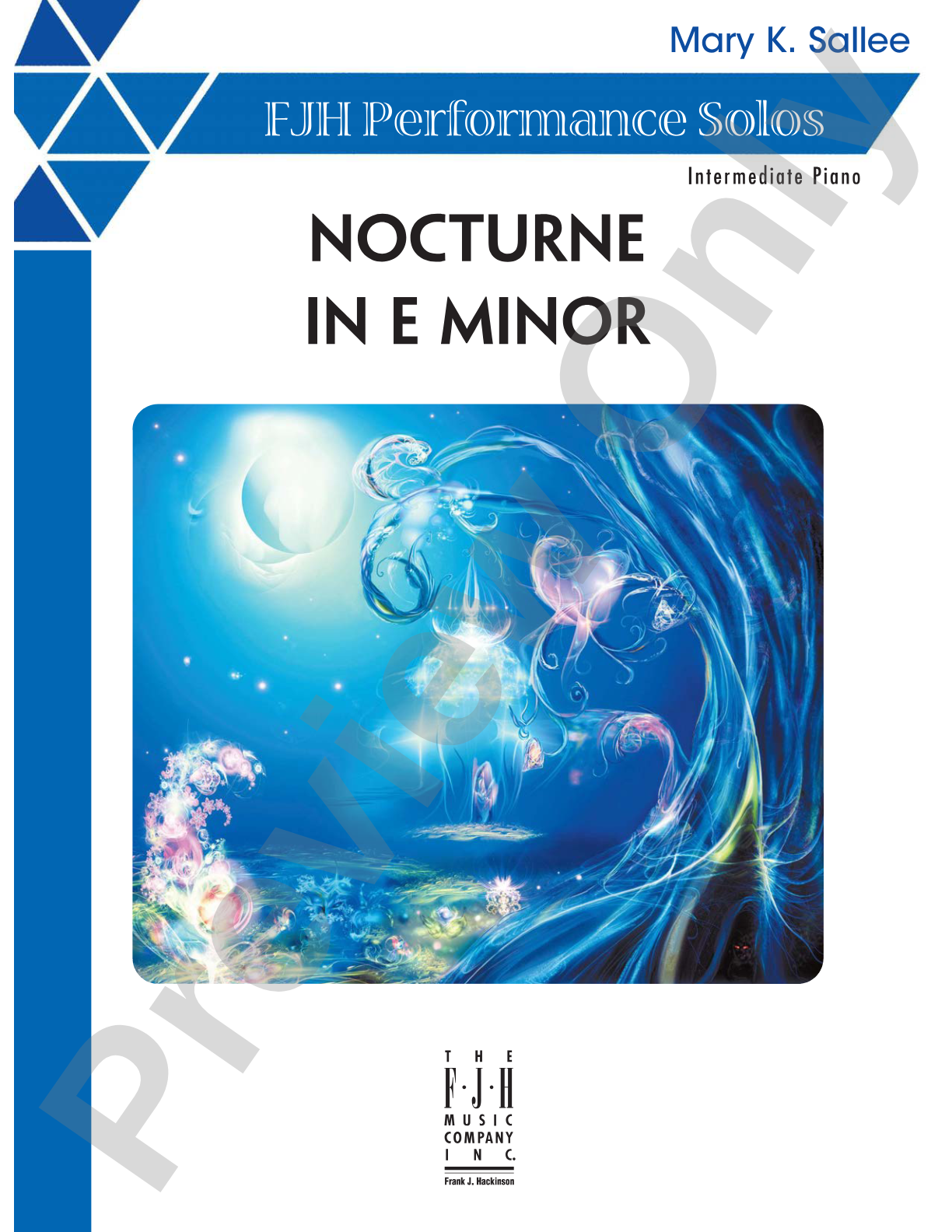
In the key of E minor and 6/8 meter, this piece is lyrical and expressive. It modulates to G Major in the B section, and then a peaceful close back in E minor. The use of rubato and the fact it doesn’t require a large hand makes it appealing to adults as well as teens.

Nocturne in E Minor: Piano isn't in MakeMusic Cloud just yet...but it could be. Let us know you'd like to see it, and you'll help shape what comes next. In the meantime, start a free trial and dive into thousands of interactive titles your students can play along with today.

Sample Audio
No sample audio found.
Sample Video
Additional Details
Series: FJH Performance Solos
Publisher: The FJH Music Company, Inc.
SKU: 98-DP2005

More about this title

About the Composer: Mary K. Sallee

Mary K. Sallee

Mary K. Sallee is a classically trained pianist with degrees in both piano performance and pedagogy from the University of Oklahoma, capped by a year of advanced study at the Hochschule für Musik in Vienna as a Rotary Ambassadorial Scholar. Since 1986, she has maintained a private piano studio in Norman, Oklahoma, where she has built a particular expertise in teaching adult students.

As a composer, Sallee has created over 60 published works, many of them written directly for her own students. Several of her compositions appear on the National Federation of Music Clubs repertoire list. Beyond solo keyboard music, she actively writes and arranges vocal and choral works through her publishing imprint, Acoustic Press. Her involvement in the music education community extends well beyond composition: she serves as a clinician, adjudicator, and conductor, oversees local festivals and competitions, and has held leadership roles in both the Oklahoma Music Teachers Association and the Music Teachers National Association.

Why we love this

Sallee writes with the clarity of someone who understands exactly what intermediate pianists need: technical accessibility paired with genuine musical substance. The move from E minor into G Major feels natural and rewarding to execute, and the invitation to use rubato gives students permission to develop their own interpretive voice rather than simply hitting the correct notes.

What to expect

This piece unfolds like a quiet conversation with yourself. The opening E minor mode is contemplative and introspective, with the shifting harmonies inviting subtle color changes. The shift into G Major provides a moment of opening, a brief sense of peace before returning home to the minor key's familiar melancholy.

Who it's for

Intermediate pianists of any age will find this piece engaging and performable. Adults especially appreciate the moderate hand span requirements and the opportunity to work with expressive, reflective music that doesn't demand technical pyrotechnics.

How to get the most out of it

  • Establish the 6/8 pulse as a gentle three-beat feel rather than rushing into six individual eighth notes; this foundation makes the rubato breathe more expressively.
  • Shape the melodic line with dynamic contour, not just dynamic markings; let the harmony suggest where phrases naturally swell and recede.
  • Prepare the G Major section as a tonal arrival, not a surprise; the transition should feel like walking into warm light rather than a sharp detour.
  • Reserve rubato for moments of genuine musical need, particularly around cadences and the return to E minor; overuse flattens the effect.

How to use it

Nest this in a recital program as a contrasting solo that bridges heavier technical pieces and lighter character works. It works beautifully in a student showcase where you want to feature expressive, mature playing without pushing students into advanced territory. The moderate technical demands also make it suitable for a mixed-level student concert where intermediate players deserve repertoire that values musicianship over difficulty.

Skills your students will build

  • Maintaining steady pulse in compound meter (6/8) while using rubato
  • Voice leading through a key modulation from E minor to G Major
  • Dynamic and tonal shaping in a lyrical context
  • Balance between left-hand accompaniment and right-hand melody

You May Also Like