Nocturne In E-Flat Major, Op. 9, No. 2 Sheet Music Preview

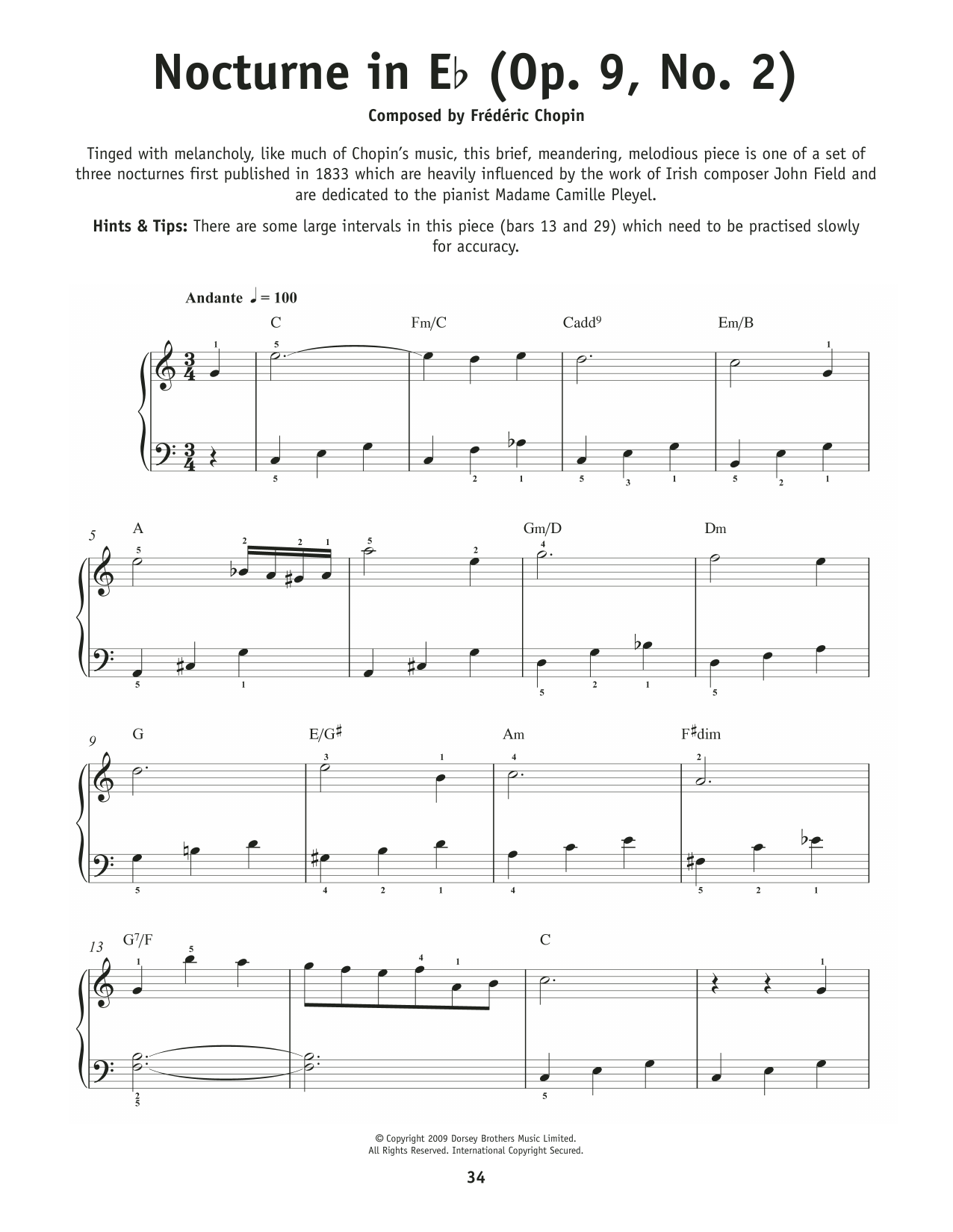
Nocturne In E-Flat Major, Op. 9, No. 2: Really Easy Piano

As performed by Frederic Chopin

Item: 35-DS01587916

Digital Download
$4.99
Description

Discover MakeMusic Cloud: thousands of interactive titles your students can play along with today.

Sample Audio
No sample audio found.
Sample Video
Additional Details
Publisher: Hal Leonard
Page Count: 2
SKU: 35-DS01587916

More about this title

About the Artist: Frederic Chopin

Chopin spent his most productive years in Paris, where he became the leading voice of piano Romanticism. His twenty-one Nocturnes, composed across four decades, established the genre as a vehicle for lyrical melody and harmonic innovation, moving far beyond the simple salon pieces that preceded them.

As a composer and pedagogue, Chopin fundamentally changed how pianists approached tone production and finger independence. His writing for the instrument remains unmatched in its understanding of the piano's expressive range, and his influence on both performance technique and musical imagination persists in conservatories worldwide.

Why we love this

This nocturne contains everything that makes Chopin essential repertoire: a singing right-hand melody that demands real cantabile control, left-hand figuration that sounds deceptively simple but requires genuine independence, and harmonic language that opens students' ears to Romantic chromaticism. The two-page length makes it attainable for intermediate pianists while remaining deep enough to reveal new layers with each performance.

What to expect

A intimate conversation with oneself, tender and introspective. The melody unfolds like a carefully chosen confession, marked by moments of questioning hesitation and gentle resignation. There's a bittersweet quality to the harmony that colors even the most lyrical passages with an underlying melancholy.

Who it's for

Intermediate to advanced pianists ready to work with genuine Romantic sonority and phrasing. This piece suits students with solid technique who can prioritize musicality over mechanical accuracy, as the real work lies in voice balance and sustained singing tone.

How to get the most out of it

  • Shape the main melody as if singing through a phrase in a single breath; resist the temptation to punctuate every bar line, letting the contour breathe naturally across longer spans
  • Keep the accompaniment transparent by using the pedal sparingly and changing it with harmonic shifts rather than rhythmically; the sonority should support the melody without clouding it
  • Listen carefully to the relationship between the outer voices; when the melody descends to lower registers, the accompanying figures must adjust their dynamic weight accordingly
  • Treat ornamentations and variations in later phrases as natural evolution of the original theme rather than new material; this coherence unifies the piece emotionally

How to use it

Position this in a solo recital or mixed instrumental concert as a change of pace that showcases pianistic artistry. It pairs naturally with other Romantic keyboard works or can stand alone as a meditative interlude between larger ensemble pieces.

Skills your students will build

  • Sustaining cantabile melody over broken figurations
  • Voice independence between right and left hands
  • Harmonic analysis of Romantic chromaticism and unexpected progressions
  • Pedal technique and sensitivity to tonal blending
  • Phrasing across bar lines and structural form comprehension
  • Ornamentation and variation as compositional technique

You May Also Like