
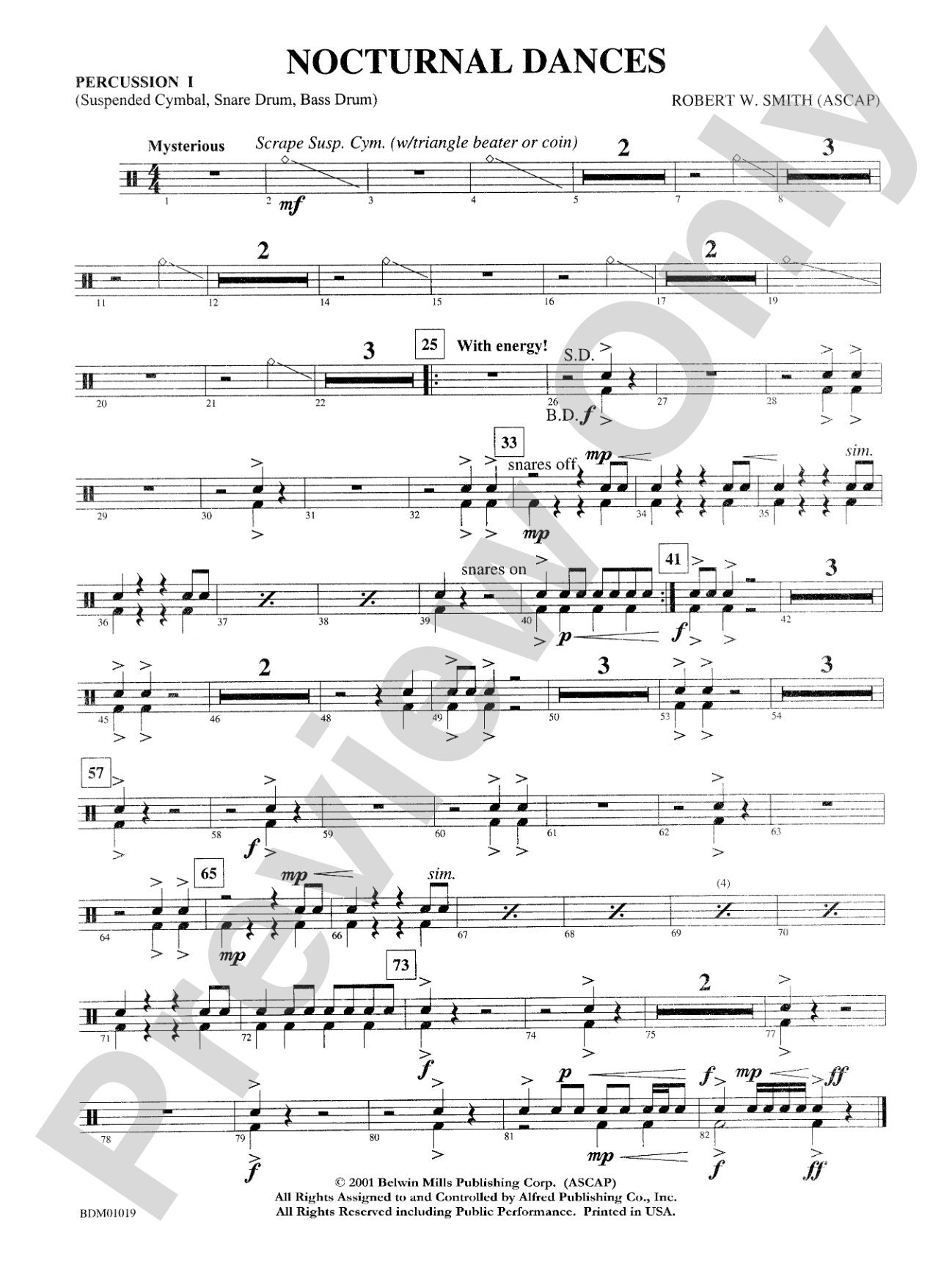

Nocturnal Dances: 1st Percussion
By Robert W. Smith
Grade: 1 (Very Easy)
Item: 00-PC-0002141_PC1
$3.00
Pickup currently not available
Description
A wonderful addition to the beginning literature with varied textures for the beginning ensembles. Each section presents the melodic material. Beginning with a rhythmic motif, this super work will offer the opportunity for the teaching of listening, reinforcement of independent counting, and due to the driving nature of the composition, will be well received on any performance.


Don't just read it, hear it, play along with it, and watch your students grow with it. In MakeMusic Cloud, Nocturnal Dances: 1st Percussion comes alive with professional accompaniment, adjustable tempo, and built-in practice tools that turn solo practice into real progress.
Open in the Player
Jump straight in and assign it today.
Start Your Free Trial
Open this title and explore the full library in minutes.
Sample Audio
1
Audio File
--:--
0:00
0:00
Sample Video
No sample videos found.
Additional Details
Series:
Belwin Beginning Band
Publisher:
Alfred Music
Page Count:
79
SKU:
00-PC-0002141_PC1
More about this title
About the Composer: Robert W. Smith

Robert W. Smith stands among America's most prolific and respected composers for concert band and orchestra, with over 400 published works to his credit. His education in music education from Troy State University and advanced study at the University of Miami equipped him to write across all levels of difficulty, from accessible beginning band literature to challenging concert works. His compositions have traveled the world, performed from Asia to Europe to Australia, and his arrangements and original works have appeared in Olympic broadcasts, the Macy's Thanksgiving Day Parade, and other major television productions.
Beyond the printed page, Smith is an active conductor and clinician who has appeared throughout North America, Japan, Australia, and Europe. His symphonic works (including The Divine Comedy and The Odyssey) and his music for developing ensembles have become standards in band repertoires worldwide. The Tempest and similar pieces for younger players demonstrate his gift for crafting engaging, pedagogically sound music that serves both educational and musical purposes.
Why we love this
Smith understands exactly what beginning bands need: accessible writing that doesn't condescend, rhythmic drive that keeps players engaged, and textures varied enough to give every section something to do. The piece builds ensemble confidence through clear melodic scoring while developing independence through the counting challenges woven throughout.
What to expect
Nocturnal Dances pulses with rhythmic energy, anchored by a driving motif that gives the piece forward momentum and shape. The varied textures keep the ear engaged, moving focus across the ensemble in ways that maintain interest for both players and listeners without demanding virtuosity.
Who it's for
Beginning concert bands working at Grade 1 level will find this piece perfectly scaled for their technical abilities while remaining musically satisfying. Directors seeking literature that develops ensemble discipline without overwhelming young players will appreciate Smith's skill at balancing accessibility with genuine musical substance.
How to get the most out of it
- Establish the rhythmic motif cleanly in the opening; this pattern returns and anchors the entire work, so getting it precise early pays dividends later.
- Balance the melodic material across sections rather than allowing any one voice to dominate. Smith has written for ensemble, not soloists, so blend the texture.
- Use the driving nature of the composition to shape phrasing naturally. Let the momentum breathe rather than over-conducting; your beginning players will feel the forward motion if you trust it.
- Isolate and practice the independent counting passages separately before full rehearsal. Confidence in these moments transforms the listening experience for your audience.
How to use it
This works wonderfully on a winter or spring concert as a contrast piece between slower, more lyrical selections. Its engagement factor makes it ideal for competitions or festival performances where you want the audience to connect with the ensemble's musical communication, and its length and grade level suit it well to opening a concert or sitting comfortably in a mixed program.
Skills your students will build
- Independent rhythmic counting within an ensemble context
- Listening to multiple melodic lines while maintaining personal part accuracy
- Maintenance of rhythmic momentum across phrase boundaries
- Balanced voicing and blend across concert band sections
- Recognition and performance of recurring motivic material