
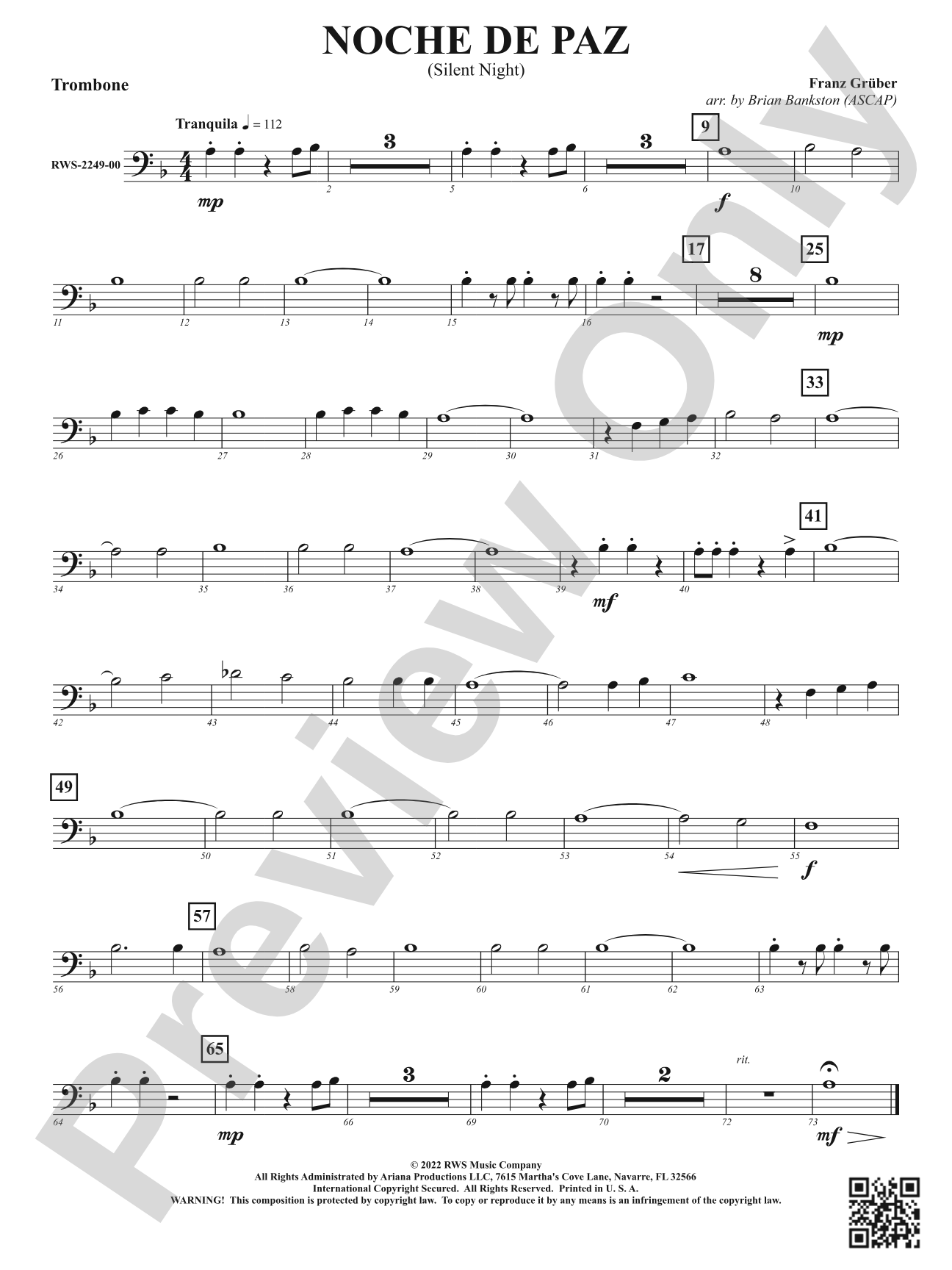

Noche de Paz - Silent Night: 1st Trombone
Silent Night
By Franz Gruber / arr. Brian Bankston
Grade: 2
Item: 98-PC-RWS2249_TN1
$3.99
Pickup currently not available
Description
A creative reimagining of the classic carol Silent Night in the relaxing Brazilian style of Bossa Nova. Warm and mellow harmonies, deceptive chord movements and Latin percussion provide an excellent education in ethnic rhythms and sounds. Broaden your band's diversity with this tranquil arrangement of a Christmas classic.
Original Item#: RWS-2249-00


Original Item#: RWS-2249-00
Noche de Paz - Silent Night: 1st Trombone isn't in MakeMusic Cloud just yet...but it could be. Let us know you'd like to see it, and you'll help shape what comes next. In the meantime, start a free trial and dive into thousands of interactive titles your students can play along with today.
Request This Title
Tell us you want it.
Start Your Free Trial
Explore everything that's ready to play right now.
Sample Audio
1
Audio File
--:--
0:00
0:00
Sample Video
No sample videos found.
Additional Details
Series:
RWS - Developing Band
Publisher:
RWS Music Company
SKU:
98-PC-RWS2249_TN1
More about this title
About the Composer: Franz Gruber
Franz Gruber (1787-1863) was an Austrian organist and composer whose modest output belied his lasting influence on music education and Christmas traditions worldwide. Though he spent most of his career as a schoolteacher and organist in his native Tyrol, his collaboration with lyricist Joseph Mohr on "Stille Nacht" in 1818 created one of the most beloved melodies in Western music. The carol's accessibility and emotional directness made it ideal for teaching melody, harmony, and cultural expression across generations of students.
Gruber's approach to composition emphasized clarity and singability. His gift for writing memorable, unpretentious melodies demonstrates how effective musical communication requires neither complexity nor virtuosity. For music educators, Gruber's work reminds us that a simple, well-crafted tune can teach as much as any elaborate composition.
Why we love this
Brian Bankston's bossa nova treatment transforms a familiar melody into a sophisticated study of Latin rhythms and jazz harmony without losing the carol's warmth. Grade 2 bands gain exposure to syncopated accompaniment patterns, deceptive harmonic movement, and the interplay between steady pulse and rhythmic flexibility that defines Brazilian music. The arrangement respects both the source material and the stylistic tradition it borrows from, making it educational rather than gimmicky.
What to expect
Warm and unhurried, like an evening in a quiet tropical setting. The familiar melody floats above gentle, syncopated rhythms and sophisticated harmonic colors, creating a carol that feels both recognizable and gently transformed. The relaxed bossa nova groove invites listeners to slow down and appreciate subtle details rather than rushing toward resolution.
Who it's for
Grade 2 concert bands looking to expand their cultural and stylistic range without sacrificing ensemble cohesion. Directors seeking material that honors a beloved carol while introducing students to Latin music fundamentals will find this arrangement both accessible and musically substantive.
How to get the most out of it
- Balance the Latin percussion carefully so it breathes support rather than competing with the melodic line. The rhythm section anchors the bossa nova feel, but your woodwinds and brass must stay centered.
- Shape the deceptive chord changes with subtle dynamic shaping and rubato. Let the harmonic twists breathe rather than rushing through them; the whole point is to enjoy the warm, unexpected turns.
- Ask your ensemble to listen to recorded bossa nova examples (João Gilberto, Antonio Carlos Jobim) before rehearsal. Hearing the style's gentle swing and relaxed articulation will inform phrasing better than any verbal description.
- Mark articulation and style clearly in the parts. Detached quarter notes in the bossa nova groove differ from the legato phrasing often used in Christmas carols, and consistency across sections keeps the groove intact.
How to use it
Program this as a December concert anchor that distinguishes your band's holiday offering from standard carol arrangements. Its moderate length and sophisticated harmony make it an excellent vehicle for teaching deceptive cadences and Latin rhythms in context, and the calm character provides effective pacing between higher-energy seasonal selections.
Skills your students will build
- Reading and executing syncopated rhythms in a bossa nova context
- Understanding deceptive chord movements and jazz harmony
- Balancing rhythmic precision with relaxed, swing-influenced articulation
- Listening for and responding to Latin percussion patterns as ensemble anchor
- Stylistic contrast between legato melodic phrasing and detached accompaniment figures