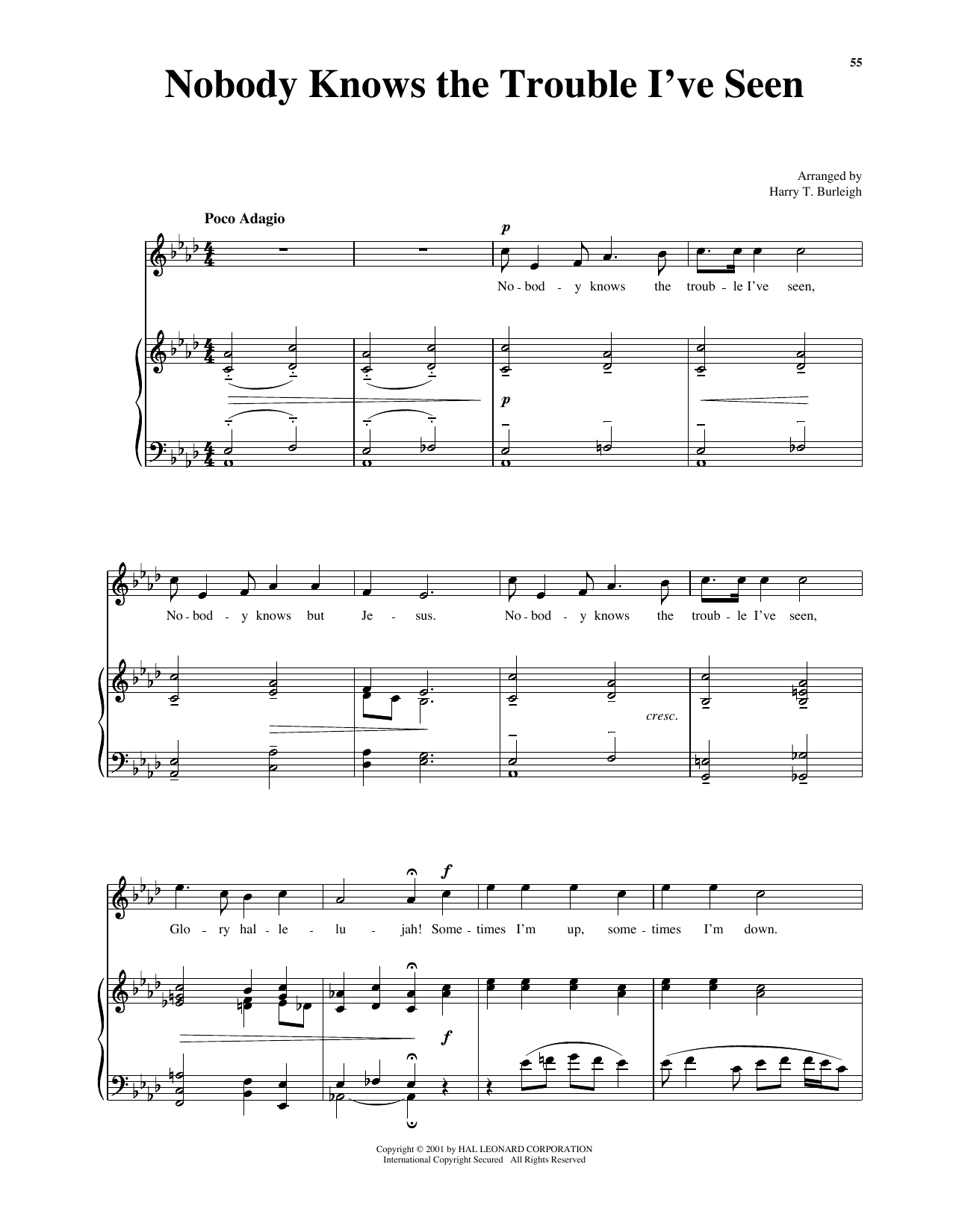
Nobody Knows The Trouble I've Seen (arr. Richard Walters) (High Voice) Sheet Music Preview

Nobody Knows The Trouble I've Seen (arr. Richard Walters) (High Voice): Piano Vocal

Arranged by Richard Walters / Arranged by Harry T. Burleigh

Item: 35-DS01477604

Digital Download
$5.99
Description

Nobody Knows The Trouble I've Seen (arr. Richard Walters) (High Voice): Piano Vocal isn't in MakeMusic Cloud just yet...but it could be. Let us know you'd like to see it, and you'll help shape what comes next. In the meantime, start a free trial and dive into thousands of interactive titles your students can play along with today.

Sample Audio
No sample audio found.
Sample Video
Additional Details
Publisher: Hal Leonard
Page Count: 3
SKU: 35-DS01477604

More about this title

About the Arranger: Richard Walters

Richard Walters has shaped American vocal pedagogy through decades of arranging and editing music for singers at every level. His work as a vocal coach, conductor, and arranger reflects a deep commitment to making repertoire accessible while preserving its artistic integrity.

Why we love this

Walters respects the spiritual's emotional weight while crafting an arrangement that doesn't demand operatic technique to communicate authenticity. The piano writing supports rather than overshadows the voice, creating space for genuine expression across all vocal ranges.

What to expect

There's a quietness to this arrangement that draws listeners inward. The melody unfolds with the intimacy of someone sharing personal struggle, while the piano provides grounded harmonic support that feels like witness rather than spectacle.

Who it's for

High voice singers preparing audition material, recital repertoire, or sacred music for worship contexts. Teachers building spirituals into vocal curricula will find Walters' straightforward, singable approach valuable for students exploring American vocal heritage.

How to get the most out of it

  • Find the spiritual's inherent swing without overdoing rhythmic liberties. The pulse should breathe naturally, especially through the repetitive phrases.
  • Shape the melody through dynamic contrast rather than speed changes. Build intensity toward 'Nobody knows' phrases, then recede slightly on the surrounding text.
  • Balance the piano accompaniment so it anchors the harmony without masking the lyrical line. The accompaniment's role is supportive architecture.
  • Connect emotionally to the text's testimony. This arrangement asks singers to convey both the sorrow and resilience embedded in the spiritual's history.

How to use it

Pair this with other spirituals in a recital to build a thematic arc exploring faith and resilience. It also serves effectively as a standalone offering on a mixed program, offering audiences a moment of reflective beauty between contrasting works.

Skills your students will build

  • Vocal legit singing with minimal vibrato when interpretively necessary
  • Sustained lyrical phrasing across longer melodic lines
  • Emotional communication through textual understanding rather than technical display
  • Piano score reading for accompaniment cueing
  • Stylistic sensitivity to African American spiritual traditions

You May Also Like