
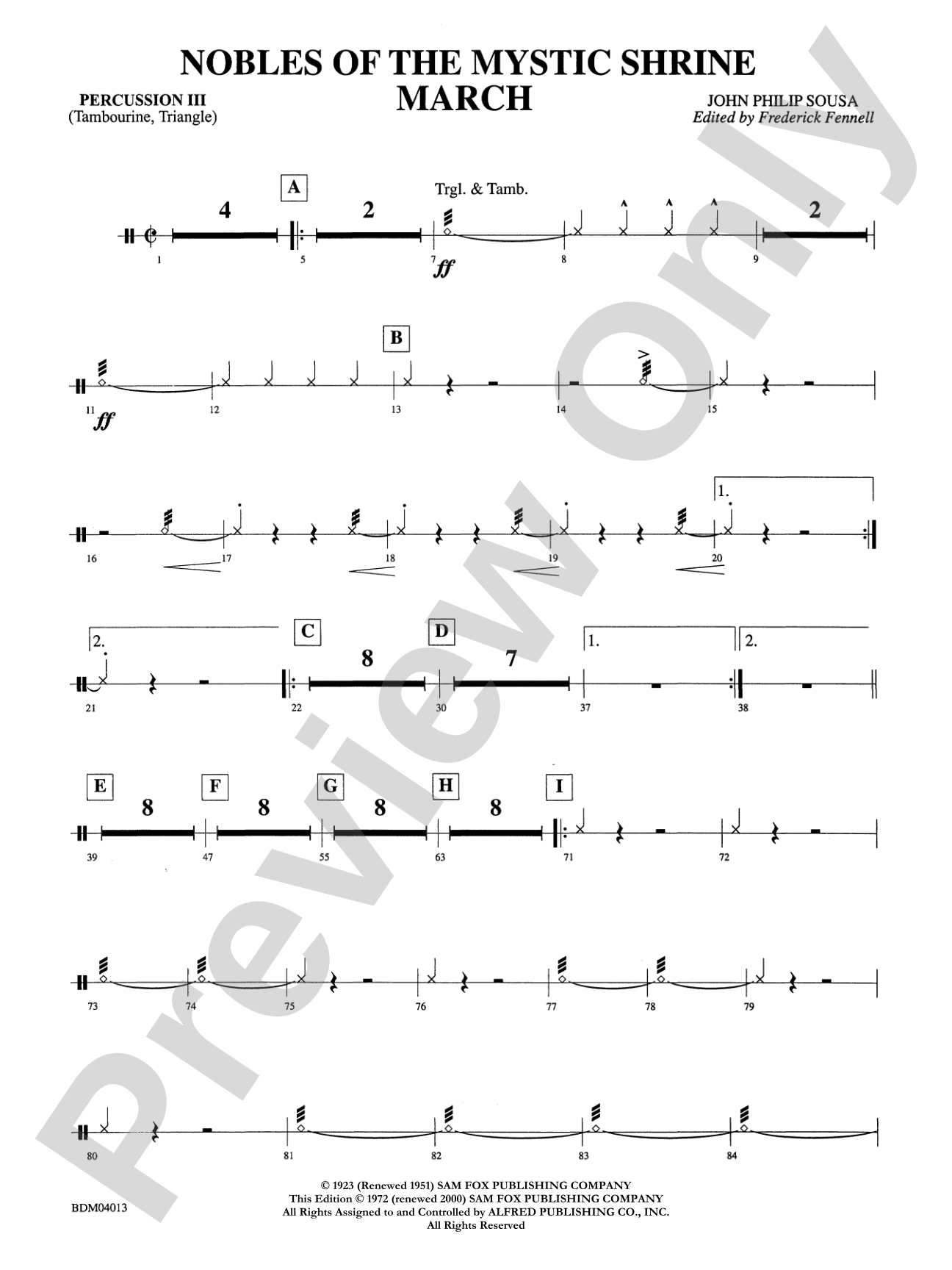

Nobles of the Mystic Shrine (March): 3rd Percussion
By John Philip Sousa / ed. Frederick Fennell
Grade: 4 (Medium)
Item: 00-PC-0002192_PC3
$3.00
Pickup currently not available
Description
Now with a full score provided, here's the original Fennell arrangement of this revered John Philip Sousa march. Although there was always a harp included in the photographs of the Sousa Band, this is the only march in his repertoire that includes a part for the harpist. The part is included and can be played on a synthesizer. This one's a real barn burner. (3:20)


Don't just read it, hear it, play along with it, and watch your students grow with it. In MakeMusic Cloud, Nobles of the Mystic Shrine (March): 3rd Percussion comes alive with professional accompaniment, adjustable tempo, and built-in practice tools that turn solo practice into real progress.
Open in the Player
Jump straight in and assign it today.
Start Your Free Trial
Open this title and explore the full library in minutes.
Sample Audio
1
Audio File
--:--
0:00
0:00
Sample Video
Additional Details
Series:
Fennell Edition Marches for Band
Publisher:
Alfred Music
Page Count:
280
SKU:
00-PC-0002192_PC3
More about this title
About the Composer: John Philip Sousa
John Philip Sousa (1854-1932) shaped the American concert band into a sophisticated ensemble capable of performing large-scale works with orchestral depth. As both composer and conductor of the famous Sousa Band, he wrote 136 marches that remain cornerstones of the band repertoire, combining memorable melodies with intricate countermelody and harmonic invention that reward careful musicianship.
Sousa's legacy extends beyond march composition; he was a fierce advocate for musicians' rights and a visionary who elevated the concert band from a regional curiosity to a nationally touring ensemble. His marches continue to define what audiences expect from the genre: energy, clarity, and the kind of straightforward emotional appeal that makes music memorable without being simplistic.
Why we love this
Frederick Fennell's arrangement brings clarity and refinement to this march's sophisticated orchestration, and the inclusion of a full score makes this accessible for conductors who want to study how Sousa layers his material. The harp part is historically significant and adds genuine color to the ensemble sound, making this a standout among Sousa marches and a programmatic statement about what a concert band can accomplish.
What to expect
Stately and energetic at once, this march moves with purposeful momentum while its harp accompaniment adds an unexpected shimmer and refinement. The trio section catches fire with rhythmic vitality, and the whole piece conveys the confidence and forward motion Sousa intended for his finest works.
Who it's for
This is for Grade 4 concert bands ready to program serious march repertoire and audiences who expect the authentic Fennell orchestration. Directors seeking repertoire that balances technical demands with immediate musicality will find this invaluable; the included full score enables deep score study and pedagogy.
How to get the most out of it
- Balance the harp part carefully so it enriches the harmony without overwhelming the melodic voices; if using synthesizer, program a warm, resonant harp timbre rather than a bright plucked sound.
- Shape the main march melody with slight dynamic emphasis on downbeats and phrase arrivals, letting the band breathe at cadential moments rather than pushing straight through.
- Lock the rhythmic precision in the trio section where the syncopation occurs; this section defines the energy and character of the whole piece.
- Listen for interior countermelodies, especially in the cornets and clarinets, and bring them out during rehearsal so the arrangement's sophistication becomes audible to the audience.
How to use it
Program this as a centerpiece of a concert devoted to classic American march literature, or use it to open a concert where you want the band to demonstrate technical control and historical awareness. It works especially well on festival concerts where other Sousa marches appear, allowing audiences to hear how his compositional ambitions grew beyond the standard march form.
Skills your students will build
- Balancing exposed harmonic parts with melodic content
- Shaping longer musical phrases in march form
- Reading complex full score arrangements and understanding orchestration
- Ensemble precision in syncopated rhythmic passages
- Performing with historical and stylistic awareness of early 20th century band writing