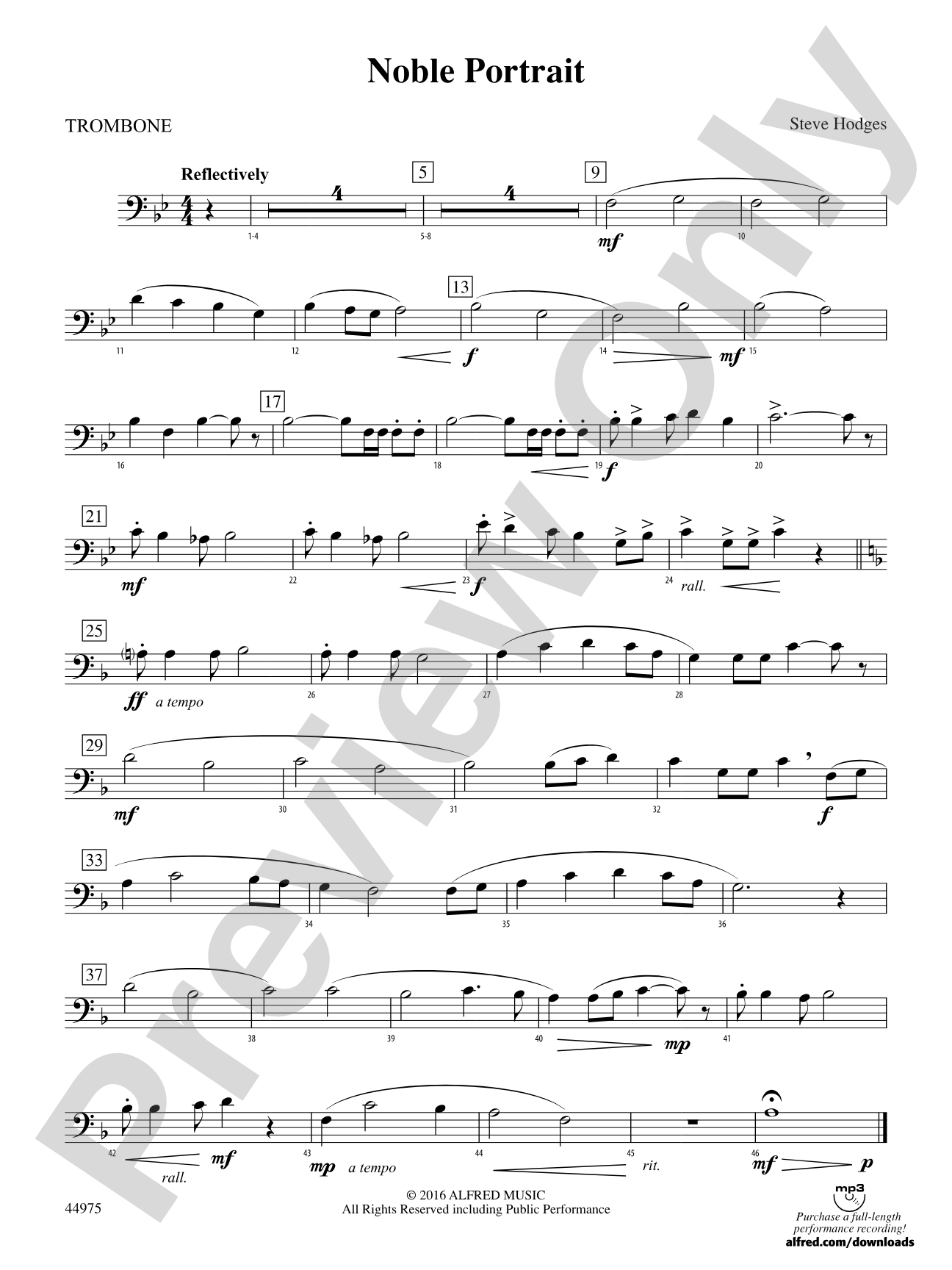
Noble Portrait: 1st Trombone Sheet Music Preview

Noble Portrait: 1st Trombone

By Steve Hodges

Grade: 1.5 (Easy)

Item: 00-PC-0017440_TN1

Digital Download
$3.00
Description
A memorable, plaintive melody presented in a variety of textures highlights this moving piece. Each section of the band has the opportunity to present the expressive theme, while a bold contrasting section provides an effective variation. The expressive and dynamic qualities of this piece will provide a valuable teaching opportunity for the young band. (2:45)

Don't just read it, hear it, play along with it, and watch your students grow with it. In MakeMusic Cloud, Noble Portrait: 1st Trombone comes alive with professional accompaniment, adjustable tempo, and built-in practice tools that turn solo practice into real progress.

Sample Audio
0:00
0:00
Sample Video
Additional Details
Series: Challenger Band Series
Publisher: Alfred Music
Page Count: 120
SKU: 00-PC-0017440_TN1

More about this title

About the Composer: Steve Hodges

Steve Hodges

Steve Hodges holds degrees from Western Oregon University (Bachelor of Science) and Central Washington University (Master of Music Education). He spent four decades in public school music education, directing concert bands, choirs, and chamber ensembles across multiple grade levels before retiring from classroom teaching.

Since 1986, Hodges has composed and published over 120 concert band works through Alfred Music, along with choral arrangements for Staff Music and Shawnee Press. His music has appeared at festivals and state conventions internationally, and he has received commissions from honor bands and school programs across Virginia, Iowa, Washington, Oregon, North Carolina, and Canada. His compositions have also been licensed for broadcast by major television networks. Hodges is an ASCAP member and currently resides in The Dalles, Oregon, where he remains active in community music alongside his family.

Why we love this

Hodges crafts an emotionally direct piece that teaches without sacrificing musicality. The rotating melody assignments ensure every section owns the expressive content, and the contrasting section gives players something genuinely different to sink their teeth into, making this far more than a vehicle for technique.

What to expect

The piece opens with quiet dignity, presenting a melody that feels both accessible and genuinely moving. As the theme passes from section to section, the arrangement creates warmth and intimacy, then shifts into a bolder character that energizes without overwhelming the core emotional center.

Who it's for

This is designed for Grade 1.5 concert bands still building fundamental ensemble skills. Young players will develop expressive control and hear how a simple melody can sustain interest through orchestration and texture rather than complexity.

How to get the most out of it

  • Balance the melody carefully as it moves between sections; younger bands often push dynamics too hard when gaining the lead, so model restraint and shape the phrase across the full statement.
  • Establish a consistent vibrato approach in the woodwinds during the expressive theme to unify the sound across your varied textures.
  • Let the contrast section breathe as a genuine departure; use it to showcase articulation and energy without losing the core lyricism of the work.
  • Shape the final statement with care; this is the payoff moment, so encourage players to listen to the whole band sound and resist the urge to accelerate.

How to use it

Program this early in a concert to establish an emotional tone and demonstrate your band's lyrical capabilities to the audience. It works equally well in a contest setting where adjudicators are evaluating musicianship and ensemble balance on accessible literature.

Skills your students will build

  • Shaping sustained melodic lines with dynamic control
  • Balancing melody and harmony across full ensemble textures
  • Transitioning between contrasting musical characters
  • Listening and blending when the theme rotates between sections
  • Breathing and phrasing as an ensemble unit

You May Also Like