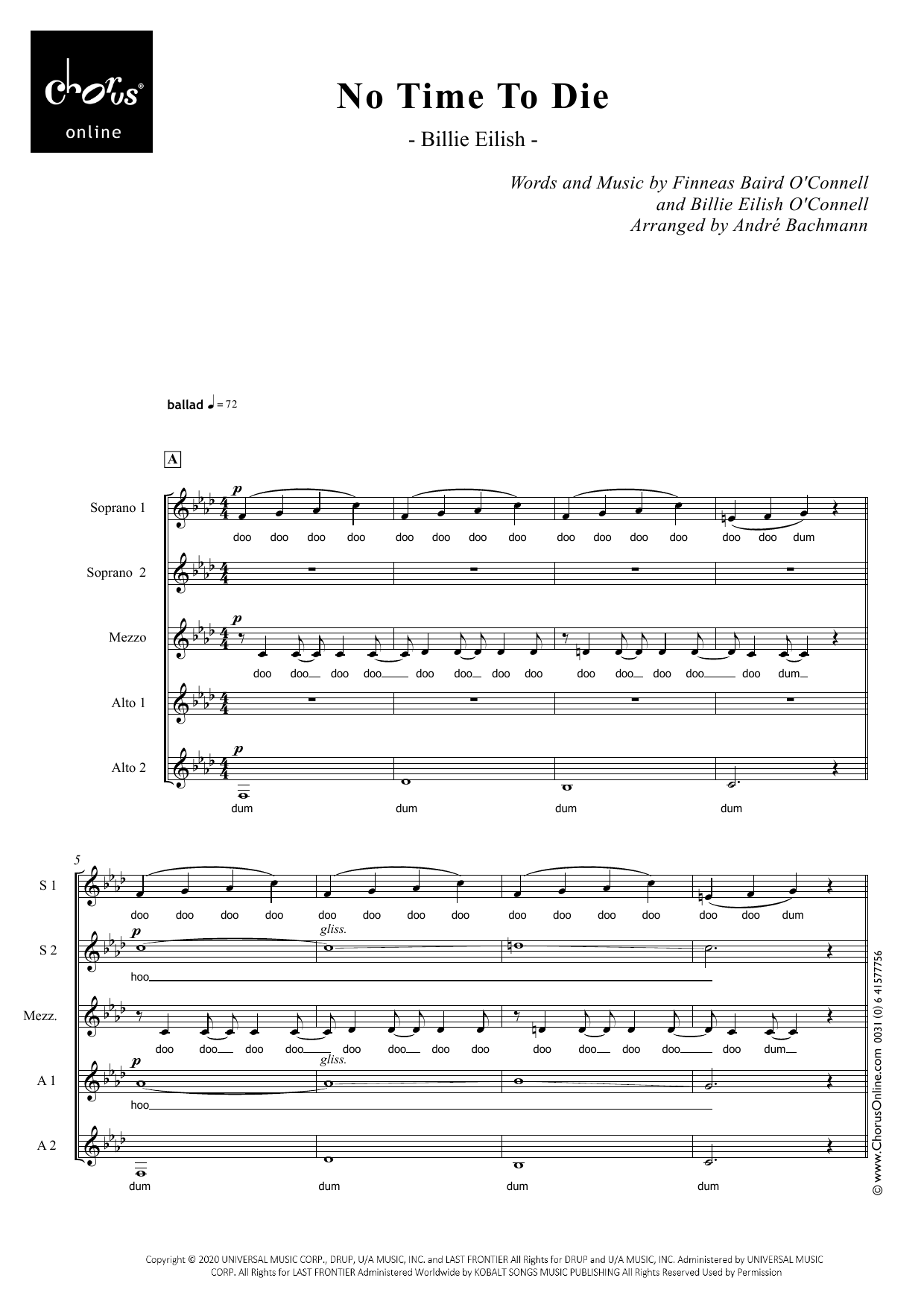
No Time to Die (arr. André Bachmann) Sheet Music Preview

No Time to Die (arr. André Bachmann): SSMAA Choral Octavo

As performed by Billie Eilish / Arranged by André Bachmann

Item: 35-DS00491069

Digital Download
$2.99
Description

No Time to Die (arr. André Bachmann): SSMAA Choral Octavo isn't in MakeMusic Cloud just yet...but it could be. Let us know you'd like to see it, and you'll help shape what comes next. In the meantime, start a free trial and dive into thousands of interactive titles your students can play along with today.

Sample Audio
No sample audio found.
Sample Video
Additional Details
Publisher: Hal Leonard
Page Count: 10
SKU: 35-DS00491069

More about this title

About the Artist: Billie Eilish

Billie Eilish emerged as one of the defining voices of her generation, known for her distinctive vocal delivery that prioritizes intimacy and restraint over technical showmanship. Her songwriting, often crafted in collaboration with her brother Finneas, strips away production excess to focus on lyrical vulnerability and atmospheric production, making her catalog particularly compelling for educational settings exploring contemporary songwriting craft.

For choirs, Eilish's work offers a masterclass in how restraint serves expression. Her melodies demand careful attention to nuance, phrasing, and dynamic control rather than belting or excessive ornamentation. This approach has made her music increasingly popular in education, where directors recognize the pedagogical value of her stripped-down aesthetic.

Why we love this

Bachmann's arrangement respects the song's cinematic tension without surrendering to Broadway excess. The SSMAA voicing distributes the haunting melody across the ensemble while preserving the intimate vocal qualities that made the original resonant. This is compelling material for choirs seeking contemporary work that challenges singers to shape phrases with intention rather than volume.

What to expect

Spare and atmospheric, with an undercurrent of tension. The piece breathes deliberately, creating moments of suspension before pulling the listener back in. There's a noir quality to the harmonic language that feels both modern and timeless, best served by singers who understand that power lives in subtlety rather than volume.

Who it's for

This arrangement serves choirs looking to program contemporary material with dramatic substance and cinematic scope. It works equally well for groups seeking repertoire that engages audiences unfamiliar with traditional choral idioms and ensembles that want to expand their stylistic range without compromising musicianship standards.

How to get the most out of it

  • Establish the dynamic floor early. This piece lives in the softer dynamic range, so clarify what 'quiet' sounds like in your space and ensure every voice understands how to support the texture without pushing.
  • Shape the text with specificity. Each phrase carries emotional weight. Rehearse the lyrics independently from the notes so singers internalize the meaning and can color their vowels accordingly.
  • Balance upper and lower voices carefully during the tutti sections. The arrangement likely stacks voices; ensure sopranos and altos aren't drowning out the deeper textures that create foundation and resonance.
  • Treat silence as active. The spaces between phrases matter as much as the singing. Conductor and ensemble should share a unified sense of breath and pacing.

How to use it

Program this as part of a set that bridges classical and contemporary sensibilities. It pairs well with other film score material or art songs that prioritize restraint. Consider placing it near the end of a concert where audience expectations have shifted and a darker, more introspective mood will land with full effect.

Skills your students will build

  • Sustaining soft dynamics without tension or vocal constriction
  • Text interpretation and emotional phrasing in contemporary idioms
  • Balancing individual voice lines within a composite ensemble texture
  • Responding to subtle conducting gestures and ensemble cues
  • Managing breath and pacing across longer phrases without structural downbeats

You May Also Like