

No Ruby: SSAA Choral Octavo
Music and lyrics by Andy Beck
Item: 00-PO-0000301
$1.75
Minimum order quantity: 20 copies
Pickup currently not available
Description
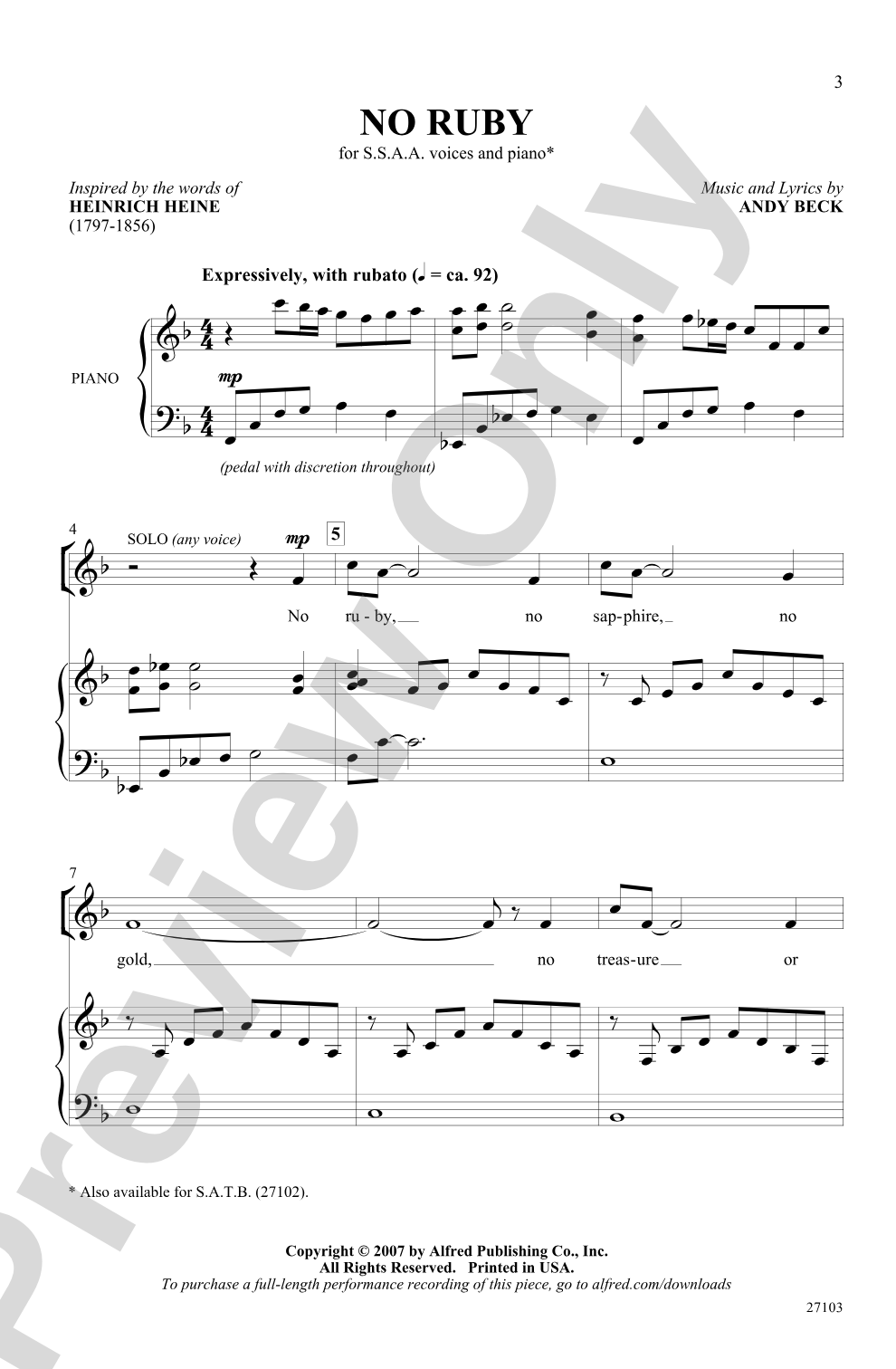
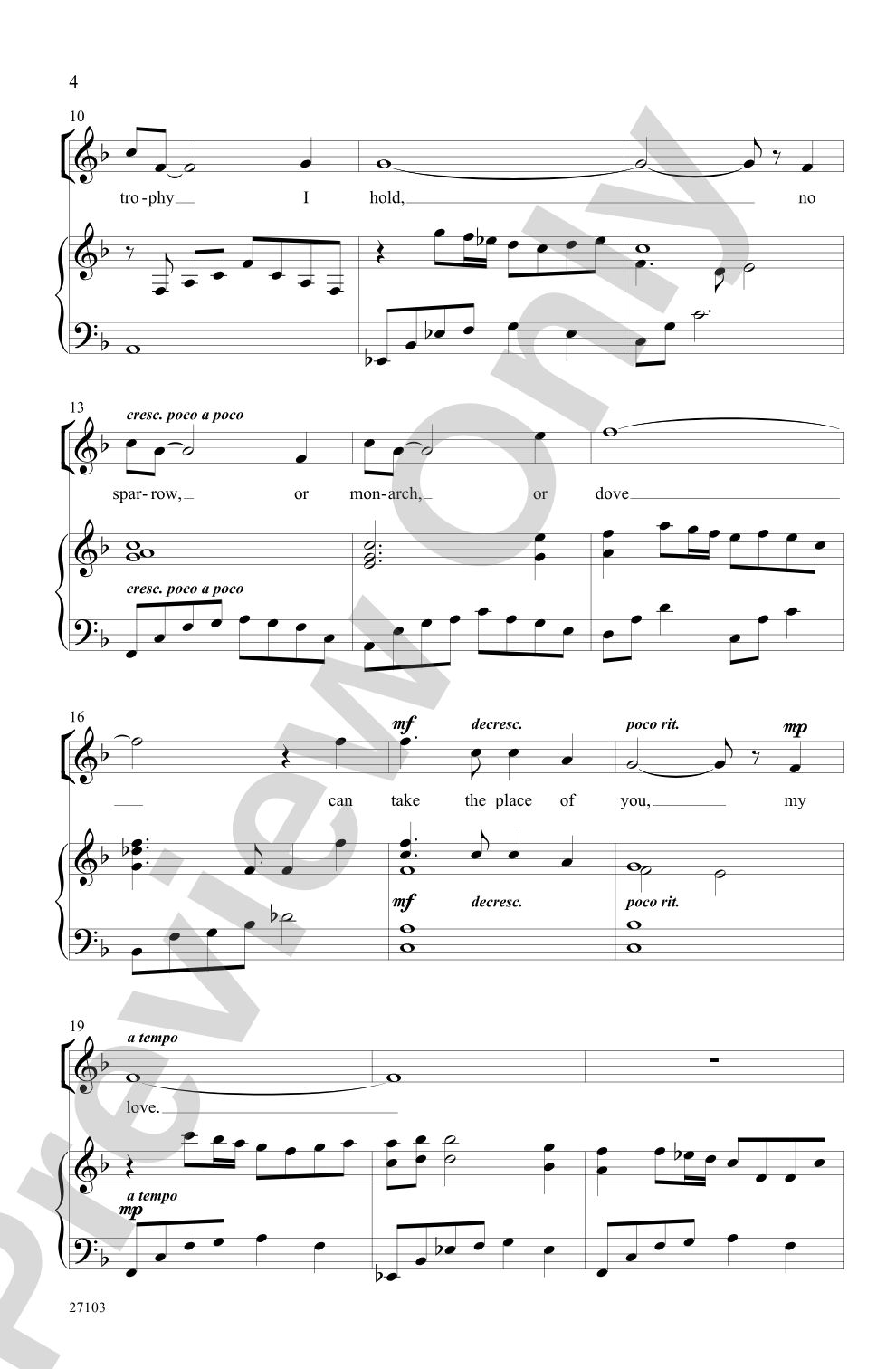
Momentary dissonances sparkle like fine jewels, and a shimmering piano theme weaves its way through this choral art song designed for 4-part mixed or women's choirs. Poetic lyrics, soaring melodies, and inspired text-painting will add a touch of class to your concert and festival program. Exquisite repertoire this year and for years to come.


No Ruby: SSAA Choral Octavo isn't in MakeMusic Cloud just yet...but it could be. Let us know you'd like to see it, and you'll help shape what comes next. In the meantime, start a free trial and dive into thousands of interactive titles your students can play along with today.
Request This Title
Tell us you want it.
Start Your Free Trial
Explore everything that's ready to play right now.
Sample Audio
1
Audio File
--:--
0:00
0:00
Sample Video
No sample videos found.
Additional Details
Series:
Alfred Choral Designs
Publisher:
Alfred Music
Page Count:
12
SKU:
00-PO-0000301
More about this title
About the Composer: Andy Beck

Andy Beck serves as Director of Choral Publications at Alfred Music, where he has shaped the catalog and authored resources that define contemporary choral pedagogy. His compositional output spans over 450 works for choirs of all ages, from children's musicals to advanced ensembles, complemented by influential instructional resources including Sing at First Sight and Vocalize! 45 Vocal Warm-Ups That Teach Technique.
Beyond the page, Beck maintains an active presence as a guest conductor, adjudicator, and clinician across the United States and internationally. He has conducted honor choirs and all-state groups throughout the Southeast, while also performing as a tenor with the North Carolina Master Chorale Chamber Choir and in musical theatre settings. His formal training includes a Bachelor's degree in Music Education from Ithaca College and a Master's degree from Northwest Missouri State University, foundations that inform his unwavering commitment to music literacy and choral artistry.
Why we love this
Beck crafts moments of genuine sophistication here, balancing accessible melodic writing with harmonic language that respects the intelligence of your singers and audience alike. The text-painting feels earned rather than imposed, and the piano writing creates an elegant sonic bed that elevates the entire piece without overwhelming the voices. For concert programs seeking repertoire with both artistic substance and performance appeal, this delivers.
What to expect
The piece unfolds with an intimate elegance, as if examining something precious under close light. Momentary harmonic tensions catch and hold the ear, while the shimmering piano accompaniment creates a sense of gentle shimmer beneath poetic vocal writing that invites singers to inhabit the text fully.
Who it's for
This octavo suits advanced high school choirs, college ensembles, and experienced community choirs seeking literature that combines artistic depth with a manageable learning curve. Directors preparing repertoire for festival adjudication or concert programming will find the work rewarding; it engages singers with genuine musical ideas while remaining performable within a realistic rehearsal timeline.
How to get the most out of it
- Shape the dissonant moments with clarity rather than blurring them; they function as intentional harmonic color, not accidents to smooth over.
- Let the piano theme establish its own character early, then weave the choral entrance around it rather than forcing the voices to dominate from measure one.
- Attend to vowel consistency across all four parts, especially in the moments where the voicing creates wider spacing; this ensures the shimmering quality reads as unified rather than scattered.
- Balance articulation with legato phrasing; the text-painting will land cleanly when singers understand where individual words end and sustained vowels begin.
How to use it
Position this as a thoughtful centerpiece in a mixed or women's choral concert, offering a contrasting moment of lyrical sophistication between larger or more rhythmically driven selections. It pairs well with festival programming, where the combination of technical interest and artistic restraint appeals to adjudicators and engages audiences without requiring extensive context or thematic framing.
Skills your students will build
- Managing dissonance with tonal awareness and blend across wide spacing
- Singing supported legato lines that sustain through text-painting without losing word clarity
- Balancing individual vocal lines with ensemble cohesion in four-part writing
- Following a piano accompaniment that moves independently from the choral texture
- Interpreting poetic language through musical gesture and phrasing