No one can hear themselves staying (Vocal Score) Sheet Music Preview

No one can hear themselves staying (Vocal Score): Choral Instrumental Pak

By Tarik O'Regan

Item: 35-PK01372197

Digital Download
$11.95

Buy Extra Parts (Digital PDF Download)

Parts Added to Cart!

Description
No one can hear themselves staying (Vocal Score)

No one can hear themselves staying (Vocal Score): Choral Instrumental Pak isn't in MakeMusic Cloud just yet...but it could be. Let us know you'd like to see it, and you'll help shape what comes next. In the meantime, start a free trial and dive into thousands of interactive titles your students can play along with today.

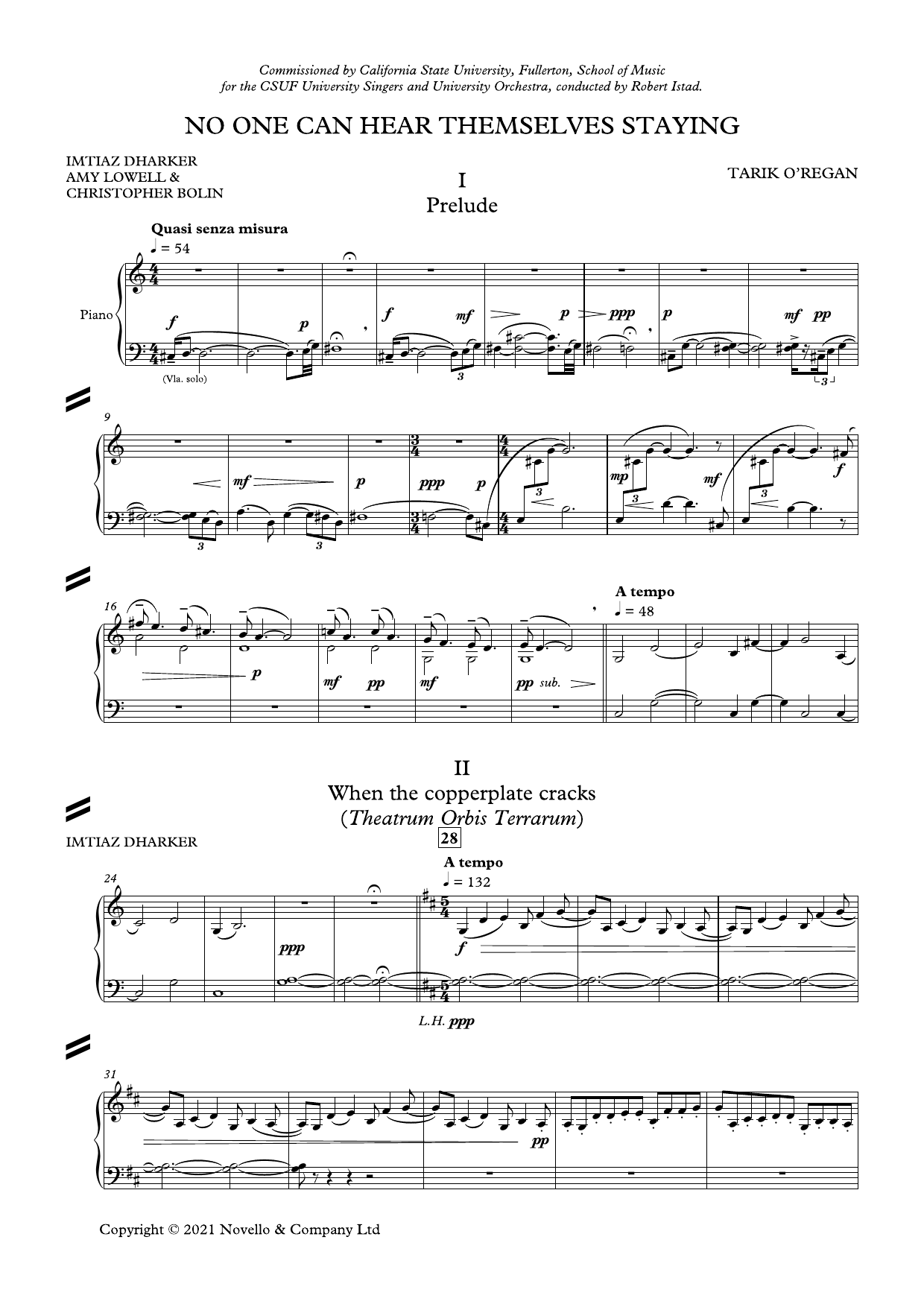
Sample Audio
No sample audio found.
Sample Video
Additional Details
Publisher: Hal Leonard
SKU: 35-PK01372197

More about this title

About the Composer: Tarik O'Regan

Tarik O'Regan is a British composer whose choral writing has become central to contemporary vocal repertoire. His work combines accessible lyricism with harmonic sophistication, making his pieces valuable across university and professional choir settings. O'Regan's output spans sacred and secular genres, and his gift for setting text with clarity and emotional nuance has earned him commissions from major ensembles worldwide.

Educators value O'Regan's scores for their balance of contemporary compositional technique and singability. His pieces challenge singers without sacrificing musicality or connection to the text, making them ideal for developing choirs seeking repertoire that grows with their abilities.

Why we love this

O'Regan's harmonic language creates emotional weight without relying on obvious gestures. The accompaniment writing elevates the ensemble sound without overwhelming young singers, and the text setting rewards careful attention to dynamics and phrasing.

What to expect

The music unfolds with quiet intensity, layering voices in ways that build emotional presence without volume. There's an introspective quality to the harmonic movement, as if the choir is contemplating rather than declaiming. The accompaniment sits close to the voices, creating an intimate acoustic space.

Who it's for

This vocal score works for collegiate choirs, advanced high school ensembles, and community choirs looking for contemporary repertoire with substance. The piece rewards singers who can handle harmonic complexity and directors seeking text that resonates with modern audiences.

How to get the most out of it

  • Shape each phrase around the breath points in the text rather than always landing cadences on downbeats. This keeps the line conversational and prevents the piece from feeling static.
  • Bring out inner voices in the harmonic progression; they carry as much emotional information as the top line, and the choir will hear themselves better when all parts lock in.
  • Balance the instrumental and vocal lines by having the ensemble find their pitch from the accompaniment but maintain independence once seated. Excessive reliance on doubling flattens the texture.
  • Trust the silence. Rests in this work are compositional choices, not gaps to fill. Let them breathe.

How to use it

Pair this with other contemporary British choral works for a concert exploring modern vocal writing, or program it as a centerpiece to a thematic concert exploring loneliness, stillness, or communication. The reflective mood makes it effective as a second or closing section of a larger arc.

Skills your students will build

  • Listening to harmonic function across all four voices simultaneously
  • Sustaining emotional engagement through subtle dynamic shifts
  • Balancing ensemble blend with clarity of individual line
  • Interpreting contemporary notation and phrasing requests
  • Responding to text as a compositional force equal to melody

You May Also Like