

No Harm, No Foul: Saxophone Quintet & Rhythm Section
By Gordon Goodwin
Item: 00-PK-0002537

$25.00
Pickup currently not available
Buy Extra Parts (Digital PDF Download)
| Product | Price | Quantity |
|---|---|---|
| No Harm, No Foul: Score | $8.00 | |
| No Harm, No Foul: B-flat Soprano Saxophone | $4.00 | |
| No Harm, No Foul: E-flat Alto Saxophone | $4.00 | |
| No Harm, No Foul: B-flat Tenor Saxophone | $4.00 | |
| No Harm, No Foul: 2nd B-flat Tenor Saxophone | $4.00 | |
| No Harm, No Foul: E-flat Baritone Saxophone | $4.00 | |
| No Harm, No Foul: Drums | $4.00 |
Parts Added to Cart!
Description
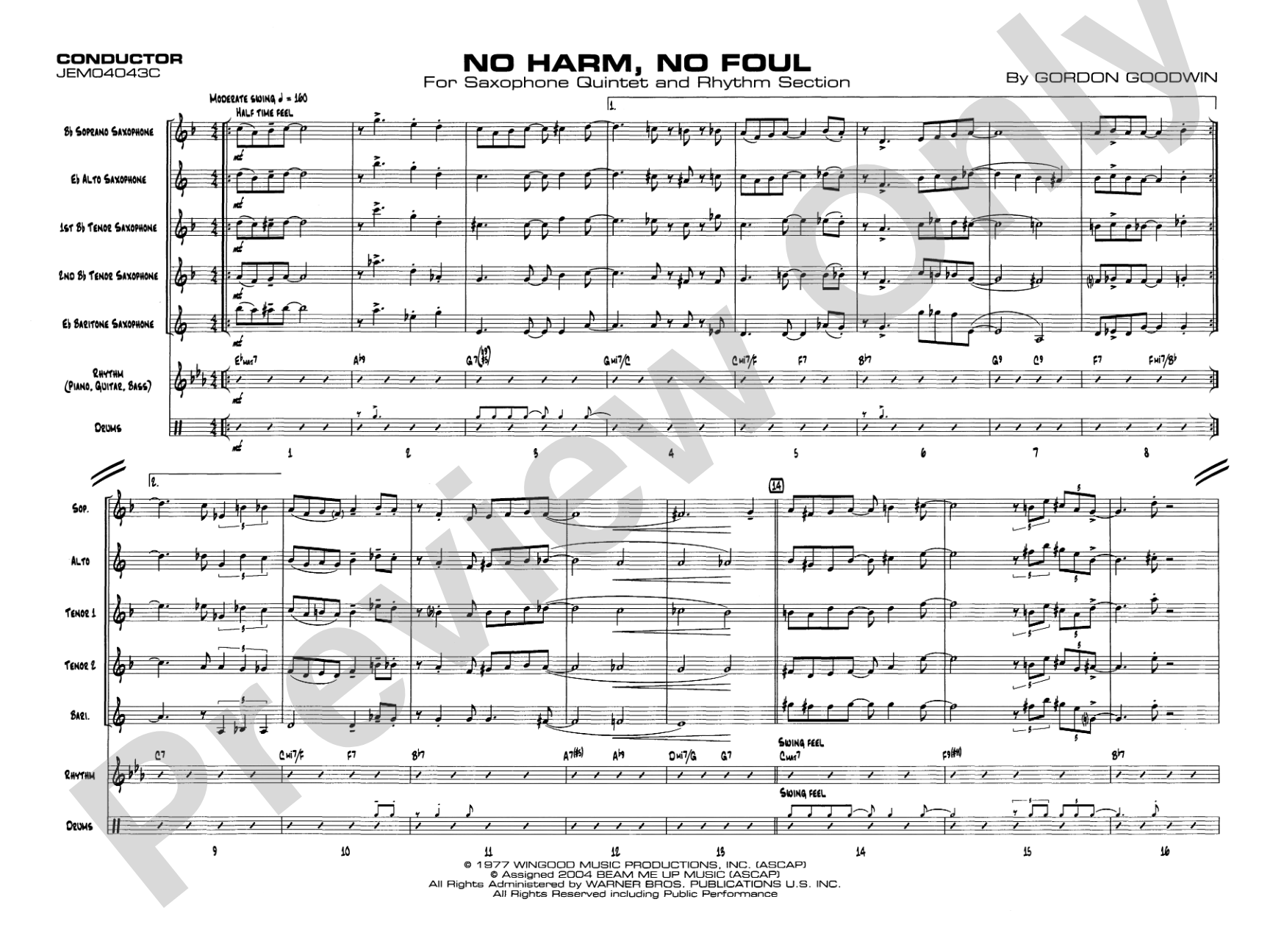
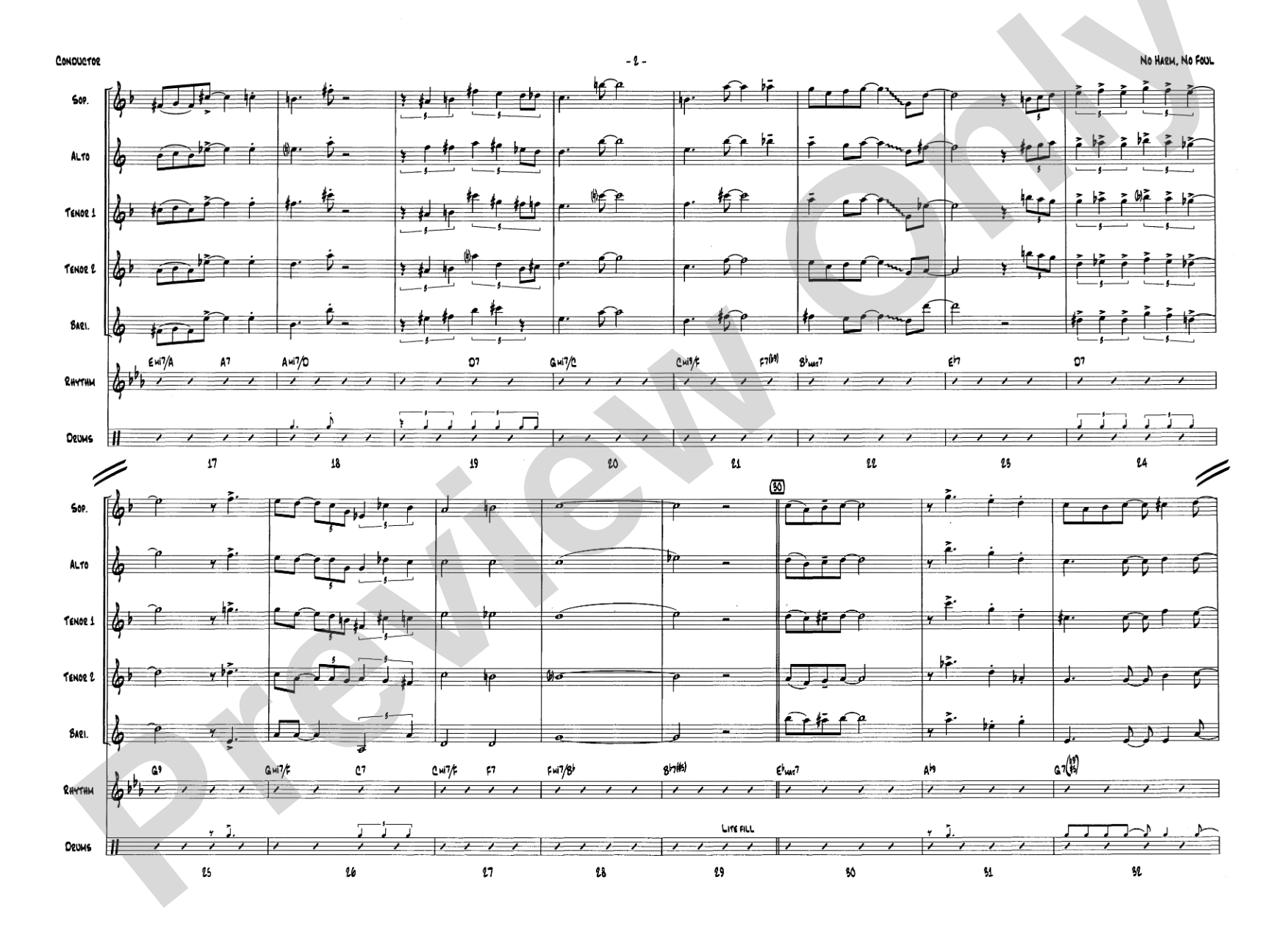
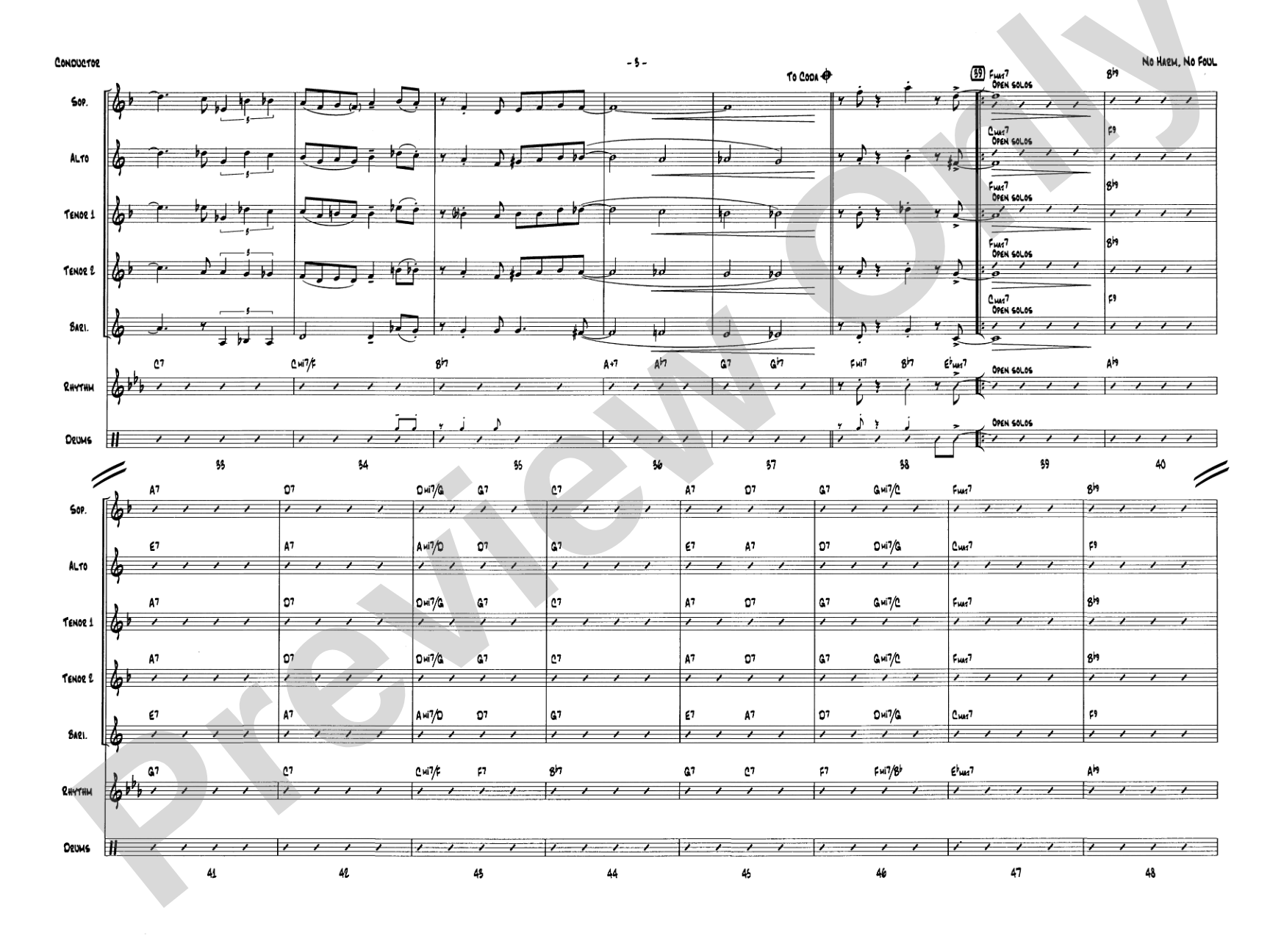
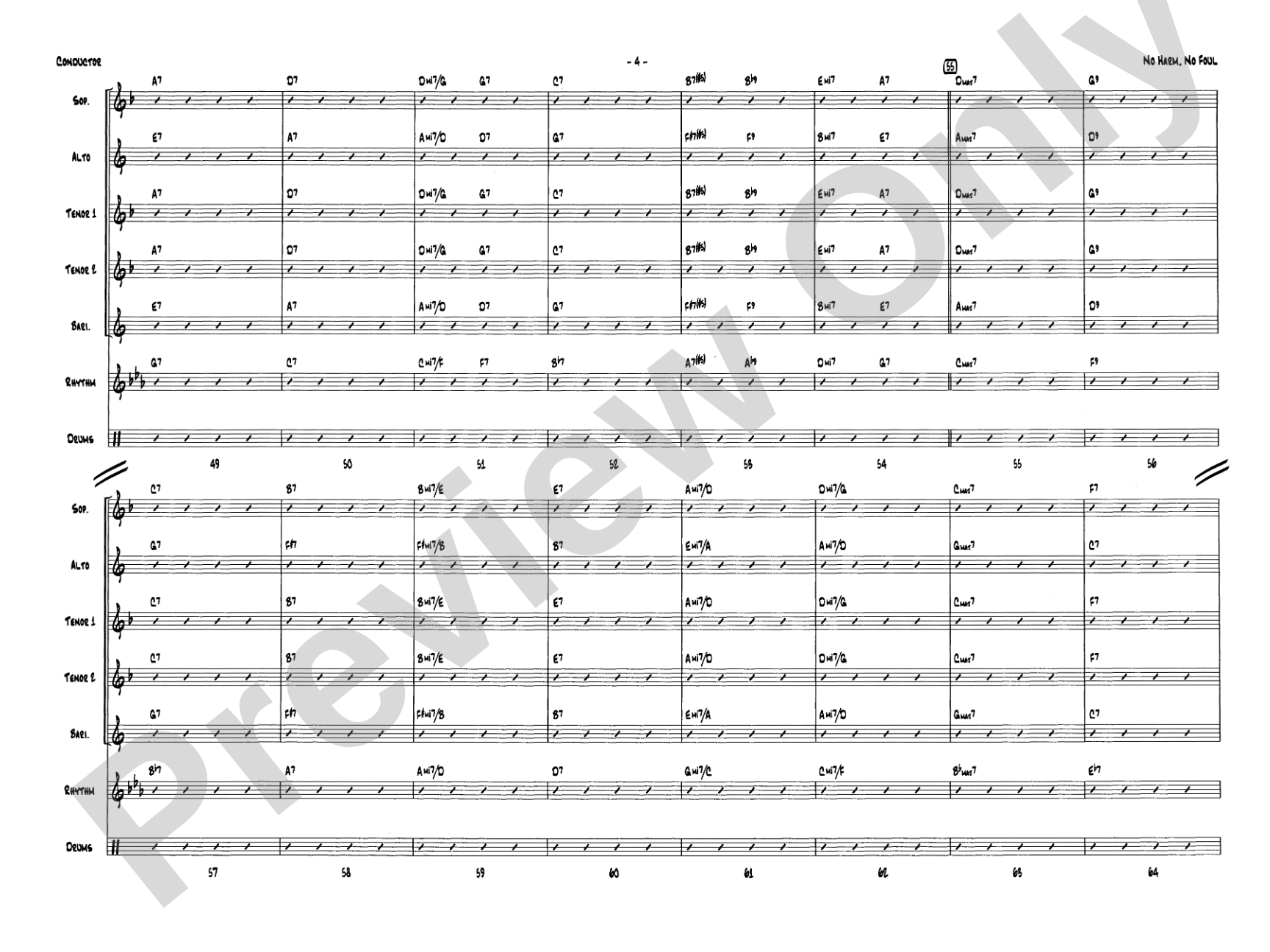
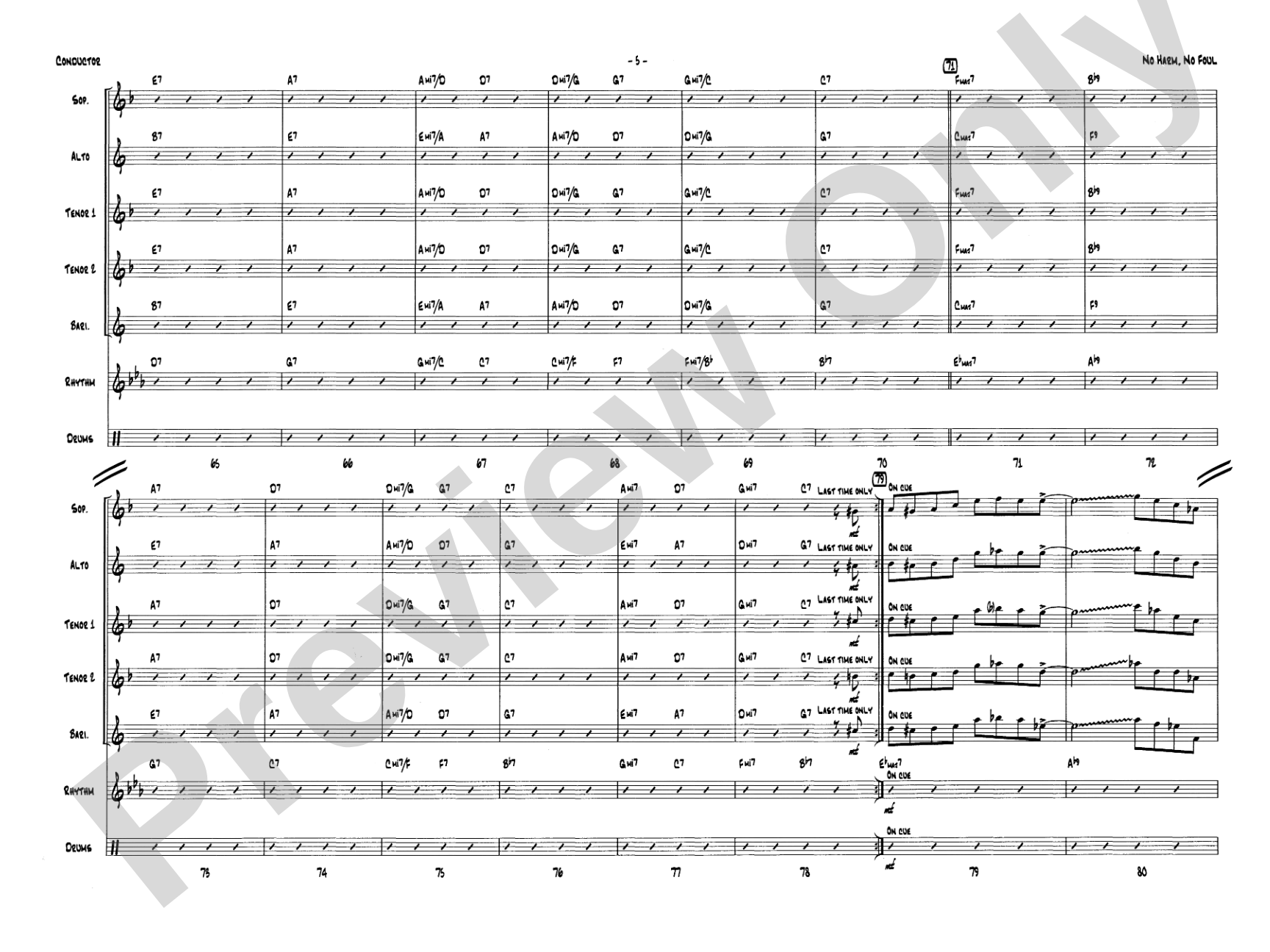
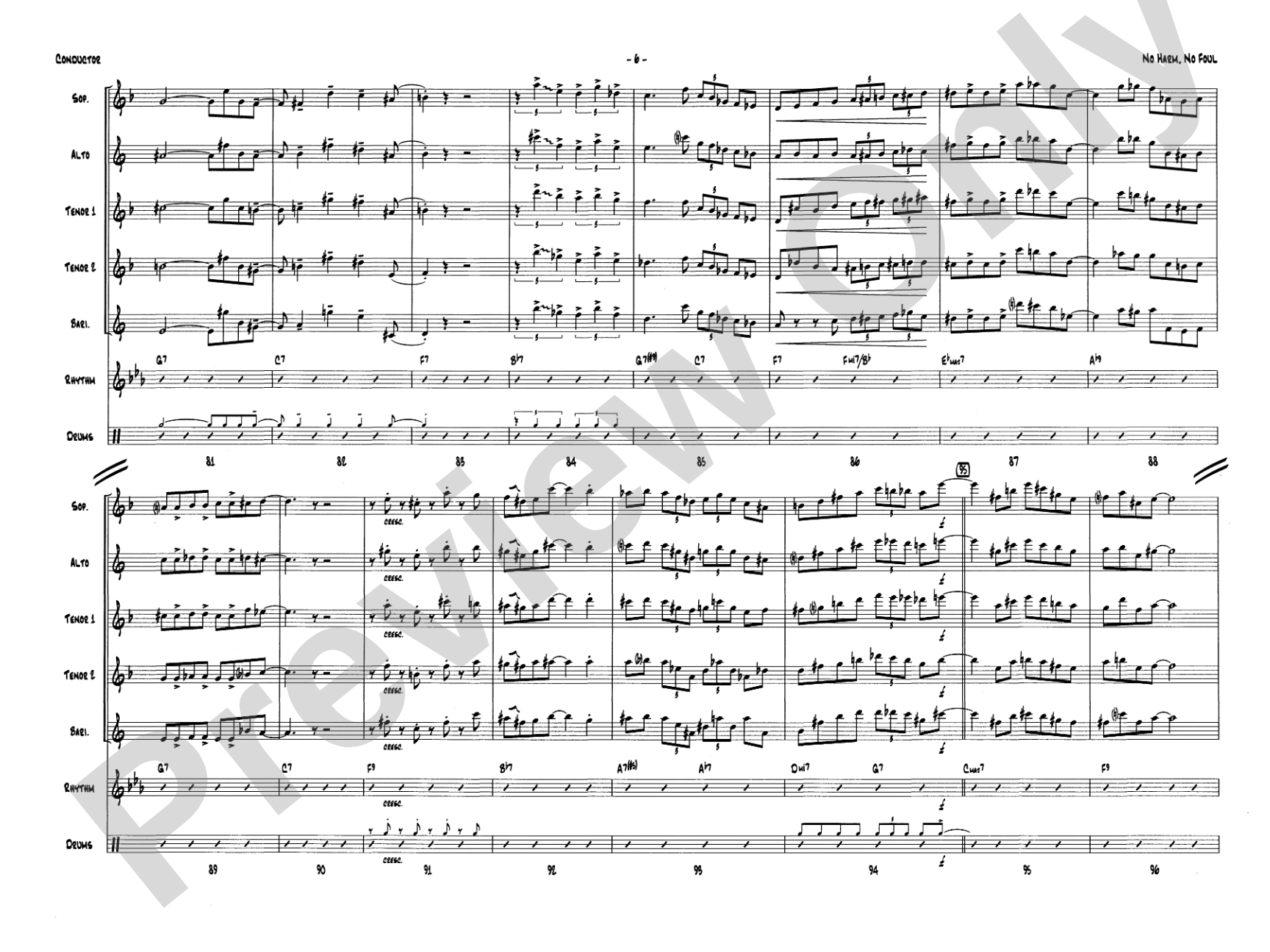
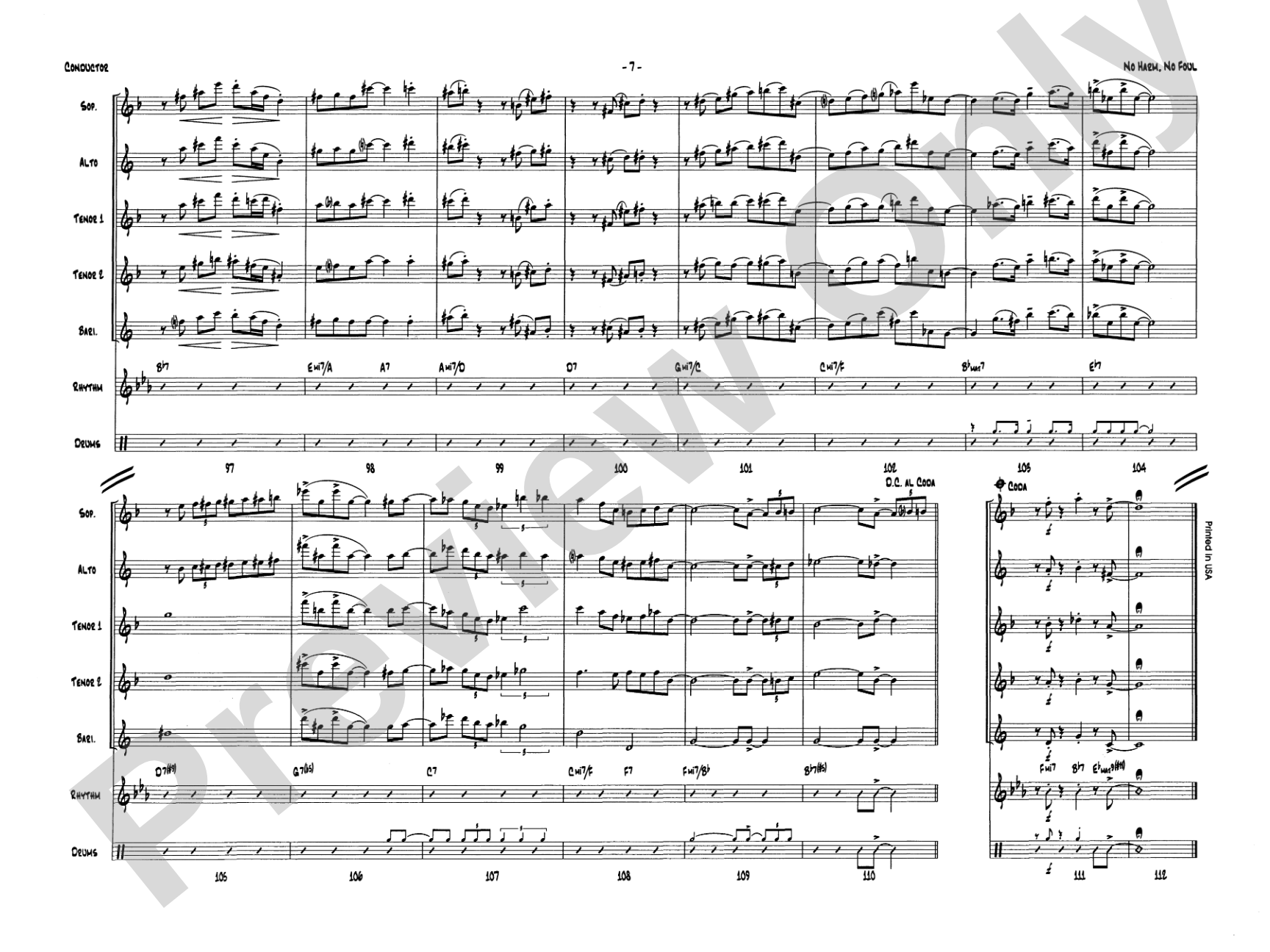
No Harm is written as a straight-ahead swing tune with an open solo section and a soli. Scored for saxophone quintet and rhythm section, the instrumentation is soprano, alto, tenor 1, tenor 2, and baritone. Rhythm parts are for guitar, piano, bass, and drums.


Don't just read it, hear it, play along with it, and watch your students grow with it. In MakeMusic Cloud, No Harm, No Foul: Saxophone Quintet & Rhythm Section comes alive with professional accompaniment, adjustable tempo, and built-in practice tools that turn solo practice into real progress.
Open in the Player
Jump straight in and assign it today.
Start Your Free Trial
Open this title and explore the full library in minutes.
Sample Audio
No sample audio found.
Sample Video
No sample videos found.
Additional Details
Series:
Gordon Goodwin Series
Publisher:
Alfred Music
Page Count:
36
SKU:
00-PK-0002537
Instrumentation:
Saxophone Quintet & Rhythm Section
More about this title
About the Composer: Gordon Goodwin

Gordon Goodwin began composing at age five, transcribing complete works rather than fragments—a gift that led him to write his first big band chart, Hang Loose, by age 13. His distinctive voice as a composer and arranger caught the attention of film and television producers, earning him three Emmy Awards and two Grammy nominations for his orchestrations on films including Bad Boys II, Con Air, Gone in 60 Seconds, and Remember the Titans.
Throughout his career, Goodwin has written for and performed alongside major artists such as Christina Aguilera, Quincy Jones, Ray Charles, and Brian McKnight. Since founding Gordon Goodwin's Big Phat Band in 2000, he has established himself as one of jazz's most prolific and ambitious voices, leading an ensemble that has received multiple Grammy nominations and continues to set the standard for contemporary big band writing.
Why we love this
Goodwin writes for saxophone quintet with the sophistication of a film composer and the groove sensibility of a working jazz arranger. The balance between a compelling soli section and open solo space gives your saxophonists room to shine while the straight-ahead swing feel keeps the rhythm section grounded and engaged.
What to expect
No Harm swings with a relaxed confidence, the kind of groove you hear on a soundstage when the music is supposed to feel effortless and cool. The saxophone quintet voices stack with warmth and definition, and the open solo section invites individual character while the written soli passages pull the ensemble back together with smart, singable harmonies.
Who it's for
Jazz ensemble directors looking for accessible yet musically rewarding material for advanced high school or college-level saxophone sections. Musicians who want to experience writing from a major Hollywood composer without sacrificing authentic swing language and ensemble craftsmanship.
How to get the most out of it
- Establish the groove pocket with your rhythm section first; lock the drums and bass into a relaxed swing feel before the saxes enter, letting them settle into that foundation rather than fighting against it.
- Shape the soli passage with clear sectional balance. The soprano and alto should float above the tenor and baritone voices; listen for blend at the unison moments rather than volume.
- Use the open solo section as an opportunity to rotate players if you have alternates available; Goodwin's straightforward changes give capable soloists room to explore without complex harmonic surprises.
- Pay attention to the written rhythm section parts. Goodwin's voicings and comping patterns are intentional; they support the saxophone lines, so resist the urge to oversimplify or ad lib beyond what's on the page during ensemble passages.
How to use it
Program this as the anchor of a jazz combo or quintet concert, pairing it with other Gordon Goodwin selections or contemporary big band charts to showcase your saxophone section's range. It also works well as a feature during a mixed concert format, bridging jazz and concert music audiences with its film-scored sophistication.
Skills your students will build
- Swing feel and rhythmic placement in quarter-note and eighth-note contexts
- Sectional balance and blend within a saxophone quintet texture
- Solo vocabulary and harmonic navigation over straight-ahead changes
- Ensemble cohesion when alternating between written soli and open improvisation
- Reading and responding to rhythm section comping patterns