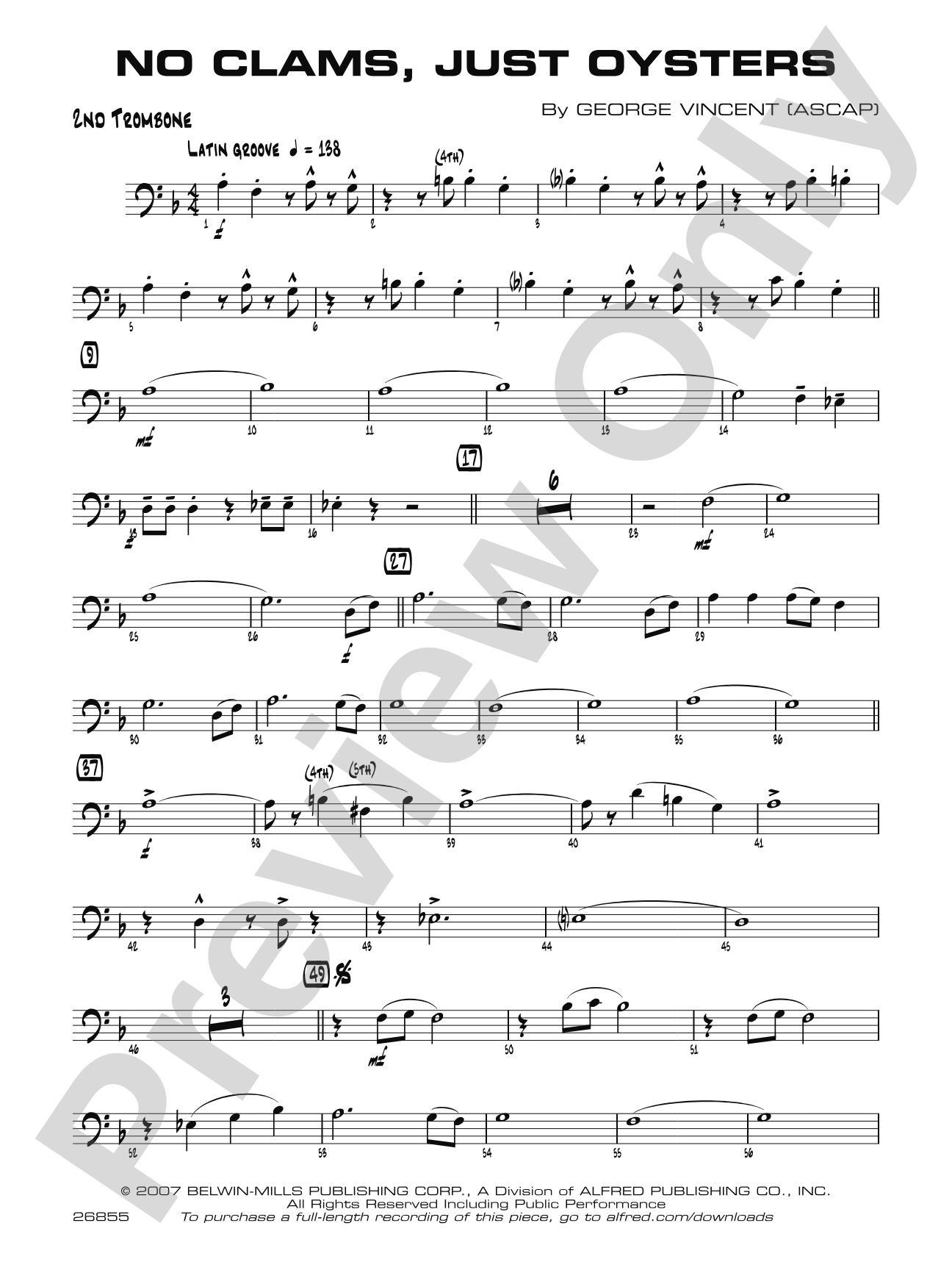
No Clams, Just Oysters: 2nd Trombone Sheet Music Preview

No Clams, Just Oysters: 2nd Trombone

By George Vincent

Grade: 0.5 (Very Easy)

Item: 00-PC-0017114_TN2

Digital Download
$3.00
Description
No clams in this chart! This George Vincent original has an easy Latin feel with a recurring rhythm pattern. A flexible solo section with opportunities for all winds to solo individually or together plus easy ranges makes for quick rehearsal time and a solid, quality performance. This chart will sound full with reduced instrumentation. An optional percussion part is included. Try the seafood! This title is available in MakeMusic Cloud.

Don't just read it, hear it, play along with it, and watch your students grow with it. In MakeMusic Cloud, No Clams, Just Oysters: 2nd Trombone comes alive with professional accompaniment, adjustable tempo, and built-in practice tools that turn solo practice into real progress.

Sample Audio
0:00
0:00
Sample Video
Additional Details
Series: Jazz Beginnings Series
Publisher: Alfred Music
Page Count: 92
SKU: 00-PC-0017114_TN2

More about this title

Why we love this

George Vincent has written a chart that respects the reality of early jazz ensembles: limited ranges, flexible instrumentation, and the need for quick results without sacrificing musicality. The Latin groove sits comfortably under all the winds, and the solo section lets every player feel like a bandleader without requiring advanced harmonic or technical facility.

What to expect

Relaxed and groovy without pretension. The Latin feel invites listeners in immediately, and there's a natural swing to the recurring rhythm pattern that makes students want to play. It sounds like a seasoned ensemble even on first or second reading.

Who it's for

Jazz ensemble directors working with Grade 0.5 ensembles, including middle school beginners and community groups still building technical foundation. The accessible ranges and flexible solo section make this ideal for students encountering jazz idiom for the first time.

How to get the most out of it

  • Keep the Latin rhythm pattern locked between the rhythm section and the ensemble hits. Once that foundation is solid, everything else falls into place faster.
  • Rotate soloists through the flexible solo section to maximize individual spotlight time and build confidence in improvisation without high stakes.
  • Don't over-rehearse the reduced instrumentation scenario. Vincent wrote this to sound full with fewer players, so trust the orchestration and use rehearsal time on ensemble precision instead.
  • The optional percussion part adds energy and authenticity. If you have access to congas, timbales, or additional shakers, the chart blooms with color.

How to use it

Program this as a crowd-pleaser on jazz festival or spring concert programming. The confident, accessible sound works well as a closer or early in the set to establish energy. It pairs naturally with other original jazz charts at comparable difficulty levels and gives audiences a taste of ensemble jazz without complex harmonies or extended forms.

Skills your students will build

  • Reading and maintaining steady Latin rhythm patterns
  • Improvising over a simple harmonic framework
  • Balancing individual solos with ensemble texture
  • Playing confidently within accessible range parameters
  • Listening to and responding to rhythm section foundation

You May Also Like